
Selecting the correct power for your laser cleaning machine is crucial to avoid surface damage and achieve optimal results.
If the power is too low, cleaning efficiency will suffer. If it’s too high, it may melt or burn the material being cleaned. Therefore, choosing the right laser power is essential.
1. About Laser Power
There are two types of laser power: average power and peak power.
Pulsed laser cleaning causes minimal or no damage to substrates due to its ultra-high peak power.
For continuous-wave lasers, also CW lasers or continuous lasers, the average power is roughly equal to the peak power.
1.1 Example of a Pulsed Laser:
-
Pulse Energy = 1 mJ (0.001 J)
-
Pulse Width = 10 ns (10⁻⁸ s)
-
Repetition Rate = 1 kHz (1000 pulses per second)
Calculations:
-
Peak Power = 0.001 J / 10⁻⁸ s = 100,000 W (100 kW)
-
Average Power = 0.001 J × 1000 Hz = 1 W
Conclusion:
Even with an average power of just 1W, the peak power can reach 100kW!
1.2 Key Parameters for Pulsed vs. Continuous Lasers
| Comparison | Pulsed Laser | Continuous Laser |
|---|---|---|
| Mechanism | High-energy pulses for instant stripping | Continuous heating for fast ablation |
| Power Range | 100W–2000W | 1000W–6000W |
| Best For | Delicate substrates | Large-scale, heat-resistant surfaces |
| Effect | Non-destructive, high precision | Fast rust removal, higher thermal impact |
| Power Selection | Pulse energy + average power | Total output power |
For pulsed lasers, when pulse width and repetition rate are fixed, higher average power means higher peak power.
Thus, you can choose the right laser based on your cleaning needs.
2. Key Factors in Laser Power Selection
2.1 Type of Contaminant
Different pollutants (rust, oil, paint, etc.) require varying laser energy levels:
-
Heavy rust or thick coatings need higher pulse energy or average power.


-
Thin oil, dust, or mildew can be removed with lower power.


-
Organic coatings may melt under excessive heat, requiring precise pulsed laser settings.
2.2 Substrate Material
Metals and wood react differently to laser cleaning:
-
Metal surfaces can handle both high-power continuous and pulsed lasers.


- Wood surfaces risk burning if exposed to excessive continuous laser energy, better use the pulsed laser cleaning.


2.3 Cleaning Area & Efficiency Requirements
-
Large-scale industrial cleaning (e.g., ship hulls, pipelines) benefits from high-power continuous lasers (3000W–6000W).

- Precision cleaning (e.g., molds, automotive parts) requires pulsed lasers (300W–2000W) for minimal substrate damage.



3. Power Selection for Different Applications
3.1 Continuous Laser Cleaning
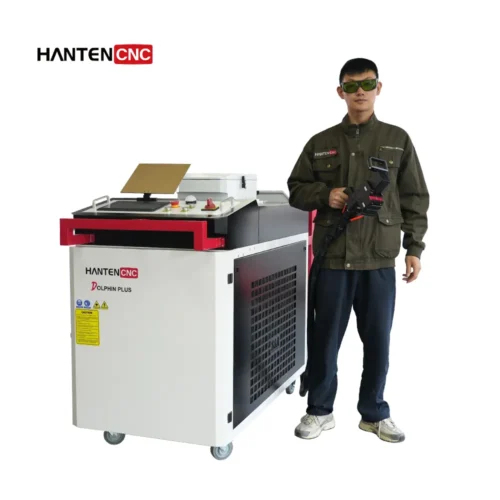
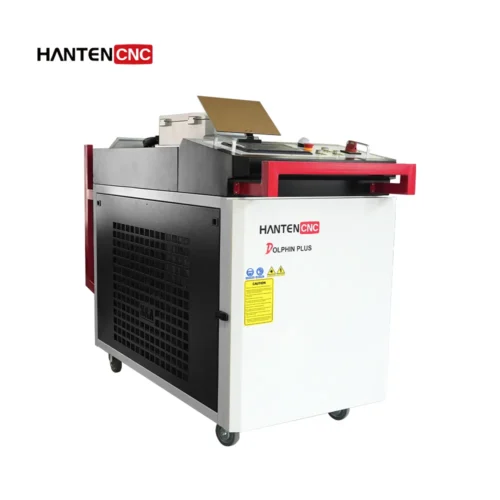
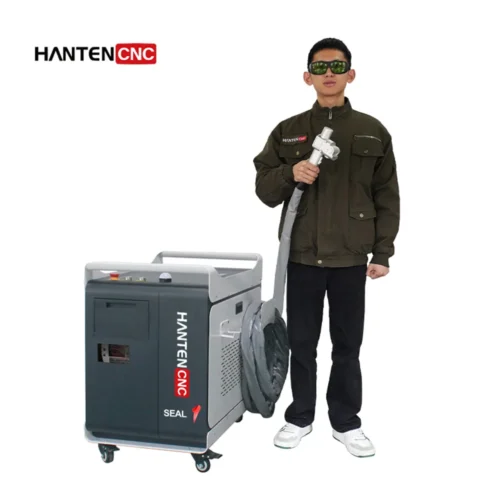
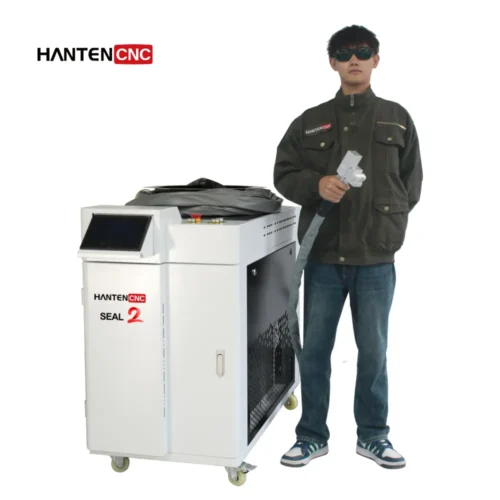
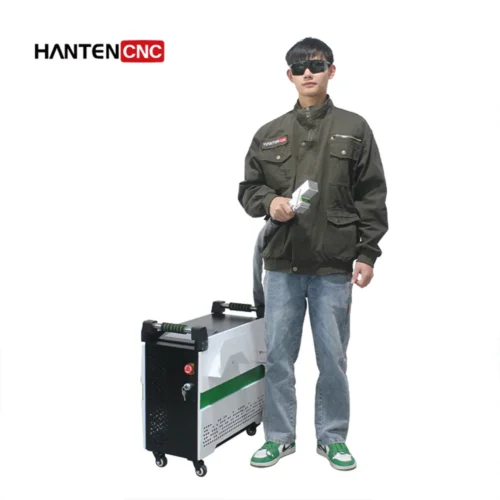
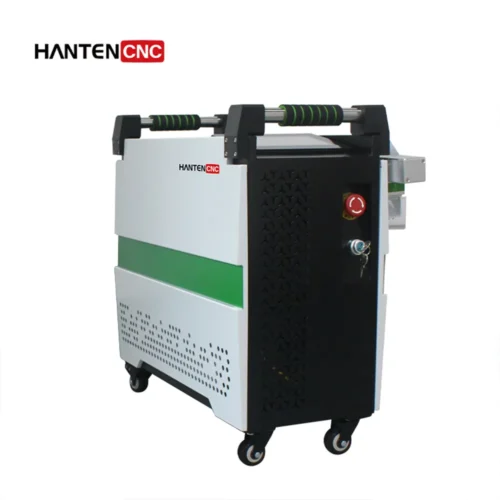
The continuous laser cleaning machines are ideal for large-scale rust and paint removal on metals (e.g., steel structures, storage tanks).
-
<100µm thin rust: 3000W recommended for efficiency.
-
<500µm thick rust: Custom 6000W machines available for faster cleaning.





3.2 Pulsed Laser Cleaning
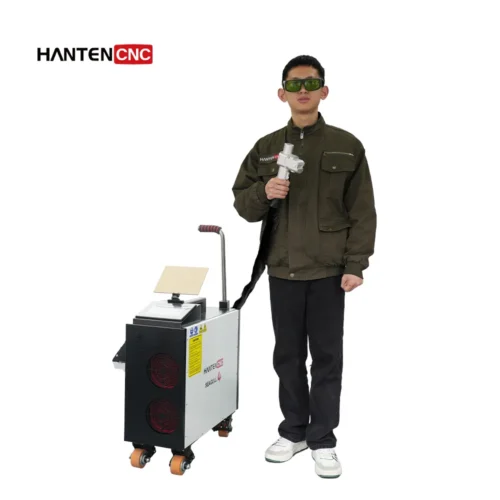
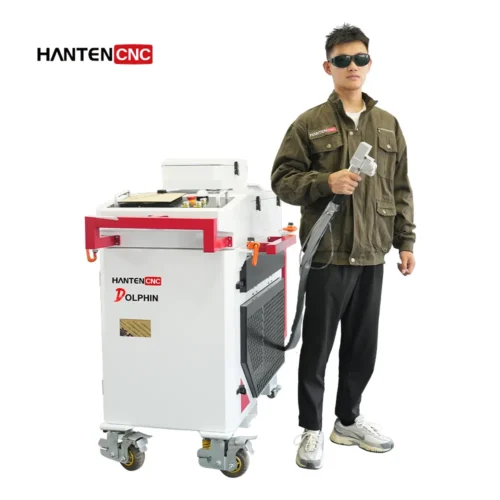
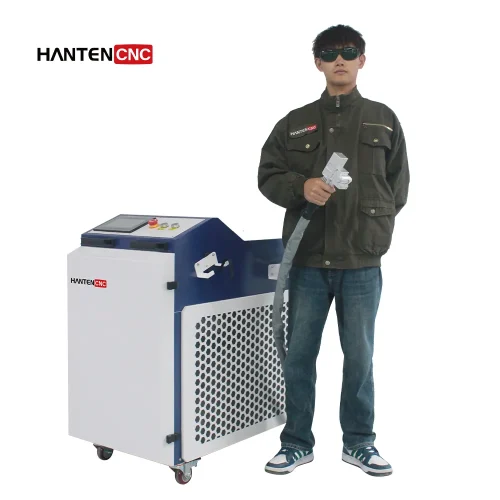
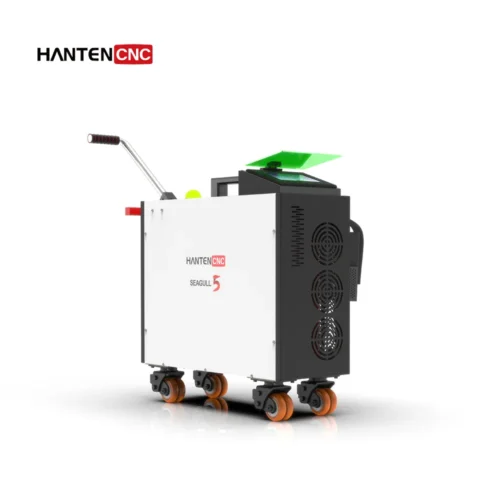
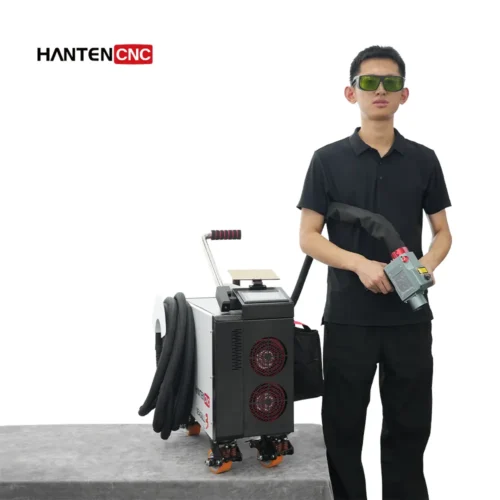
The pulse laser cleaning machines are versatile for metals and some non-metals (e.g., wood, plastics).
-
Entry-level (300W, 5mJ): Suitable for thin paint (<150µm) and rust (<200µm).
-
Mid-range (500W, 1.5mJ): 50% faster than 300W, ideal for heavy rust and mold cleaning.
-
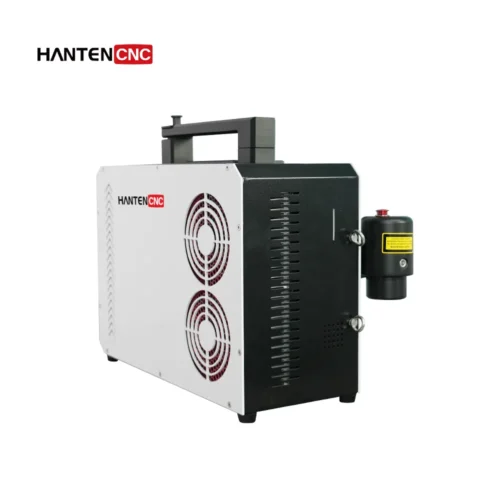
High-end (1000W–2000W, 15mJ): Perfect for production lines, offering speed and precision without substrate damage.








4. Common Mistakes in Power Selection
❌ Comparing pulse vs. continuous power directly – They serve different purposes.
❌ Overestimating high power – Excessive continuous power can damage substrates, while high-power pulsed lasers are costly.
❌ Ignoring spot size adjustment – Smaller spots increase power density, affecting cleaning results.
❌ Neglecting safety – High-power lasers require proper radiation and fume extraction measures.
Conclusion
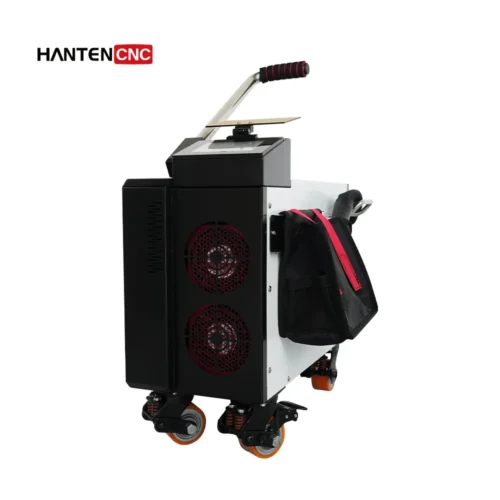
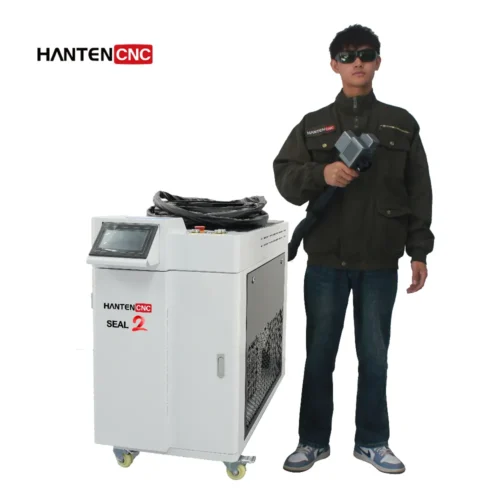
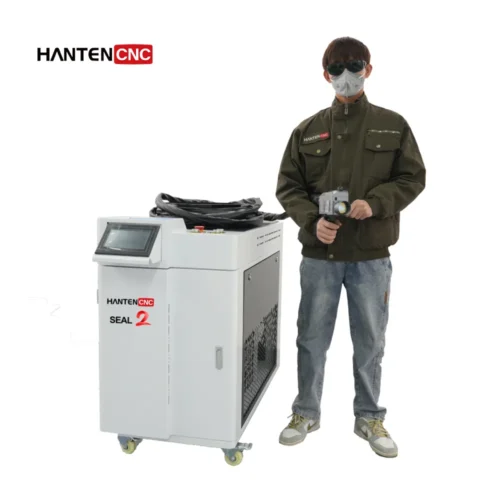
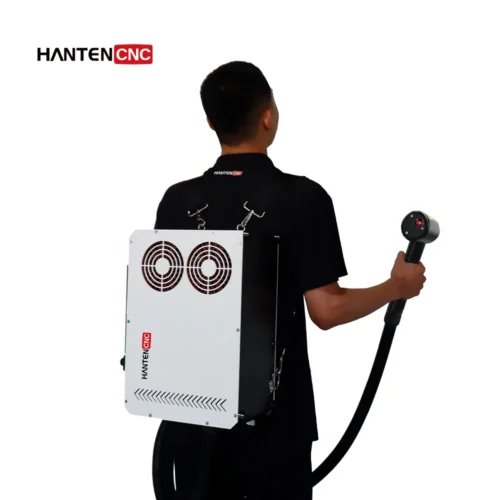
Choosing the right laser cleaning machine power depends on your application, efficiency needs, and budget.
At HANTENCNC, we offer tailored solutions for various industries, ensuring high efficiency, safety, and cost-effectiveness. Whether you need gentle precision or heavy-duty cleaning, our machines deliver exceptional performance.