
Welding is one of the most important manufacturing and repair processes. It typically joins two or more pieces of metal together. They either use filler materials or melt the edges of two metal parts. Over the years, people have developed many welding methods to meet different needs. One of the most crucial comparisons today is “laser seam welding VS spot welding.”
Other traditional methods typically use heat, pressure, and filler materials. They can be slow and create a large HAZ. Sometimes, they may need extensive post-processing. Over time, industries have demanded more precision, faster production, and cleaner welds. This need typically leads to the development of laser technology.
Laser welding uses a highly focused laser beam, which creates intense heat in the target area. This fierce heat typically allows metals to melt quickly and make joints. From this technology, two main approaches appeared: seam welding and spot welding.
In this article, we will learn more about these two laser welding methods. We will go through their pros and cons. You will mainly learn their key differences. Ultimately, we will determine the best method for your project.
What is Laser Seam Welding?
Laser seam welding is considered a common type of laser welding. Mostly, people prefer it more than the spot welding method. The reason for this preference is that a seam welder functions as a general-purpose machine.
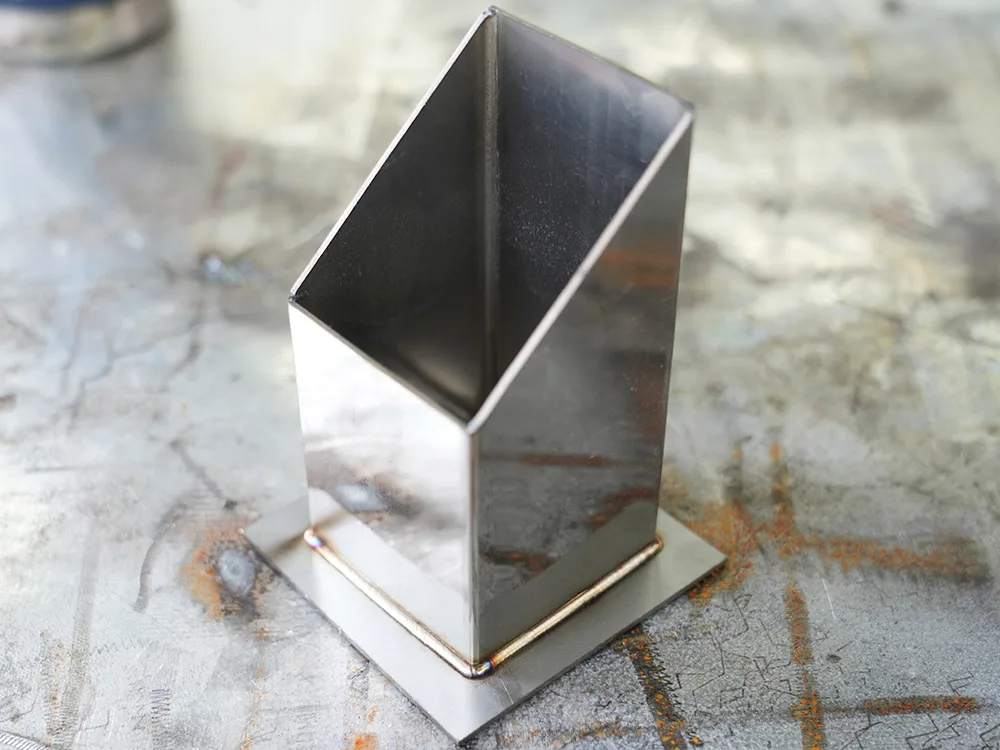
How does it work? Specifically, the main concept of this machine comes from the name “seam.” It means the machine creates a continuous seam for attachment. A laser seam welder does not attach along points or spots; it forms strong and long welding joints. Such efficiencies are suitable for airtight and watertight joints.
Laser seam tracking welding is applicable in various industries. For example, you may use it in the automotive sector. It works well for joining car body panels, exhaust, or fuel tank systems. In the electronics industry, you may design battery casings, sensors, and other components. On the other hand, the aerospace sectors utilize it for fuselage components. Apart from them, there are different sectors, such as construction, food and beverage, that use them.
Benefits of Laser Seam Welding
- You can focus a laser beam to a tiny spot. This way, you can ensure that the weld is very accurate. This level of accuracy is very suitable for tight tolerance applications. You may think of aerospace, electronics housings, medical, and so on.
- Laser seam welding produces less heat compared to other traditional methods. It reduces distortion. This benefit is especially suitable for working with thin sheet metals. You may think of some metal parts from the automotive or aerospace industry.
- The seam welding is typically continuous and uninterrupted. It normally creates a perfect airtight and watertight seal. Thus, this method is ideal for making fuel tanks and various enclosures.
- Laser seam welding can also be fully automated. It offers you opportunities to deal with high-volume production lines.
- The process works with many metals, such as stainless steel, aluminum, and titanium.
Limitations of Laser Seam Welding
Although laser seam welding offers a wide range of benefits, it has some limitations. And that begins with its initial cost. A laser seam welding machine could be a little pricy. However, if you are dealing with high-volume orders, it is a pretty good investment.
Laser seam welding is not ideal for uneven or rough surfaces. Besides, for extra-thick materials, it may need multiple passes for better results.
What is Laser Spot Welding?
Laser spot welding is more specific compared to laser seam welding. It is ideal for situations where a continuous seam isn’t necessary. Instead of a seam, it works by creating a joint at discrete points.
The name of spot welding comes from the word “spot.” It’s a localized welding method that forms strong joints between materials where they get attached. The strength of the joints makes it suitable for industrial usage. Also, it does not require any full coverage of each joint on a line.
Laser spot welding is often preferred in electronics, automotive, and jewelry. You can think of delicate parts where laser seam welding might be too powerful. For example, PCB welds, gold ornaments, or other tiny objects are noteworthy.

Benefits of Laser Spot Welding
- Laser spot welding typically applies heat to very small points. Because of this, you can ensure fewer HAZ areas and nearby parts are less likely to be damaged. In contrast, laser seam welding applies more heat along a continuous line. It results in increased distortion.
- Spot welding only melts in small areas. Therefore, it uses less energy and material. It is handy for delicate or expensive metals. Seam welding, on the other hand, covers a large area and can waste more material.
- You can typically check each spot welding point. If there is any defect, you can easily locate and fix it. On the other hand, seam welds are complex to check along the entire line.
- Spot welding works well for irregular or complex parts. Laser seam welding lacks this benefit. Therefore, spot welding is very versatile.
- Although spot welding is slower, it produces intense and localized joints. You can optimize each weld for better strength. For specific assemblies, it is much safer than seam welding.
Limitations of Laser Spot Welding
- A laser spot welder passes energy and heat to a small area. This way, it generates minimal heat distortion, making it ideal for thin and delicate materials.
- This laser welding method needs precise positioning of the points. If you make a mistake here, you might end up with defective welds.
- The laser spot welding might not be suitable for large-volume orders. It is comparatively slower than laser seam welding. However, it could be a better solution for small-scale productions.
Laser Seam Welding VS Spot Welding: Key Difference
Laser seam welding and spot welding have several key differences. From the previous section, you have already got the general ideas about these two methods. In the following table, let’s summarize their key differences. The table shows the suitability of each laser welding method.
| Feature | Laser Seam Welding | Laser Spot Welding |
| Weld Type | Continuous weld along a joint | Discrete welds at specific points |
| Application | General-purpose, used for long joints, airtight or watertight seals | Specific applications, joining small or delicate parts at points |
| Heat Affected Area | Moderate, spreads along the seam | Very small, concentrated at each spot |
| Material Distortion | Low, but slightly higher than spot welding | Minimal, ideal for thin or sensitive materials |
| Speed | Continuous motion, suitable for high-volume production | Fast per spot, but multiple spots needed for long joints |
| Precision Requirement | High, but less critical than spot welding | Very high, parts must be accurately positioned |
| Joint Strength | Strong along the seam, suitable for structural joints | Strong at spots, but weaker for long joints |
| Typical Industries | Automotive, battery cases, aerospace, electronics | Electronics, medical devices, jewelry |
| Cost | High initial investment, efficient for long runs | High initial investment, better for precise small-scale joins |
| Advantages | Continuous, airtight/watertight, versatile | Very precise, minimal distortion, clean welds |
Table 1: Laser Seam Welding Vs Spot Welding
Laser Seam Welding VS Spot Welding: Which is Better?
From the previous discussion, you are familiar with their key differences. You might already have some ideas about which one you should choose. Let’s go through several situations and determine which one is suitable for your project.
If you are making automotive body parts or fuel tanks, laser seam welding is better. It creates long and continuous airtight welds. It is ideal for long joints and large assemblies.
If your project involves electronics or medical devices, laser spot welding may be a better option. This type of project often involves joining small parts. In such situations, you must ensure that minimal heat reduces distortion.
When you are working on machinery parts or metal housings, seam welding is suitable. These tools and equipment often need strong welds.
For custom or small workshops, you may consider both laser seam welding and spot welding. The exact type will depend on what kind of products you are dealing with. What are the customer’s requirements?
In jewelry or delicate metal parts, laser spot welding is better. Seam welding in such situations would be too powerful and may damage thin material.
Above all, when you are choosing between laser seam welding vs spot welding, you must first assess your project needs. Consider the size of the parts, joint length, material type, and needed precision.
Ready to Choose a Laser Welding Machine?
HantenCNC laser welding machines come with various types and configurations. You can typically choose from seam welding or welding models. Our laser machines are designed for precision and speed.
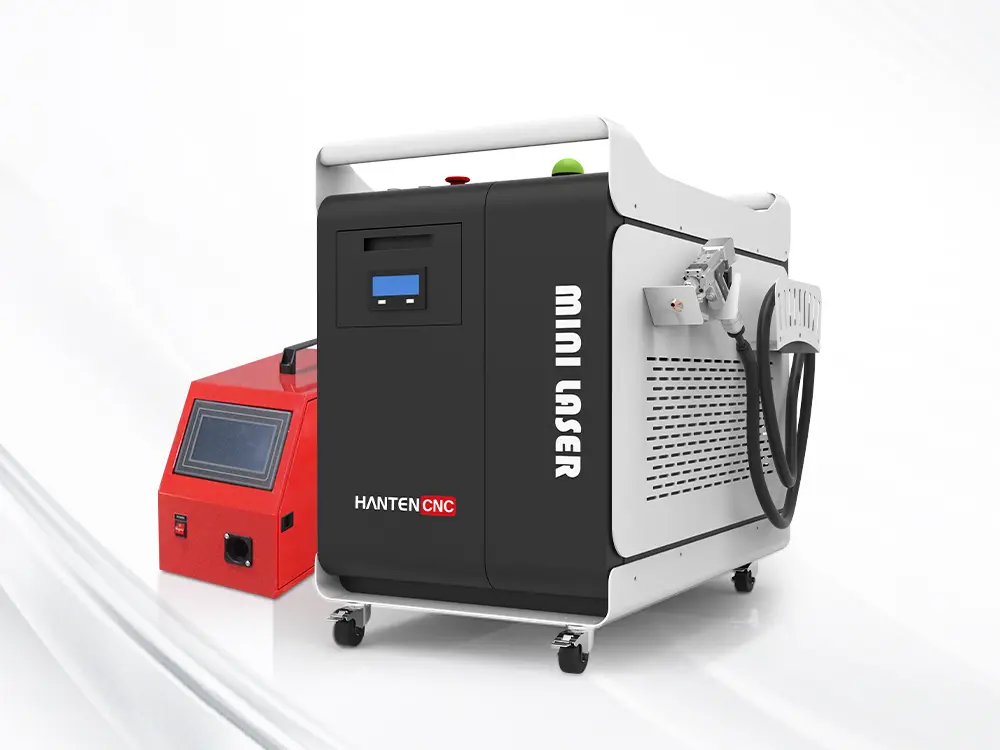
If you are looking for custom configs, HantenCNC also offers specific solutions to match your needs. We also provide relevant support and training for our customers.
Ready to choose a laser welding machine? Or, do you have any questions about our products? Feel free to contact us. We have a very professional team of experts who are always happy to assist you.