Welding and coating both involve joining, bonding, or fusion. In welding, you are typically joining two surfaces of two different metal parts. In coatings, you usually create a protective layer on top of the surface. So, either way, you are joining something on the metal surface. In this case, the condition of the surface is crucial for better results. A laser oxide removal machine can help you achieve a clean and oxide-free surface.
What is Laser Oxide Removal?
As the name suggests, the laser oxide removal means removing the oxide layer using a laser. A laser oxide removal machine uses a highly focused laser beam to remove the oxide layers from the metal surface. When the laser hits the oxide layer, a rapid temperature rise happens. It quickly vaporizes the oxide layer, leaving a clean and smooth surface.
If you consider traditional methods, you will find they have their limitations. None of them can achieve the precision of a laser oxide removal machine. The laser devices don’t involve physical wear on the material. There are no cleaning chemicals involved. So, this technology is environmentally friendly.
The laser oxide removal machine is prevalent in many industries. It is a popular method for preparing metal before welding, soldering, or coating. You can use this technology for maintenance and also ensure the material remains intact.
Understanding the facts behind welding and coating?
Welding is the process of joining two pieces of metal together. When joining, you need to melt some portions of the surface of both pieces. Or, you might need a filler that can join them. Either way, you will need a clean and contamination-free surface so that the joining becomes robust and durable.
On the other hand, coating is the process of applying a protective or decorative layer to a surface. It could be painting, powder coating, plating, or other types. For the coating to stick, the surface must be free from oxides, oil, and dust.
If oxide particles remain on the surface, they may act as a barrier between the base material and the weld or coating. In welding, it can cause incomplete fusion, porosity, or weak joints. In coating, oxides can lead to poor adhesion, which may eventually cause peeling, blistering, or premature wear.
How Laser Oxide Removal Improves Welding and Coating Quality?
If you want the best welding coating results, you need a certain quality of the surface. You must ensure it is clean, smooth, and free from oxides or contamination. Even the smallest layer of oxide can reduce adhesion and cause defects. In this section, we will check whether laser oxide removal can provide such surface conditions.
Better Surface Adhesion
Surface adhesion is typically the ability of one material to bond with another. It’s the level of bonding or the durability of bonding. When it comes to welding or coating, these properties play a very critical role.
In welding, it means how strongly the molten filler fuses with the base metal. On the other hand, it means how effectively the layer sticks tightly to the surface in coating. Of course, strong adhesion ensures durability and prevents peeling. Strong bonding also prevents cracking or weak joints.
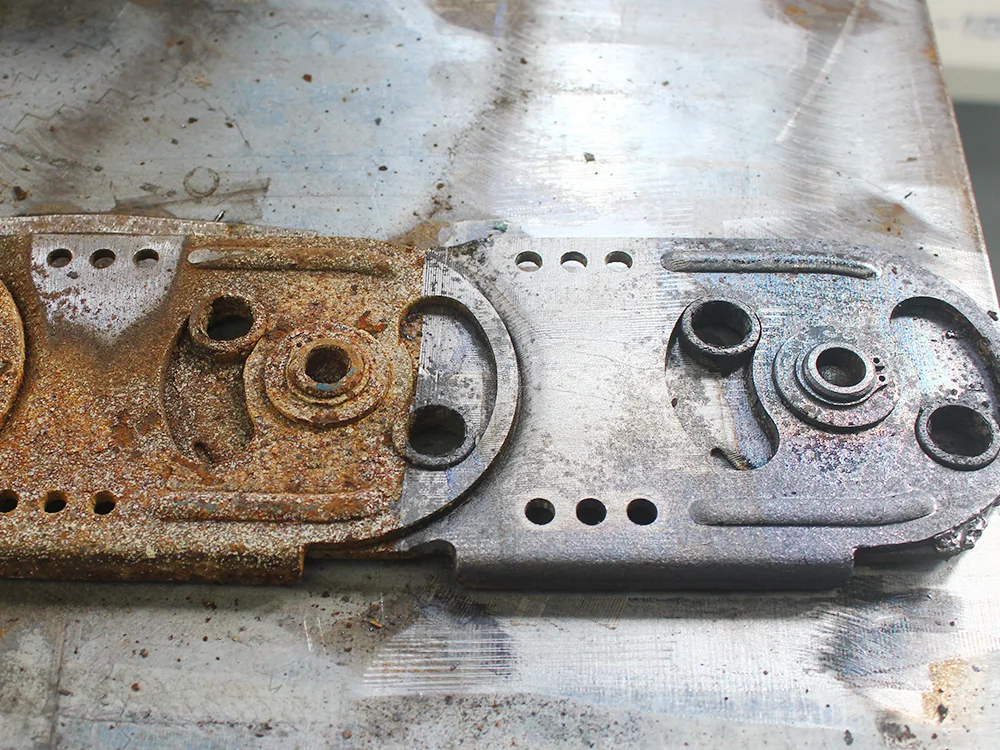
Welding and coating need clean, oxide-free surfaces for the best adhesion. Why must the oxide be cleaned thoroughly? Because it acts as a barrier between the base material and the welding or coating. Laser oxide removal, in this case, clears these oxide layers with precision. Almost 99.99% of oxides can be cleaned with the laser oxide removal process.
Elimination of Oxide Layers
Oxide layers typically form naturally on metals. It happens when you allow your metal parts to be exposed to air or heat. However, a thin oxide layer may protect against corrosion in some cases. However, they create a major problem with welding and coating.
The oxide layer typically prevents proper fusion. Because of this, mainly the coatings cause delamination.
There are various traditional ways to remove oxide layers. Sanding, grinding, or chemical cleaning are some of the most popular ones. These methods can remove oxides, but there is a risk of uneven cleaning, which is even worse for welding or coatings.
Laser oxide removal uses a concentrated beam of light to vaporize the oxides instantly and evenly. It does not touch or wear down the underlying metal.
Reduced Defects
There are various reasons why weld or coating defects occur. One of the most common reasons is the inappropriate laser oxide removal. Porosity, cracks, or incomplete fusion are often caused by contamination trapped in the joint area.
If you didn’t clean the surface properly, the oxide layers may trap gas during welding. Because of this, it creates a void in the weld bead. In coatings, trapped oxides can create bubbles, peeling, or flaking over time.
Laser oxide removal perfectly eliminates these contaminations. It ensures no residue is left behind. This way, the laser oxide removal machine reduces the likelihood of defects forming in the layer.
No Abrasive Damage
Abrasive cleaning methods can remove oxide layers. Wire brushing, grinding, or sandblasting are some of the most popular traditional abrasive cleaning methods. However, these methods often damage the surface. They may scratch the base metal or change its dimensions. Or they may embed particles into it. These surface changes may create new problems for welding or coating.
Laser oxide removal is a non-contact method. It uses only light energy to clean. Because of this, your base material remains completely intact. Therefore, laser oxide removal is ideal for high-precision work or sensitive materials.
Consistent Quality
Consistency is always an essential need in manufacturing. For surface preparation, it’s no exception. Variations in surface preparation can cause some welds or coatings to perform better than others.

Manual cleaning often depends on your skills. There is a high possibility of uneven results. Laser oxide removal, in this case, delivers the same high-quality cleaning across every part, every time. It is programmable and repeatable.
Let’s Talk!
Looking for an appropriate laser oxide removal machine? Why not choose HantenCNC laser cleaners? These devices are robust, efficient, and durable. The controls are very easy to understand and customizable. If you need any assistance, feel free to contact us. We are always waiting to answer your queries.