As a manufacturing professional, you often need to choose the right cutting method for your projects. The two main options are water jet cutting and laser cutting. Water jet cutting VS laser cutting, what is the difference? When you know the differences between them, it can help you decide what’s best for your needs, which will save you time and money.
What is Water Jet Cutting?
Water jet cutting is a method where high-pressure water streams are used to cut materials. The water pressure can go up to 90,000 PSI, which makes it powerful enough to cut through almost anything. This process doesn’t create heat, so you can cut materials without worrying about heat damage to your project.

How Water Jet Cutting Works
Pressure Generation
High-pressure pumps compress water to extreme levels that create the cutting force needed for material penetration.
Nozzle Focus
The pressurized water passes through a tiny orifice in the cutting head that focuses the stream into a precise cutting tool.
Material Cutting
For harder materials, abrasive particles are mixed with the water stream to improve cutting capability and achieve clean cuts.
Types of Water Jet Cutting
Pure Water Jet
A pure water jet is useful for cutting softer materials like rubber, foam or even food products. This method uses only high-pressure water without any added particles. It’s perfect when you want a clean, precise cut without worrying about contamination. If you work with delicate materials, a pure water jet is what you need.
Abrasive Water Jet
An abrasive water jet is what you need for tougher materials like metal, stone or ceramics. It mixes tiny garnet particles with water to cut through thick or hard surfaces. You can get precise cuts even with difficult materials with this cutting method.
Key Components of Water Jet Cutting
High-Pressure Pump
It is the heart of the system that can generate pressures between 30,000 and 90,000 PSI to create the cutting force.
Nozzle and Orifice
These parts focus the water stream into a precise cutting beam that is just 0.003-0.015 inches in diameter.
Abrasive Feed System
This system controls the flow of abrasive particles into the water stream to improve the performance on harder materials.
What is Laser Cutting?
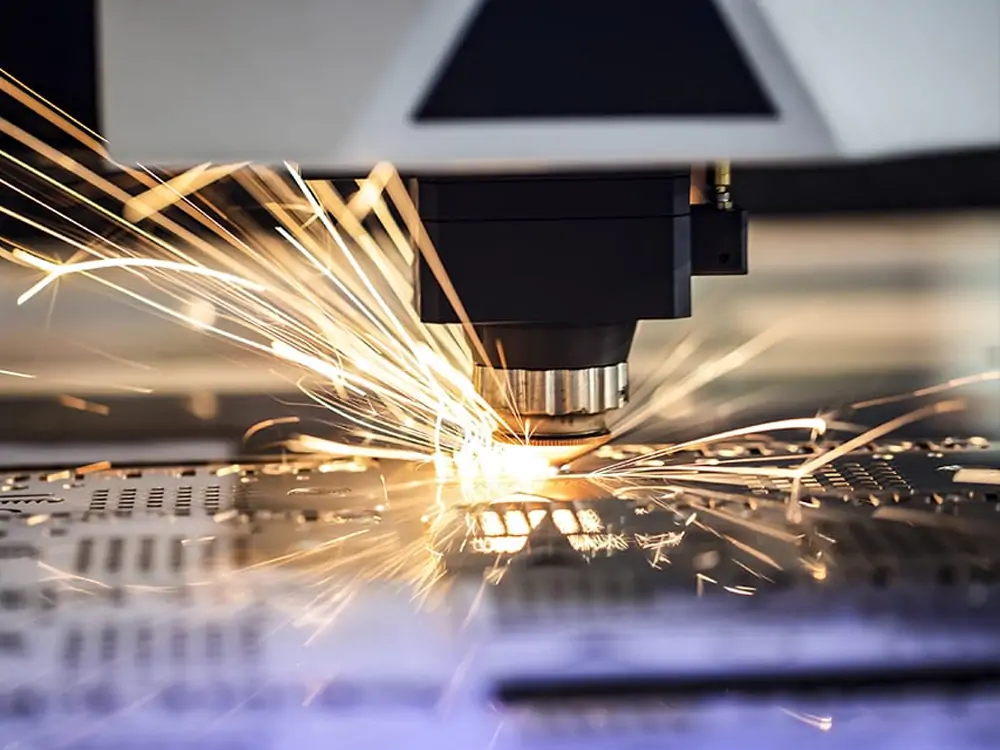
It is a technology that cuts through material using concentrated light to rise temperature to the level of melting or vaporization of the material. This process can help you get clean and precise cuts as it is fast, efficient and works well with automation. Whether you’re cutting for projects or production, laser cutting will make your work easier.
How Laser Cutting Works
Beam Generation
The laser source makes a coherent light beam with concentrated energy output for material processing.
Beam Focus
The laser beam is focused to a small spot area by optical systems at the point where it should be cut.
Material Interaction
The focused beam heats the material rapidly, which causes melting, burning or vaporization to create the cut.
Assist Gas
Pressurized gas blows away molten material to maintain cut quality throughout the process.
Related Blogpost: How Does Laser Cutting Work?
Types of Lasers Used
CO2 Lasers
CO2 lasers are used for cutting non-metal materials like wood, acrylic and textiles. They give you smooth, clean cuts and have excellent beam quality. If you want affordable cutting for different types of projects, CO2 lasers are cheaper and get the job done without costing you a lot.
Fiber Lasers
Fiber lasers are perfect if you need to cut metal quickly and efficiently. They have a higher power density that can give you faster speeds and better energy use. They need less maintenance compared to CO₂ lasers, which makes them more reliable and an easy-to-manage tool for your metal cutting projects.
Related Blog post: What Materials Can Fiber Laser Cutting Machines Cut?
Key Components of Laser Cutting
Laser Source
Generates the laser beam through electrical energy conversion and provides the power needed for material cutting.
Optical System
Consists of mirrors and lenses that direct and concentrate the laser beam onto the cutting head with exactness.
Assist Gas
Delivers pressurized gas to the cutting zone which helps remove molten material and prevent oxidation during cutting.
Water Jet Cutting VS Laser Cutting: A Comparative Analysis
1. Cutting Speed and Efficiency
Laser Cutting
Laser cutting is much faster than water jet cutting and operates 3-5 times quicker on similar materials. With automated systems, you can also run the process continuously with very little setup time. This speed makes laser cutting perfect if you want to make large orders.
Water Jet Cutting
Water jet cutting keeps a consistent speed, no matter the thickness of the material (within its range). This means you don’t have to stop often for maintenance or adjustments. If you want trustworthy cutting and better accuracy, a water jet can help you with your projects.

2. Precision and Tolerances
Laser Cutting
Laser cutting can help you get precise results, with tolerances of ±0.003 inches on thin materials. It uses computer-controlled systems to make sure every cut is uniform. This means your edges will be uniform and you’ll achieve repeatable results even in mass production.
Water Jet Cutting
Water jet cutting can help you get accuracy with tolerances of just ±0.001 inches on thick materials. It’s a cold cutting process, so your material doesn’t experience thermal distortion that might affect accuracy. Water jet cutting is helpful when you want high precision without any extra steps, even with complex shapes.
3. Heat-Affected Zones (HAZ)
Laser Cutting
Laser cutting produces heat that can change the properties of the material near the cut edge. This heat-affected zone can cause warping or stress in materials that are sensitive to heat. You will need post-processing steps so you can overcome these issues.
Water Jet Cutting
Water jet cutting doesn’t produce heat, so it avoids heat-affected zones entirely. Your material properties will stay the same, no matter what you’re cutting. This makes water jet cutting helpful for projects where heat-sensitive materials are used for stress-free results.
4. Material Compatibility
Laser Cutting
Laser cutting behaves well on metals, plastics and some organic materials, but has difficulty in reflective surfaces and in extremely thick material (more than 1-2 inches). It also cannot cut tempered glass. If you need to cut any of these materials, laser cutting might not work that well.
Related Blog post: GLE VS QCW: Which Laser Is Better for Silver Cutting?
Water Jet Cutting
Water jet cutting can be used to cut almost any material, such as metals, ceramics, stone, and composites. It can cut thick materials up to 8 inches or more without affecting the quality. You can also use it for tough materials like titanium and Inconel for clean and precise results.
5. Edge Quality and Surface Finish
Laser Cutting
Laser cutting makes smooth edges on thinner materials and needs little or no extra finishing. The edges usually meet surface finish requirements directly from cutting. By maintaining a sharp, consistent beam focus, you can use laser cutting to get clean edges.
Water Jet Cutting
Water jet cutting can make clean and smooth edges without burrs or rough spots. The process reduces the need for secondary finishing. Even for complex shapes or contours, water jet cutting ensures excellent quality and a professional surface finish every time.
6. Operational Costs and Maintenance
Laser Cutting
Laser cutting is cheaper for thin materials because of its high speed. It uses less energy than water jet systems, which reduces the energy costs. With automated operation, you can also reduce labor costs. This makes laser cutting affordable for high-production environments.
Water Jet Cutting
Water jet cutting is expensive because it uses abrasive materials and needs water treatment. Maintenance, such as servicing pumps and replacing nozzles, is also required. If you need versatility and material compatibility, water jet cutting justifies these additional expenses.
Choosing the Right Cutting Method
Material Type
You can use a water jet to cut almost any material. For metals and non-reflective materials under 2 inches thick, a laser is a better option.
Thickness Requirements
For materials that have a thickness of more than 2 inches, you should go for a water jet. Use laser cutting for thinner materials where fast cuts are needed.
Precision Needs
If you need very accurate cuts for precise dimensions, go for a water jet. For standard accuracy, laser cutting works well.
Production Volume
You can choose laser cutting, which can help you with high-volume production. For smaller projects where detailed and careful work is needed, a water jet is better.
Budget Considerations
Consider the upfront setup costs and operating expenses to decide whether water jet or laser cutting fits your budget.
Water Jet Cutting VS Laser Cutting: Advantages and Disadvantages
Advantages
| Water Jet Cutting | Laser Cutting |
|---|---|
| No heat-affected zone | High cutting speeds |
| Cuts any material | Low operating costs |
| Superior edge quality | Excellent automation |
| Handles thick materials | Smooth edges on thin materials |
Disadvantages
| Water Jet Cutting | Laser Cutting |
|---|---|
| Slower cutting speeds | Makes heat-affected zones |
| Higher operating costs | Material limitations |
| Requires water treatment | Thickness restrictions |
| Limited automation | Reflective surface issues |
Water Jet Cutting VS Laser Cutting: Applications in Various Industries
| Industry | Water Jet Applications | Laser Applications |
|---|---|---|
| Aerospace | · Titanium components · Composite parts |
· Aluminum brackets · Thin sheet parts |
| Automotive | · Thick steel parts · Gaskets |
· Body panels · Brackets · Trim pieces |
| Medical | · Surgical instruments · Implants |
· Medical device housing · Thin components |
| Architecture | · Stone cutting · Thick metal panels |
· Decorative elements · Signage |
| Electronics | · Heat-sensitive components | · Circuit boards · Enclosures |
Conclusion
Water jet cutting and laser cutting are both practical and efficient in meeting various manufacturing requirements. Water jet cutting is helpful when you need better precision, cut thick material, and no heat effects. Laser cutting is faster, can be automated, and is cost-effective for thinner materials.
Are you ready to start your next cutting project? Contact HANTENCNC today for our expert guidance and competitive quotes on all types of cutting services.
FAQs
What materials can you cut with a water jet?
Water jet cutters can cut any material such as metals, ceramics, stone, glass, composites and even food products without thickness limitations.
How does laser cutting compare to plasma cutting?
Laser cutting can help you with higher precision and better edge quality than plasma cutting. It might cost more and work best on thinner materials.
Can water jet cutting be used for thick metals?
Yes. Water jet cutting is better at cutting thick metals up to 8+ inches thick with excellent precision and edge quality.
What is the maximum thickness that laser cutting can handle?
Laser cutting can handle materials up to 1-2 inches thick effectively, though this varies by material type and laser power.