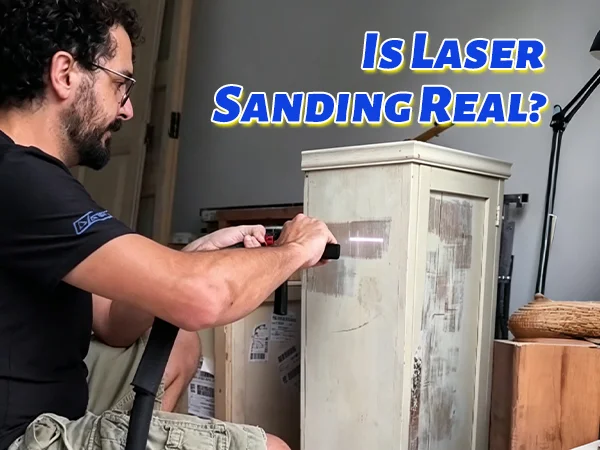
Is Laser Sanding Real?

Yes, laser sanding is real. And yes, it can do part of the job that sanding does, just not all of it.
 
At HANTENCNC, we manufacture laser cleaning machines that are changing how workshops and restoration professionals prepare surfaces, particularly for wood furniture, delicate antiques, and carved details.
 
This article clarifies the terminology confusion: what laser sanding actually is, what parts of the sanding job it can handle, what it can’t, and when to keep your sandpaper handy.
 
This article focuses on wood, since that’s where “laser sanding” is most often discussed. But both sanding and laser cleaning are also used on metal, stone, and other surfaces.
is laser sanding real

1. What does Sanding do?

Traditional sanding is typically done with sandpaper or an electric sander. Both work the same way, through physical abrasion, and both can do two things to wood:

First, they can remove paint, varnish, stain, and dirt from the wood surface.

Second, they can alter the wood itself, including levelling, rounding edges, and exposing fresh fibres.

What does sanding do to wood? Basically, it can do two things as follows:

First, sanding can remove paint, varnish, stain, and dirt from the wood surface.

Second, sanding can alter the wood itself, such as levelling, rounding edges, and exposing fresh fibres.

what does sander do

2. What does Laser Sanding do?

When laser sanding a wood surface, the laser beam first hits the surface, and then the coating absorbs the heat; within nanoseconds, laser sanding can peel off unwanted layers, including paint, rust, or dirt, while leaving the wood beneath untouched.

So laser sanding can do part of what a sander does, but not all of it.

In short, laser sanding can remove paint, varnish, stain, and dirt from the wood surface.

But laser sanding cannot alter the wood itself. It cannot level, round edges, or expose fresh fibres.

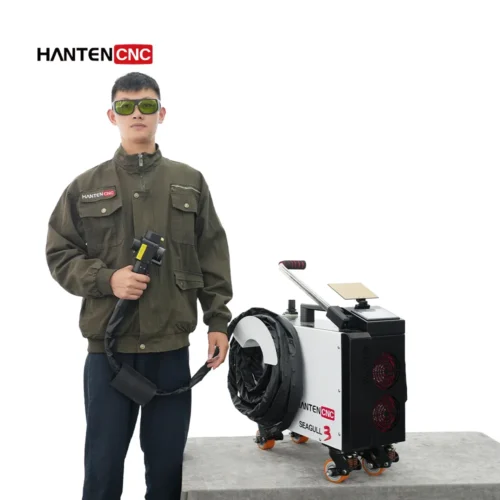
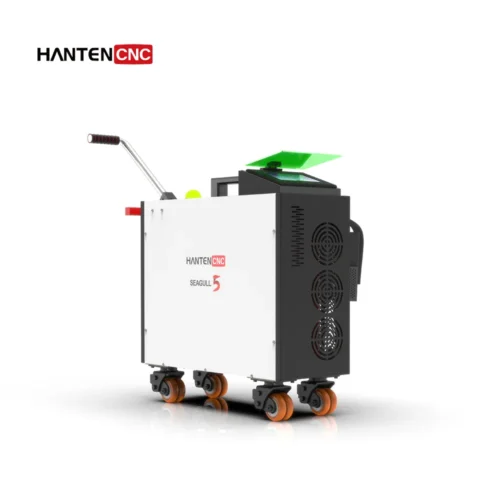
HANTENCNC’s pulsed laser cleaning machines, like the SEAGULL series, are designed for this purpose. They deliver energy in ultra-short bursts, vaporizing coatings faster than heat can reach the substrate below.

3. What's the Difference between the Sanding and Laser Sanding?

The two serve different purposes on wood.

Sanding is used for both preparing new wood and renovating old wood. On new lumber, it shapes and smooths the surface before finishing. On old furniture, it strips the old finish and reworks the wood underneath.
 
Laser sanding is used only for renovating the surface of old wood. It removes old paint, varnish, and grime from aged surfaces, but it does not prepare new wood or alter the wood itself.
 
In short:
  • Sanding → new wood preparation + old wood renovation
  • Laser sanding → old wood surface renovation only

4. Why Laser Sanding Exists?

The term laser sanding exists because sanding and laser sanding both aim to clean up a surface before the next step.
 
But the mechanisms of sanding and laser sanding are different:
  • Traditional sanding uses physical friction, where abrasive particles scrape off the material.
  • Laser sanding is physical laser ablation: Photothermal vaporization, where light energy turns material into gas.
In fact, laser sanding isn’t chemical stripping, and it isn’t sanding either. It’s a third process: photothermal ablation. The coating absorbs photon energy and vaporizes: no chemicals, no abrasion, no residue, no drying time, and no hazardous waste.

5. Where Laser Sanding Works Best?

Laser ablation is especially useful in situations where traditional sanding either cannot work or does not work well.

1. Ornate, Carved Furniture
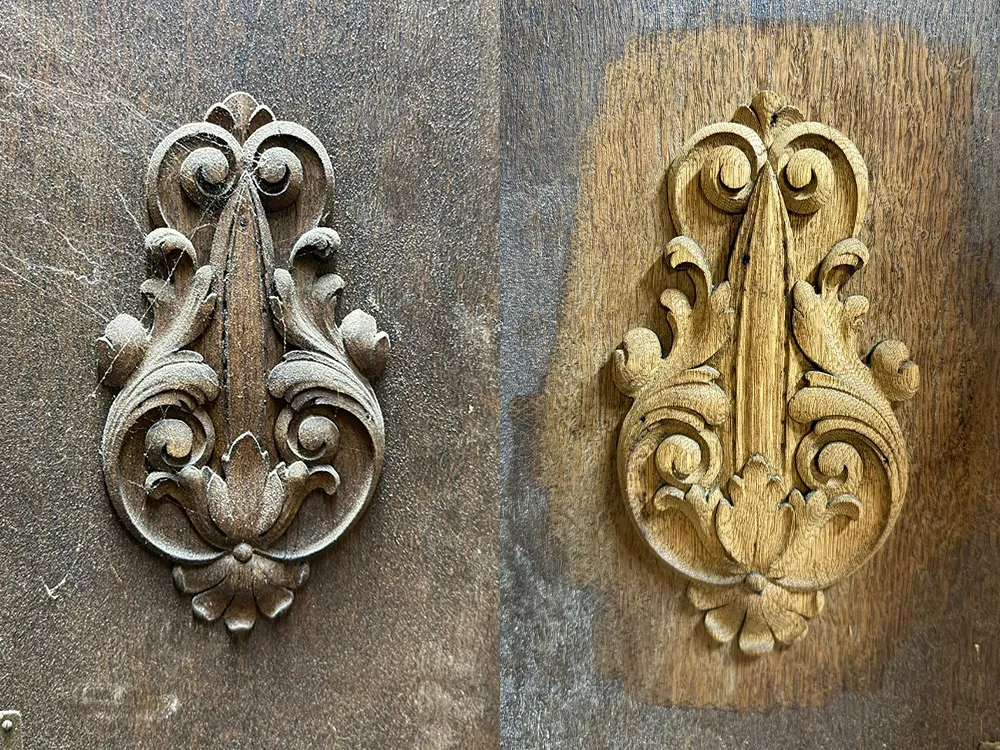
Traditional sanding relies on abrasives making physical contact with the surface. This means it can only handle flat or simply curved surfaces. When you encounter carvings, grooves, or fretwork, sandpaper and electric sanders fall short. They either cannot reach the recesses or they round off the edges and details you want to preserve.
 
Imagine an old wooden door with detailed carvings and many layers of paint. Using sandpaper risks losing the fine details. Chemical strippers often leave residue and can damage the wood. A laser removes the paint while preserving every edge and groove of the carving.
 
A HANTENCNC customer in Belgium used a 1000W pulsed laser cleaning machine to remove old paint from wooden stools and furniture. This method removed the paint completely, protected the wood underneath, and left the surfaces ready for repainting and refinishing.
 
Laser Paint Stripper Price 2026

2. Antique Restoration

Old coatings and grime must be removed, but the underlying material cannot be damaged. Laser technology is precise at the micron level. It takes away only what needs to be removed and leaves the rest untouched.
 

A customer in Thailand used a HANTENCNC 200W laser restoration machine to remove copper oxide from the surfaces of an antique clock, restoring it to original condition with zero damage to the clock’s surface.
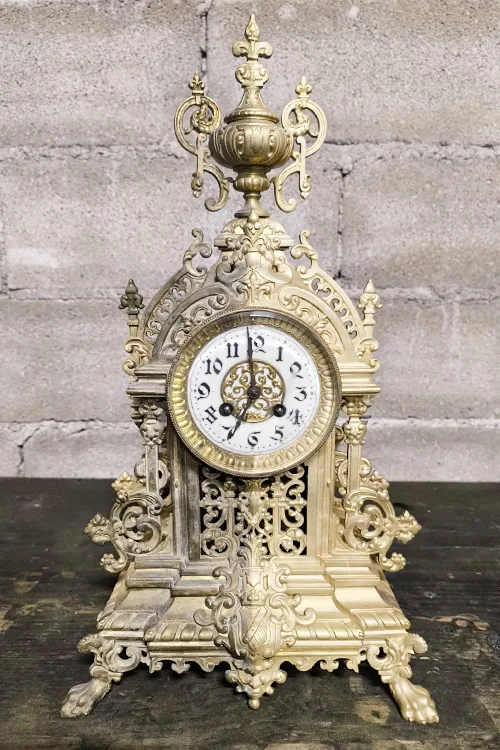
copper oxide laser cleaning with a 200w 2mJ laser cleaning machine

3. Building Exterior Renovation

Laser cleaning is often used for renovating building exteriors, especially when restoring historic buildings. It removes dust, graffiti, weathered deposits, and biological stains from stone walls, carvings, and other parts, all while preserving the original architectural features.
 
Pulse Laser Cleaning on Stone Wall – Before vs After
300W 5mj 500W 5mj laser cleaning dirt on stone

A customer in Canada used a HANTENCNC 300W laser sanding machine to remove dirt and coating from the surfaces of an antique building, restoring it to its original condition with zero damage to the stone’s surface.

4. Complex or Curved Surfaces

Grilles and curved surfaces are areas that sandpaper cannot reach. A focused laser beam can clean any spot, no matter the shape.
 

France: A customer used a 1000W laser with 15mJ pulse energy to remove thick rust and oxidation layers from an old car body — stripping the surface down to bare metal without damaging the underlying steel.

1000w 15mj laser rust removal - - HANTENCNC

6. Final Summary

Laser sanding is real; it isn’t sanding. Laser sanding is laser cleaning, or laser ablation, a photothermal process that strips coatings with light instead of abrasion. On wood, it can handle half the sanding job: removing paint, varnish, stain, and grime.
 
Laser sanding can handle some tasks that regular sanding does, but not everything. It cannot shape the wood, level surfaces, round edges, or reveal fresh wood fibers.
 
At HANTENCNC, we have over 20 years of experience making pulsed laser cleaning machines for workshops and restoration experts. If you need to strip a carved antique door or get an old surface ready for refinishing, our SEAGULL series gives you the precision and control you need.
 
If you are unsure which laser sander machine is best for your project, reach out to our team. We will help you find the right model for your needs.