
Selecting the right laser paint stripper is not as simple as choosing a power rating or a model name. Paint removal involves different substrates, different coating types, and very different cleaning outcomes.
At HANTENCNC, we work with customers in automotive repair, shipbuilding, aerospace maintenance, woodworking, and industrial refurbishment—each with their own challenges.
This guide will walk you through choosing the most suitable HANTENCNC system for your job. It’s written to be practical, straightforward, and focused on real-world use cases.
1. Start With the Substrate: Metal or Non-Metal?
Laser paint stripping works by delivering high-energy pulses that instantly vaporize the coating without damaging the surface underneath.
But the correct laser configuration depends heavily on what the underlying material is.
1.1 Metal substrates
- Automotive body panels (galvanized steel, coated aluminum)
- Small civil aircraft skins (aerospace aluminum)
- Ship hulls (thick carbon-steel plates with multi-layer anti-corrosion paint)
- Industrial machinery and equipment (carbon steel, 45# steel)
1.2 Non-metal substrates
- Wood (latex paint, PU coatings, wood stain, epoxy varnish)
- Composite materials (carbon fiber, glass fiber)
Note: Most composite surfaces require femtosecond or picosecond lasers for safe removal, and are not recommended for nanosecond pulsed cleaning.
Once you know your substrate, choosing the right laser becomes much easier.
2. For Metal Surfaces: Match the Application to the Right Model
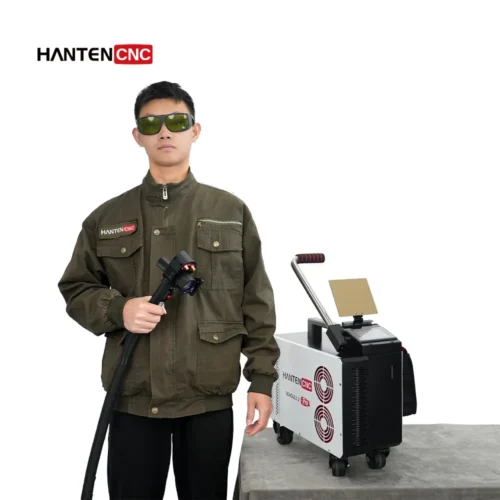
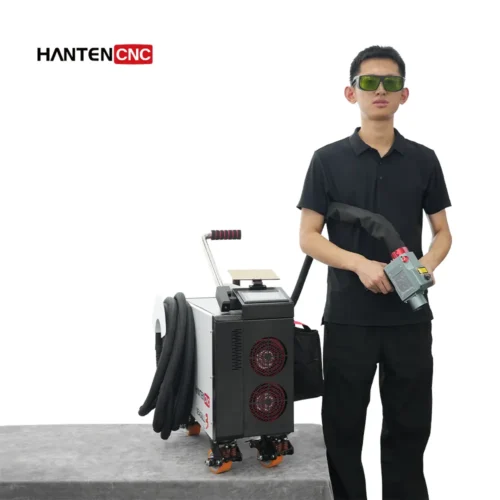
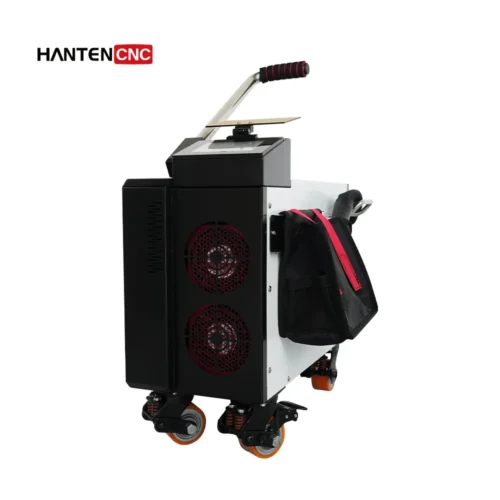
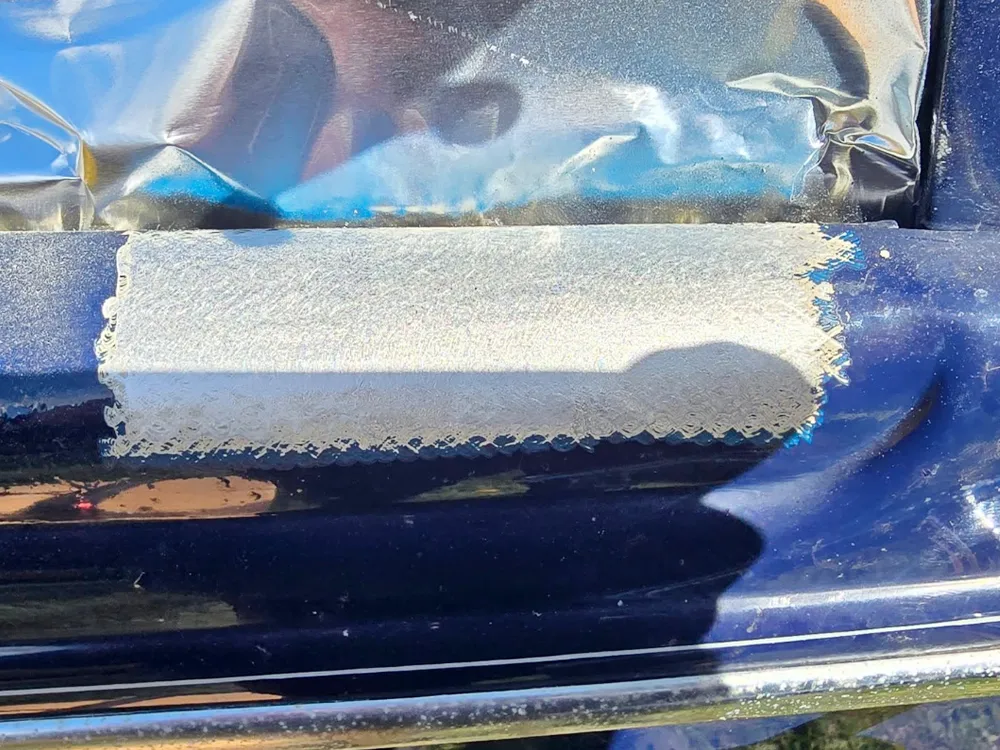
Automotive body panels are thin and sensitive to heat. They require pulsed cleaning with stable energy delivery and minimal thermal impact. HANTENCNC recommends you choose the following models:

2.1 Why these models work well?
SEAGULL2™ and SEAGULL3™ use flat-top beam profiles, meaning energy is evenly distributed across the spot. This avoids “hot zones” that can damage the metal.
What’s more, the SEAGULL3™ is up to 45% more efficient, ideal for workshops that need faster throughput.
Lens selection matters
You also need the right focusing lens to control the spot size and achieve the desired energy density. For example, pairing a multimode laser with an F160 lens usually performs worse than using an F210 lens. A shorter focal length creates a smaller, more concentrated spot, which prevents the flat-top beam from showing its advantages and can even cause damage to the substrate.
2.2 Ship Hull Coatings (1–2 mm anti-corrosion layers)
Ship coatings are thick, hard, and usually applied over steel plates many millimeters thick. Here, efficiency—not delicacy—is the priority. HANTENCNC recommends you choose the following models:
-
1000W single-mode continuous laser
-
2000W / 15 mJ high-energy systems
Why higher power is needed?
-
Marine coatings are often repainted repeatedly, leading to 1–2 mm total thickness
-
These layers require strong thermal loads to break through
-
Substrate damage is rarely a concern
-
Shipyards often want a slightly rough surface after cleaning, to help the next paint layer adhere
Typical laser impact on the steel can be controlled within 50–70 μm, well within ship maintenance tolerances.

2.3 Aircraft Skin Paint Removal (thin aerospace aluminum)
Aircraft skins can be thinner than 1 mm. Overheating them is not an option.
Recommended approach
-
Low-power pulsed laser + vision-guided robotic cleaning
Why is this method used?
-
The skin can deform with excessive heat
-
The surface must stay smooth for aerodynamic reasons
-
A 3D scanning system maps the curvature first
-
The robot then moves precisely to clean every area while holding energy levels within a tight safe range
This is one of the few areas where “more power” is actually dangerous.
3. For Wood Surfaces: Choose Carefully Based on Paint Type
Laser cleaning on wood is very different from metal. Different coatings react differently to heat, and wood can burn or discolor if the process is not controlled.
3.1 Latex Paint (common indoor/outdoor use)
Latex paint is relatively easy to remove. HANTENCNC recommends you choose the SEAGULL2™ and SEAGULL3™.
SEAGULL2™ and SEAGULL3™ remove the paint cleanly without damaging the wood grain, as long as the operator keeps the beam moving smoothly.
3.2 Water-Based Polyurethane
This coating is very popular for outdoor furniture, indoor furniture, and wooden structures.
Performance notes
-
The SEAGULL2™ can remove water-based PU cleanly
-
The SEAGULL3™ improves efficiency by about 45%
-
Up to 100–150 μm of coating can be removed without scorching
This makes pulsed laser cleaning a great fit for large wooden railings, surfaces, and decorative pieces.

3.3 Oil-Based PU and Epoxy Resin
These finishes often appear on:
-
Hardwood floors
-
High-end furniture
-
Marine docks
-
Heavy-duty wooden structures
Important to know
Laser cleaning will remove the surface layer, but a sticky gel-like residue remains. This comes from partially melted polymer binders.
How to deal with the residue
-
Light sanding works for thin residues
-
For thicker layers, simply heating with a hair dryer or heat gun softens the residue, making it easy to wipe or brush away
This is normal for oil-based coatings and does not indicate poor cleaning performance.

4. Graffiti and Exterior Wall Coatings
Graffiti paint typically involves acrylic or polypropylene-based pigments.
Recommended model
-
Multi-mode pulsed laser
Reason
-
Multi-mode delivers gentler energy distribution for stone, concrete, or painted walls
-
Single-mode lasers can remove graffiti, but may leave marks on the surface below
For cleaning public facilities or building exteriors, multi-mode is generally the safer choice.

5. A Practical Selection Table
| Application | Recommended Model | Notes |
|---|---|---|
| Car panels | SEAGULL2™ / SEAGULL2™ (5–15 mJ), F=210 lens | Low thermal impact required |
| Ship hulls | 1000W / 2000W high-power continuous laser paint stripper | Handles 1–2 mm heavy coatings |
| Aircraft skin | Low-power + robotic system | Avoid heat deformation |
| Water-based paint on wood | SEAGULL2™ / SEAGULL3™ | Clean removal without burn marks |
| PU/Epoxy on wood | SEAGULL3™ | Gel residue requires post-steps |
| Graffiti walls | Multi-mode pulsed laser | Lower substrate damage |
Conclusion
Choosing the right laser paint stripper isn’t about following a generic power chart—it’s about understanding your substrate, your coating, and the cleaning result you expect.
HANTENCNC has tested dozens of materials and paint types and maintains a dedicated parameter library for real-world applications. Whether you’re cleaning automotive panels, ship hulls, aircraft parts, or wooden surfaces, there is a precise configuration that fits your needs.
If you already have photos of your material, you can share them with our engineers—we’ll help you identify the exact model, pulse energy, and lens setup for the job.