
Laser welding can be done with or without wire. The use of welding wire typically makes the process even more flexible and simple. You can utilize a wire feeder along with a laser welder to weld a wide range of metal parts, including delicate components.
When it comes to wire feeding laser welding, the critical part is the setup. You must carefully align the wire with the laser beam. The feeding angle, position, and wire size must match the weld requirements. When you do it correctly, you can ensure smooth melting, stable welds, and clean results.
What is a Wire Feeder for Laser Welding?
A laser welding wire feeder is an essential device for improved laser welding. It pushes the wire filler metal into the laser welding machine. Typically, a wire feeder feeds it smoothly into the weld area to fill gaps and create strong joints. The laser then melts the wire to form a bond with different metals.
Using a good wire feeder improves overall weld quality and speeds up the process. It typically comes with a motor, rollers, and speed control. Based on wire and welding material, you can control everything. It makes the welding process easier and more stable.

How Does a Wire Feeder Work?
Generally, a wire feeder works like a dispenser of the filler metal. It’s a controlled dispenser. Inside the machine, a motor roller grips the wire spool. Thereafter, the roller spins the wire to pull it off the wire spool and push it through a guide tube. Thus, it goes into the tube and leads to the laser welding head.
Here, the key factor is precise speed control. You have to feed the wire at a specific rate. The feeding rate must match the machine’s power and the welding torch’s speed. When heated by the intense laser beam, the wire melts instantly. This liquid form then fills the gap, ensuring a strong, consistent, and defect-free final weld.

Why Do You Need a Wire Feeder for Laser Welding?
While you can weld metal parts directly, you might wonder why you need a wire feeder. Some of the common reasons why you need a wire feeder or laser welding are as follows:
Filling Material
The purpose of using a wire feeder is to add filler metal to the weld joint. It typically fills the gaps between the gaps of the material being welded. The added material enhances the joint’s quality and makes it stronger. It’s a necessary step if the metal contains a large gap.
Safer for Delicate Components
Using filler wire reduces the total heat input during operation. This heat reduction is safer for delicate and heat-sensitive materials. As a result, the base material will be intact. Less heat production means a lower chance of heat distortion or warping. Also, the wire helps maintain the original shape of thin parts.
Welding Depth Control
The filler material allows control of the depth and shape of the weld pool. You can control the entire process by maintaining precise feeding. This way, you can manage both bead size and penetration. This control prevents issues such as undercutting or insufficient material.
Increased Production Efficiency
To increase the material deposition rate, wire feeding is a reliable option. It lets you weld more materials in less time. This feature also speeds up the welding process for large-scale production. Here, the automotive parts play a significant role. They improve productivity, enhancing production efficiency.
Welding Speed Control
As mentioned before, the wire feed depends heavily on the power level and weld speed. It gives you overall smooth control over the entire process. By adjusting the wire feed, you can fine-tune the welding speed. It leads to better throughput and more stable, high-quality welds.

Dual Wire Feeder vs Single Wire Feeder
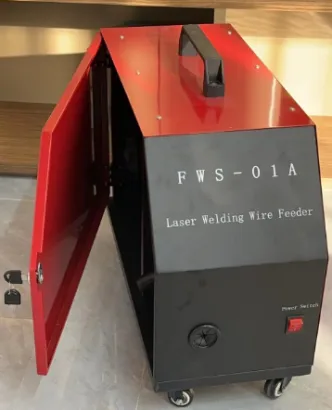
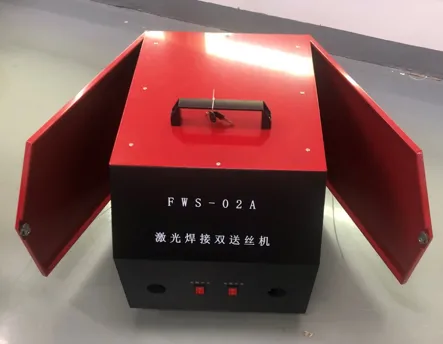
Both dual- and single-wire feeders are widely used in laser welding. Each has its own benefits and limitations.
Control Mode
A dual wire feeding system typically gives you more control. You can feed two wires at different speeds or directions. This way, you can make better adjustments to heat input and filler volume.
Single wire feeders, on the other hand, are much simpler and easier to control. It runs one wire at a fixed speed.
Welding Process
A dual feeder uses two separate wires simultaneously. It often uses the hot wire technique for both wire materials. This way, it increases the amount of filler material deposition.
On the other hand, a single-wire feeder uses a single wire source. It typically uses the cold wire technique. This process is relatively simple and requires a simpler torch setup.
Cost
Dual feeders are comparatively expensive. Their setup uses high-mechanical components and requires two spools for wires.
In contrast, single-wire feed welders are less costly. They have a simple design, setup, and minimal maintenance needs.
Applications
Dual wire feeders are suitable for thick plates and filling wide gaps. Besides, it is used in large-scale automotive production. Often, people use it to produce heavy machinery items.
A single wire is ideal for thin to medium-thick materials. Thus, it finds heavy application in demanding sectors such as medical devices, jewelry, and minor part assembly. It is the best choice when you need a simple, accurate bead.
Types of Wire Feeder Wire Used in Laser Welding
Various types of wire are used in laser welding. Among them, the one you select depends on the material you want to be welded. One of the most common wires is made of stainless steel. It’s an excellent option that can resist corrosion and has high strength. It is suitable for welding stainless steel, aluminum, iron alloy, and other materials.
Another standard alloy wire is aluminum. It can withstand high temperatures and rust easily, and is suitable for the automotive and electronic sectors. Other wire alloys include titanium, nickel, and copper wires. Based on your requirements, select one for optimal results.
Looking for a Laser Welding Machine?
If you are looking for an efficient, stable, and budget-friendly laser welder, HantenCNC could be ideal. At our factory, we produce a wide range of laser welders, including models with or without wire feeders. HantenCNC is an in-house production facility; we create and assemble most of the parts. Thus, we can offer the highest level of customization. Feel free to reach out to us if you have any questions.