
We are all more or less familiar with welding. In factories or even in small workshops in local markets, we can see its uses. However, there are various types of welding methods. Fiber laser welding is one of the most common types.
Fiber laser welding is widely used in modern manufacturing. It is fast, precise, and easy to control. Many industries, including metal fabrication, widely use it to achieve better welding results. To better understand this technology, you must know how it works and its benefits. With it, you can increase both production efficiency and the quality of your work.
This article will highlight everything about fiber laser welding. Starting from its core working principle, its types, benefits, and limitations will be mentioned. You can use this information to compare the fiber optic laser welder with other technologies.
What is Fiber Laser Welding?
Fiber laser welding is a modern joining process for metals using high-power laser energy. It fuses metal using light energy delivered through an optical fiber. This optical fiber produces a narrow, highly focused beam. It allows joining parts with high accuracy and minimal heat distortion. This way, the heat-affected zone (HAZ) remains very small, with clean welding.
A fiber-optic laser welder is much faster than traditional methods like TIG or MIG. Many industries rely on this technology for its high speed and accuracy. Common sectors include automotive, electronics, aerospace, and medical. It is essential for EVs, battery components, and thin engine parts. Besides, you can create a wide range of surgical tools or implants using it.
How Does a Fiber Laser Welding Machine Work?
A fiber laser welding machine works by converting electrical energy into a high-power beam of light. The process generally begins in the laser source. Inside it, the electrical energy powers a series of diodes. These diodes provide light into the optical fiber. Typically, these fibers are doped with a rare-earth metal such as ytterbium. Thus, the fiber amplifies light into a powerful, coherent light beam.
Once the machine generates a laser, it travels through an optical fiber cable. This flexible cable serves as a secure conduit for the light, allowing the beam to pass smoothly. The tube makes sure it passes without losing power. It carries the laser to the laser head, which then controls the automated system that moves the welding material. This flexibility makes fiber lasers much more versatile than older machines.
Inside the welding head, high-quality lenses help to focus light into a tiny, intense spot. When the laser strikes metal, the portion rapidly heats to the metal’s melting point. Thus, the metal surface melts, creating a molten pool. In particular cases, it creates small holes, known as “keyholes”, that allow heat to reach deep into the joint. The molten metal flows and joins the parts together.
As the laser moves forward, the metal pool cools down and solidifies. Rapid cooling results in a strong, clean, and seam-free weld. To protect the weld from air, shielding gas such as argon is sometimes sprayed over the weld area. It protects metals from oxidation, keeping them clean and durable in the long term.
Different Types of Fiber Laser Welding Machines
At HantenCNC, you will find various types of fiber laser welding machines. Each of them is specially designed for a specific use. Some are portable, while others are fixed and fully automated. To choose the right option, you must understand the options. You know their pros and cons and how your projects can benefit from them.
Handheld Laser Welding Machines
Handheld fiber laser welding machines are among the most popular for small- to mid-sized shops. They offer a manual welding gun for the process. This gun is typically connected with a flexible fiber cable. Its laser beam quickly melts the metal, forming a strong joint. These machines are highly adaptable and portable. You can easily move it, and it does not require complex programming to operate. A beginner can easily learn to create complex shape welding in just a few hours.
Using handheld fiber laser welders, you can weld cabinets, kitchenware, and custom frames. They even support welding angle edges. Also, these machines are ideal for repair work. The main benefit is its low cost and support for welding various shapes. However, the consistency highly relies on the operator’s hand.

Laser Welding Workstations
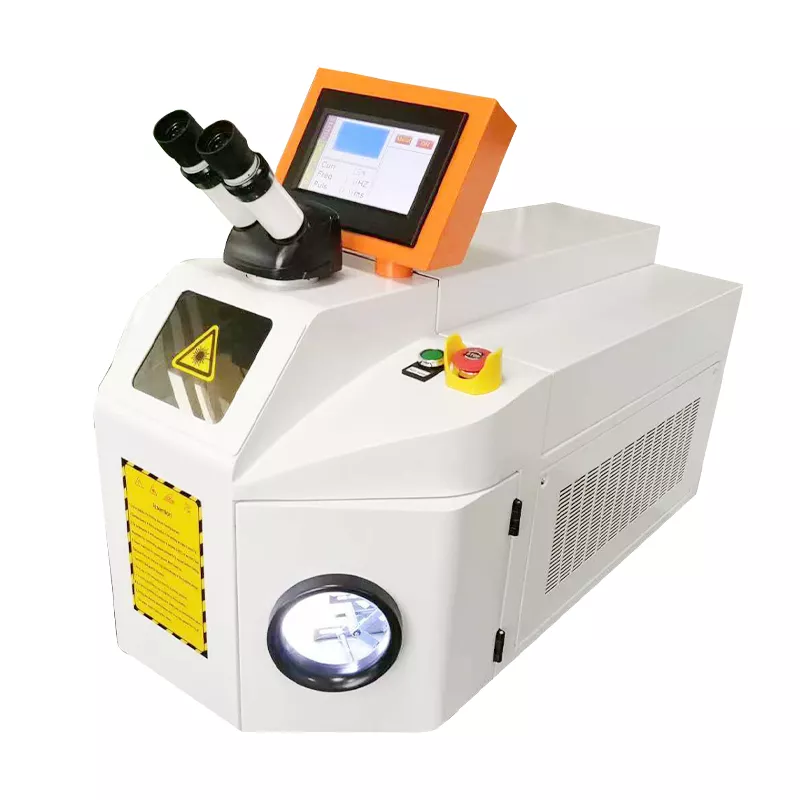
Laser welding workstations are fixed systems designed for precision. The laser head is generally set in specific areas. It only moves on the internal track. This practice delivers stable, repeatable results across every weld. The operator places the workpiece into the worktable inside the machine and closes the door. This system keeps the laser light safely contained. For this reason, the machine is a safe option for busy factory floors.
These machines are ideal for small, intricate parts like jewelry or medical tools. They offer higher accuracy than handheld laser welders. The overall setup is very stable, so that you will get identical welds on every part. It plays a crucial role in small- to medium-range production, where precision is a top priority.
Automated Laser Welding Machines
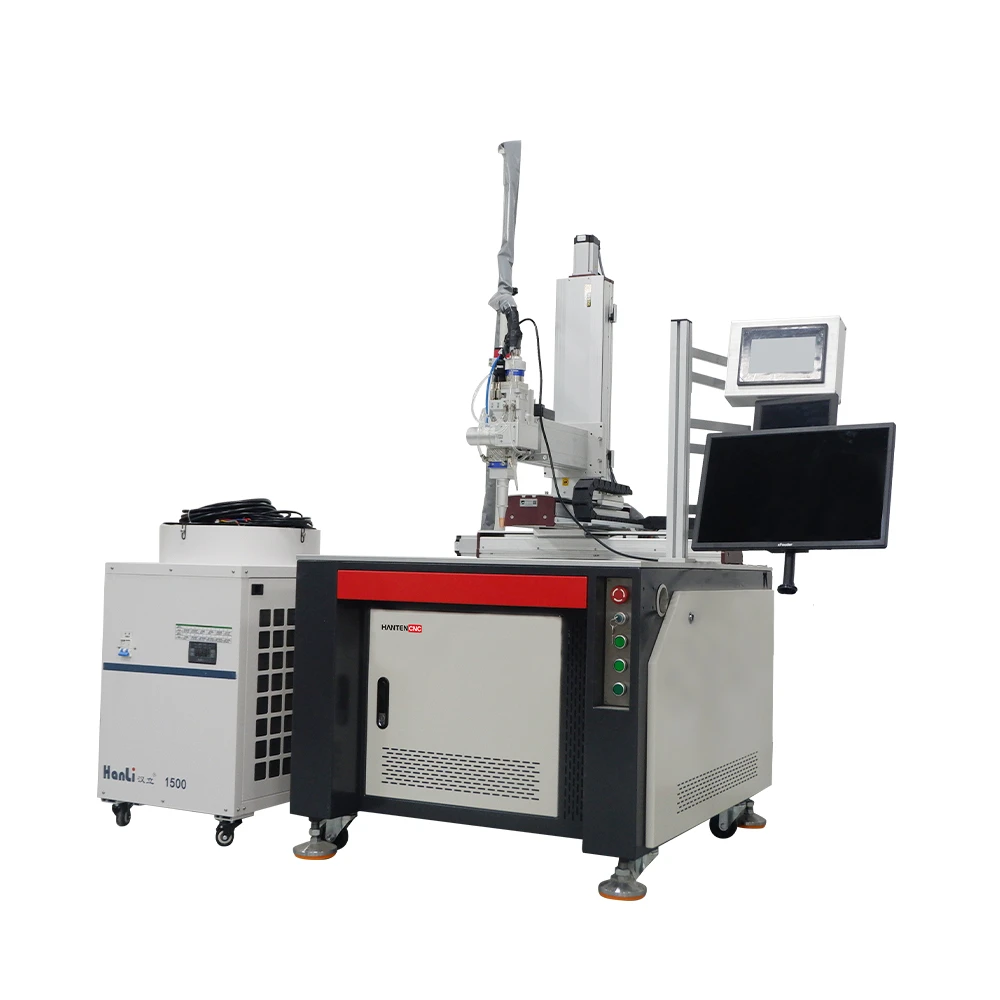
Automated machines are generally built for mass production. It uses a CNC or programmed control system for welding. The laser head moves along the intended path without causing any flaws. Once you set the machine, it repeats the task perfectly. The entire process runs without any manual work. It reduces human effort while enhancing efficiency.
These machines are perfect for repetitive tasks. Yet, it is ideal for flat sheets or simple geometric parts. Companies utilize them to reduce labor costs and material waste. Automated machines are much faster than human-controlled machines. Although the initial setup may take a long time, long-term savings are massive.
Robot-Assisted Laser Welding Machines
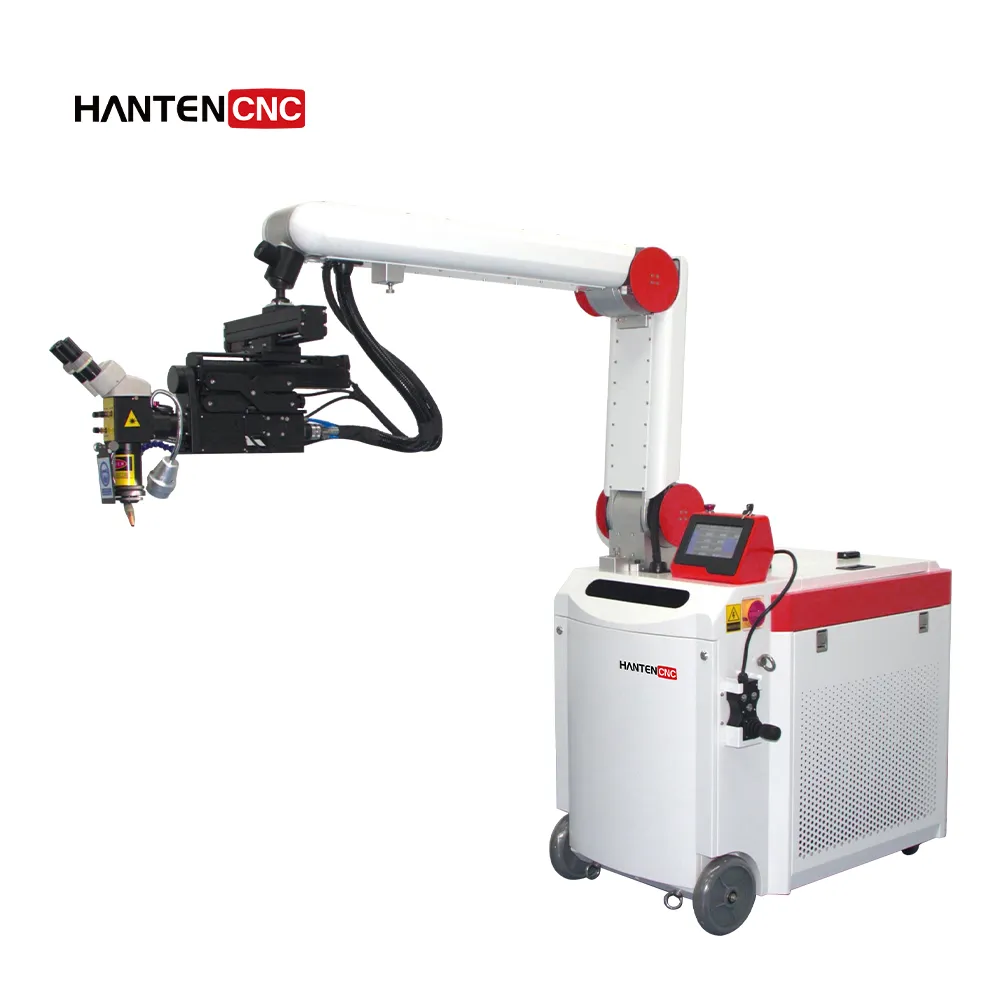
Robot-assisted systems use a fiber laser head mounted on a multi-axis robotic arm. These arms can move in six different dimensions easily. It allows them to weld complex 3D shapes. They can reach inside car frames or curved pipe edges with ease. This system is now considered the most advanced welding technology available today.
These machines are very common in the automotive and aerospace industries. Typically, they ensure the highest level of consistency and speed. A single robot can replace multiple manual welding machines. However, these machines require a high investment. But it offers unmatched versatility. You can program it to handle various product types as your business grows.
Fiber Laser Welding VS Other Traditional Welding
In general, there are various types of metal welding methods. Some of the common ones include MIG, TIG, FCAW, and SMAW. Laser welding is the latest technology to enter this market. Let’s check out the benefits and limitations of fiber laser welding compared to traditional methods.
Benefits Compared to Others
As mentioned earlier, fiber laser welding machines are faster than TIG or MIG welding. It produces lower heat-affected zones (HAZ). It means the metal remains intact and does not bend or warp from the intense heat. Besides, the process is exact, producing clean, perfect seams. Often, you do not need post-processing or polishing for the weld. As a result, it saves both time and labor costs.
These machines are also very energy efficient. It does not need as much electric energy as a CO2 laser does. Maintenance is also low because there is no moving part inside the laser source.
Limitations Compared to Others
The biggest drawback is the initial cost. These machines are more expensive to buy than traditional ones. Precision is also a double-edged sword. The parts need to fit together properly since the beam is so small. If there are any gaps between joints, the laser cannot properly bridge them. It requires high-quality cutting and prep work.
Welding reflective metals like copper, brass, and aluminum is also challenging. But modern fiber lasers are capable in this case. Safety is also another concern for fiber lasers. The light is invisible and can cause blindness. So, be careful and stay in a protected area wearing safety goggles.
Fiber Laser Welding Applications
Fiber lasers are vital in the automotive industry. You can work on the car body parts, the battery, and many other systems. Medical sectors rely on it for tiny devices such as needles, pacemakers, and surgical tools that require exact precision. In the electronics industry, it is used to join small, sensitive components in smartphones. Aerospace sectors use it to produce light parts for airplanes and satellites. It has a wide range of applications in almost every industry worldwide.

Summary
Fiber laser welding is a modern and relatively efficient welding method. People widely use it in various industries. A fiber laser welding machine typically offers high speed, strong welds, and precise control. It works great for both small and large factories.
Compared to other methods, fiber laser welding produces clean welds with less heat distortion. Regarding the fiber laser welding machine, there are several types. You can choose from manual, automated, or robot-assisted devices.
For different types of laser welding machines, HantenCNC is the right place for you. If you have any questions, feel free to reach out to our customer support team.