Welding is a common method for joining metal parts and is widely used in metal fabrication industries. In real production, metal parts come in many shapes, sizes, and angles. So, the weld seam is rarely the same. It may be flat, overhead, horizontal, or mixed. Because of these variants, it’s not practical to use the same welding technique. That’s why welding positions matter so much. This article discusses all six types of welding positions. Find out more about their main features, how they’re usually used, and their limits. By understanding them, you will be able to pick the best process for your job.
Understanding Different Welding Positions
Welding positions typically define how a weld is performed in relation to gravity and the workpiece. These positions help you control the weld pool. Besides, following these standards also improves joint strength and maintains consistent quality. They also affect welding speed, safety, and final look.
Traditional welding heavily depends on correct weld positioning. It helps prevent flaws like sagging, uneven entry, or excessive spatter. The same principle generally applies to laser welding as well. Although it is more accurate, the welding position is still crucial. When welding in optimal positions, the energy supply is stable, and the weld seams are clean.
Every year, we see modernization in metal fabrication industries. The need for more accurate and stronger weld joints drives this development. One of these is the welding position that solves various real production problems. Traditionally, people performed welding on flat surfaces. Over time, structures became larger and more complex. People needed welds on walls, frames, and pipelines. It eventually led to the development of various welding techniques.
Each position handles specific gravity, access limits, and joint orientation. There are two primary types of welding positions: fillet and groove. Each type is further divided into flat, horizontal, overhead, and pipe positions.
Fillet Welding (F)
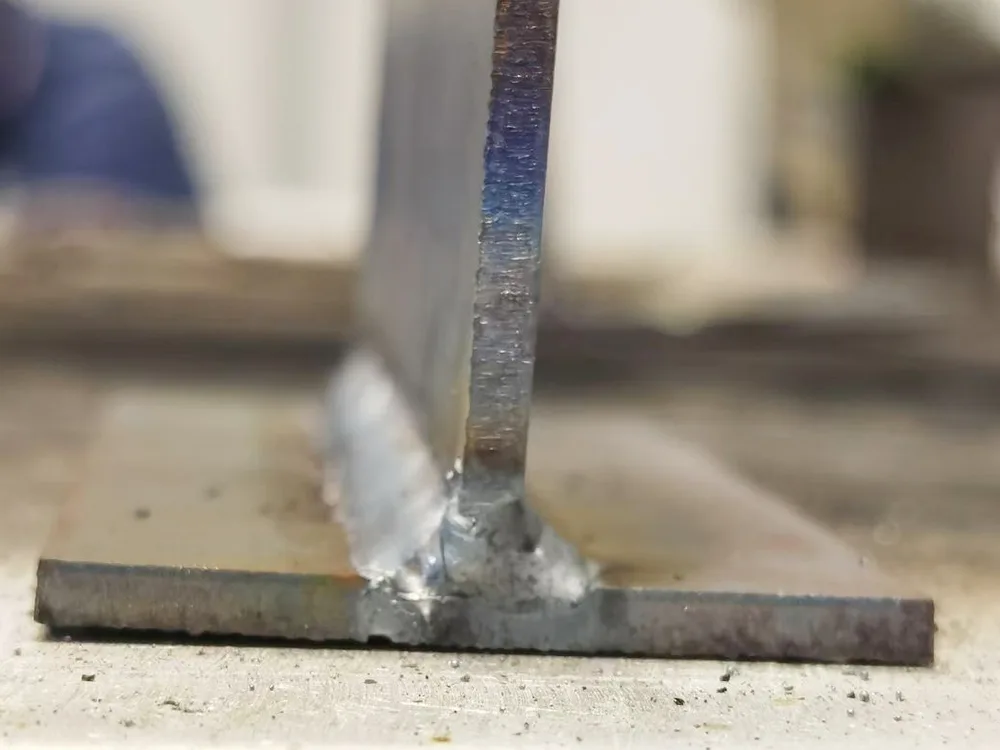
Fillet welding is ideal for metal parts joined at an angle. Typical examples include T-joints, lap joints, or corner joints. Fillet welds are designated with an F, such as 1F, 2F, 3F, and 4F.
Fillet welding is the easiest welding position. However, horizontal and vertical fillet welding needs better heat control. Overhead fillet welding is more challenging, though, and requires skilled operators or automation. It is ideal for frames, brackets, and general fabrication work.
Groove Welding (G)
Groove welding, on the other hand, is ideal for joining two metal parts edge-to-edge. Before you weld, create a groove between the parts to allow deeper weld penetration.
Groove welding can be performed in various positions, from 1G to 6G. Flat and horizontal groove welds are common in plate fabrication. In contrast, vertical and overhead groove welds are suitable for structural work. Pipe groove welding, especially 5G and 6G, is ideal for critical applications.
Types of Welding Positions (1G-6G)
Groove welding typically uses six welding positions. In short, they are 1G, 2G, 3G, 4G, 5G, and 6G. 1G stands for flat welding, 2G for horizontal, and 3G for vertical positions. On the other hand, 4G refers to overhead welding, 5G to pipe welding, and 6G or 6GR to complex pipe welding. Each position addresses different angles, access limits, and production needs.
Flat Welding – 1G
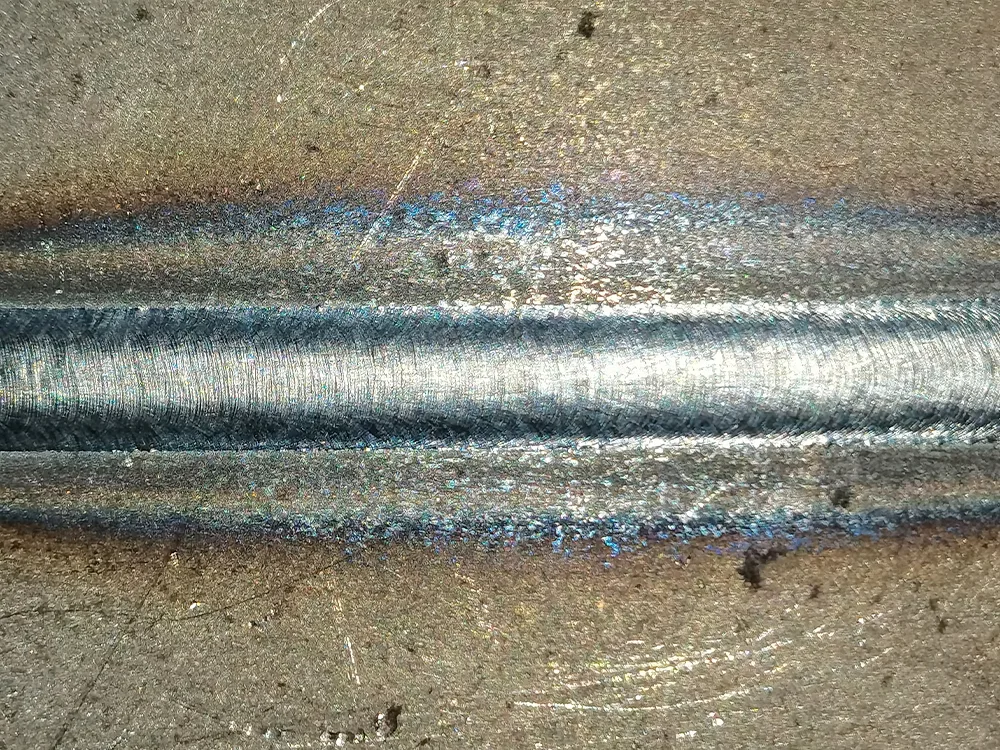
Flat welding (1G for Groove Welding) is the simplest one. This position requires the metal parts to be on a table or a floor and to maintain an appropriate torch angle. You should maintain the correct flame/torch position and keep it in constant motion. For this setup, set the torch angle to 45 degrees.
Flat welding is ideal for flat surfaces. However, it can also apply to pipe welding when the pipe is rotated.
Key Characteristics
- Flat welding is performed along the gravity, providing complete control over the weld. Thus, the weld pool flows evenly into the joint.
- Molten metal stays stable and easy to manage. In this case, the weld can achieve a high deposition rate.
- Flat welding ensures constant weld penetration.
- The torch angle is usually around 45 degrees.
- 1G or flat welding is ideal for most welding processes.
Limitations
- Flat welding is not suitable for overhead or vertically positioned surfaces.
- 1G is not suitable for a complex structure. It doesn’t reflect real installation conditions.
Horizontal Welding – 2G
Horizontal welding, or 2G, is practiced when the weld groove remains horizontal. Note that the metal parts are positioned vertically.
You can use a 2G position on both flat plates or fixed pipe surfaces. Here, gravity affects the weld pool, making control more difficult than in flat welding or 1G.
Key Characteristics
- The weld axis is horizontal, while the workpiece is vertical.
- The molten metal tends to sag due to gravity.
- Ensure the torch angle is at 45 degrees for proper penetration.
- It needs careful control of the heat and the weld puddle.
Limitations
- Due to gravity-induced sagging, the 2G seems more challenging than the 1G.
- This welding position requires greater skill than flat welding.
- To control the sag, you might need to go slow.
Vertical welding – 3G
This welding position is also used on vertically positioned metal parts. However, the weld axis is vertical. This welding position is also known as 3G. You will weld in the upward or downward direction.
When you are doing vertical welding, puddle manipulation is critical. To do this, you can consider using a zigzag, upside-down, or triangular motion.
Key Characteristics
- In vertical welding, heat control is critical.
- In vertical welding, the weld axis is perpendicular to the workpiece surface.
- Gravity strongly affects the flow of molten metal.
- Weld torch angle changes to control puddle movement.
Limitations
- This welding position also requires a high level of skill. If not handled correctly, there is a high risk of weld sagging.
- Compared to flat welding positions, this technique is much slower.
Overhead Welding – 4G
As the name implies, overhead welding is done above the weld torch. Usually, the workpiece doesn’t move. Compared to other positions, overhead welding is quite challenging.
Key Characteristics
- The overhead welding is performed from below the joint.
- Molten metal tends to sag, forming higher crowns.
- For this welding position, maintain a 45-degree torch angle.
- A small puddle size is essential for better control.
- The applied techniques are almost similar to vertical welding.
Limitations
- Overhead welding is much more difficult than welding in the flat or horizontal positions. Therefore, it needs experienced operators.
- There is a high risk of falling sparks and metal.
- This method may not be suitable for large, complex structures without support.
- Much slower welding speed to maintain control
Pipe Welding – 5G
The 5G welding section outlines the welding techniques for pipes in the horizontal orientation. Well, you can do flat, horizontal, or overhead welding based on your requirements. All these 5G techniques are further classified into two groups: uphill and downhill welding.
Uphill welding starts from the bottom and moves upward. In contrast, downhill welding begins from the top and moves downward.
Key Characteristics
- The pipe remains horizontally fixed during welding.
- Transition through multiple positions along the pipe.
- Carefully control the torch and travel speed.
- This welding position requires high positional accuracy to maintain a consistent bead shape.
Limitations
- Pipe welding in the position requires a very high level of skill. Working with this type of setup is quite challenging.
- Welding in these positions takes longer than in flat positions.
- There is a high risk of sagging or uneven weld beads.
- This technique is limited to pipes that cannot be rotated.
Complex pipe – 6G or 6GR
6G or 6GR are even more complex than we discussed before. Unlike 5G, 6G setups are usually complex, with the pipe fixed at a 45-degree angle. Based on your situation, you can apply flat, horizontal, or overhead welding.
Key Characteristics
- Gravity continuously affects the weld, requiring skilled hands and control.
- 6GR adds access restrictions.
Limitations
- Highest difficulty level
- Very demanding for manual welding
- Limited accessibility in 6GR
- Requires advanced skills or automation
Summary
Welding positions tell you how you must perform the work with respect to gravity and the workpiece. There are different types of welding positions. Each position is meant for specific projects and tasks. Groove welding is one of the most popular types of welding positions, especially for laser welding.
When considering groove welding, six major positions arise. In technical terms, they are called 1G, 2G, 3G, 4G, 5G, and 6G. This article primarily explored the six positions, their applications, and their limitations. Let’s summarize that information in the following table.
| Welding Position | Workpiece Orientation | Welding Difficulty | Typical Applications | Sustainability & Automation |
|---|---|---|---|---|
| 1G (Flat) | Workpiece lies flat; welding performed from above | Easiest | Flat plates, base frames, sheet metal fabrication | Excellent |
| 2G (Horizontal) | Workpiece vertical; weld axis horizontal | Low–Medium | Butt joints, structural components, enclosures | Very Good |
| 3G (Vertical) | Workpiece vertical; welding done upward or downward | Medium–High | Structural columns, vertical seams, heavy fabrication | Good |
| 4G (Overhead) | Welding is performed from underneath the joint. | High | Structural steel, reinforcement, and repair welding | Good |
| 5G (Pipe – Fixed) | Pipe fixed; weld progresses through multiple positions | Very High | Pipelines, pressure vessels, industrial tubing | Very Good |
| 6G (Pipe – 45° Fixed) | Pipe fixed at 45°; combines all positions | Most Difficult | Critical pipe joints, certification tests | Excellent |
HantenCNC is a leading maker of various types of laser welding machines. For any assistance, feel free to contact our customer support team.