
Aluminum is one of the most widely used metals. We use it to make kitchen appliances, automobiles, and even large aircraft. It is lightweight and very readily available. There are lots of aluminum project ideas that you can work on. However, “How to cut aluminum sheet metal” efficiently becomes challenging in many cases.
You can cut aluminum sheet metal in various ways. Each method has its unique benefits and limitations. In this article, you will learn some standard methods of cutting aluminum sheets. The article typically goes through the pros and cons of each technique. However, you will also learn about the best way to cut aluminum for your project.

Understanding Aluminum Sheet Metal
Aluminum metal sheets are usually flat and thin. They are corrosion-resistant and incredibly lightweight. Due to its excellent properties, aluminum is widely used in a variety of applications. People prefer to use it both indoors and outdoors.
The common thicknesses we often use in the metal workshops for aluminum sheet metals range from 0.2mm to 6.5mm. Aluminum sheet metals are typically not used directly. You need to process it for various purposes. For example, if you want to create signs and panels, you must cut sheet metal to create texts, logos, or signs.
Besides, if you want to create structural components, you will need to shape them into various cross-sectional areas. If you’re going to make aluminum pipes, you must round them and weld them. Therefore, the demand for aluminum sheets never ends.
How to Cut Aluminum Sheet Metal?
There are several ways to cut aluminum metal sheets. This diversity typically comes from the requirements of the project.
Manual cutting and shearing cannot offer the precision that laser cutting or CNC cutting can. On the other hand, the initial cost of laser cutting and CNC cutting is higher than that of manual ones.
Manual Cutting Tools
You could use tin snips or a hacksaw to cut aluminum sheet metal. It is the manual way of cutting aluminum. In this method, you will apply your physical force to slice through the material. It is typically simple, cheapest, and ideal for small-scale tasks. It doesn’t need any electricity or any complex machinery.
Pros
- Low initial cost
- No electricity or setup required
- Portable and easy for quick jobs
Cons
- Limited to thin sheets only
- Poor quality and accuracy
- Slow and labor-intensive
- Not suitable for complex shapes or high-volume tasks
Shearing
The shearing method uses a machine called a shear, a type of blade. It may have various types and forms. Some shearing devices are like scissors where you have to put the aluminum sheet and cut it. In some shearing devices, the blade typically rotates at a constant speed. To cut the aluminum sheet, you have to push it forward.
Aluminum shearing is quite simple and easy to operate. It creates relatively clean and smooth cutting results.
Pros
- The simplest and cheapest method of all techniques
- Suitable for small batch productions
- Maintaining these devices is easy
Cons
- Cannot produce a cut on curves
- Not suitable for large-scale productions
- Some shearing devices need larger areas
CNC Router Cutting
A CNC router cutting machine is typically a computer-controlled machine. It cuts aluminum sheets with high precision using a rotating cutting tool. A CNC machine is a versatile and specialized machining device.
In this method, the aluminum sheets are placed under the spindle. It typically holds the cutting knife, which rotates at a constant speed. Based on the CAD drawing or CNC codes, the spindles move along the path. Eventually, it leaves a smooth cut behind.
Pros
- Precise cutting with stringent tolerances
- Ideal for curves and detailed cuts
- Smooth finish with less manual work
Cons
- Costly, both the machine and the software
- Not suitable for thick aluminum
- Not a beginner-friendly choice
Plasma Cutting
Plasma cutting is a process that utilizes a jet of hot and ionized plasma to cut through metals. When the plasma torch hits the workpiece, it melts it quickly. The flow of gases through the nozzle typically removes the molten metal. This method is highly suitable for thicker aluminum sheet metals.
Pros
- Effective for thick aluminum
- Rapid process
- Not limited to straight lines
Cons
- Lower accuracy unless integrated in robot hands
- Rough edge cutting
- High initial costs
Waterjet Cutting
Waterjet cutting is another popular method of cutting aluminum sheet metal. It is typically used in industrial applications. In this process, along with water, abrasive particles are used. With the help of a nozzle, the water flows at high speed. When the water, along with abrasives, hits the metal surface, it typically creates a deep cut. Eventually, it leaves a smooth cut behind.
Pros
- No heat warping
- Smooth cutting edges
- Safe and clean
Cons
- Messy process
- Not portable
- Relatively slower method
Laser Cutting
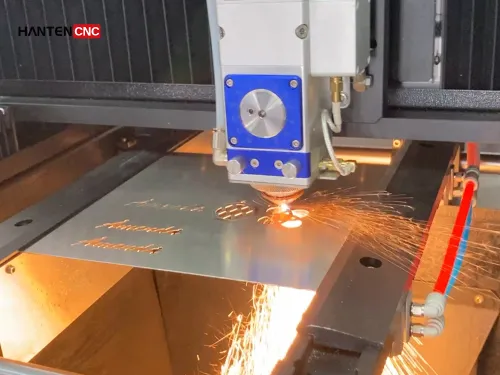
Laser cutting is an advanced and exact technique. It deploys a highly focused beam to operate the cutting process. When the beam hits the metal surface, it melts, burns, or vaporizes the aluminum sheets. The laser follows the desired design, which is controlled by a computer. So, there is less chance of cutting errors.
Pros
- High precision & smooth edges
- Provide Quick and clean results
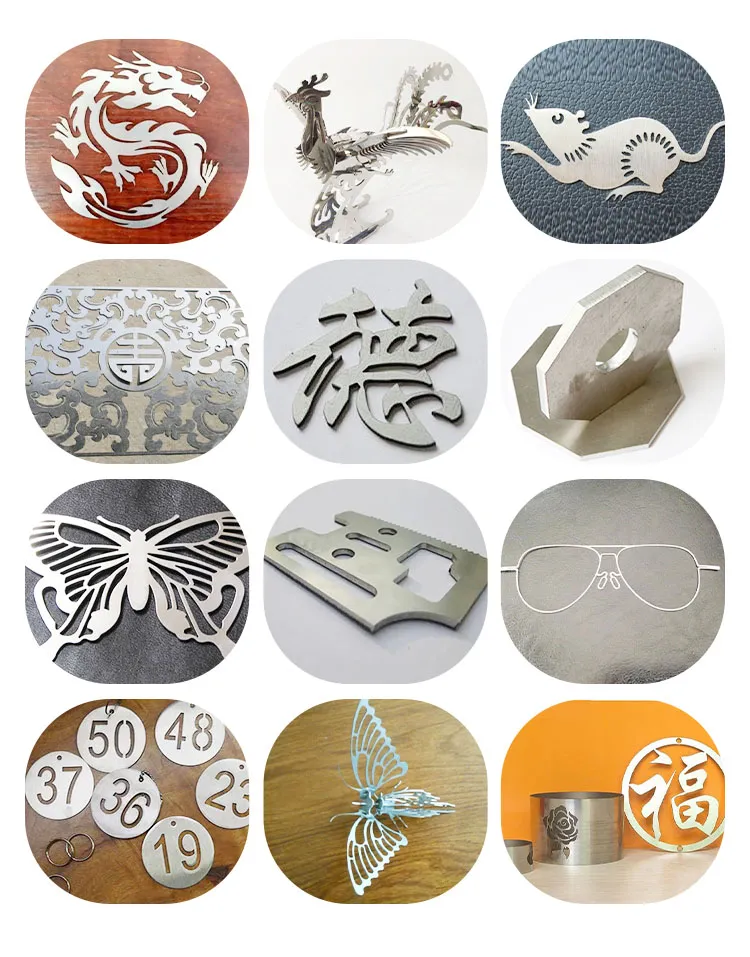
- Suitable for complex work
- Minimal material waste
Cons
- Can be expensive
- Safety concerns
- Requires skilled operators
Why is Laser Cutting the Best Way to Cut Aluminum Sheet Metal?
As you know, there are several ways for cutting aluminum sheets. Apart from them, why is the laser cutting method the best way? Let’s find out the reason behind it.
Most Precise and Repeatable Precise Cut
As a computer controls the machine, the beam only follows the given instructions. For this reason, the precision remains the same for repeated work. You can easily produce the same outcome for each aluminum part.
Smooth Edges
The beam melts the metal edges very precisely, which leaves smooth edges. This way, it saves time and improves the quality while not requiring sanding or reworking.
Thickness Versatility
Laser cutting aluminum can handle thin, medium, and thick materials simultaneously. They can cut many different thick materials without changing parts. As a result, it supports deep penetration and offers flexibility for various jobs.
Automation and CAD Integration
Laser cutters can work with CAD software. Thanks to this automation, cutting is now quick and easy to repeat. You won’t need to use much muscle power to cut intricate forms.
Low Tooling and Maintenance Cost
Laser technology does not require many physical tools. It uses light instead of blades, so it reduces the risk of material damage and eliminates design errors. Consequently, it minimizes the cost and lowers the maintenance charges.
Safe and Clean Process
The laser cutting machine is quite flexible. It allows you to customize settings according to your material’s thickness and design requirements. Furthermore, it does not produce sparks or noise, and generates little waste. This makes it suitable for every approach, resulting in safe and clean cutting.

How to Cut Aluminum with a Laser Cutter: Step-by-Step
Aluminum is soft compared to other metals and easy to cut. You might be thinking it needs lower laser power as well. But in reality, aluminum typically needs more laser power. Because it has excellent thermal conductivity and high reflectivity, you must know the exact laser parameters before you begin the project. Here is the step-by-step process for cutting aluminum sheet metal with a laser cutting machine.
Step #1: Prepare the Aluminum Sheet
Firstly, you have to prepare your aluminum sheets for cutting. To do this, select the exact alloy and the thickness of your aluminum based on the project. Thereafter, clean the surface thoroughly if there are any contaminants. Place the sheet in the appropriate region of the laser bed. Don’t forget to secure the movement of the sheet.
Step #2: Set up the Laser Machine
Turn on the machine and check the laser parameters. With a 1000W laser cutter with a power range of 50-100%, use a 10-25m/min velocity for 1 mm thick aluminum. The speed varies with thickness; therefore, apply 6m/min for 2 mm and 2m/min for 3mm thickness material.
Step #3: Upload the Design
Insert your cutting plan from CAD software into the control panel of the laser machine. Before you start, make sure the file is lined up correctly with the aluminum sheet. Double-check the scale and position before proceeding.
Step #4: Perform a Test Cut
It is essential to perform a test cut before starting production. It lets you know whether the parameters are working well with the sheet. If they are not working well, then fix them up as needed.
Step #5: Execute the Final Cut
Once all your settings are perfect, start the cutting process. Observe the cutting process closely. If there is any emergency, turn off the machine. After the completion, allow the aluminum to cool before removing it safely from the laser bed.
Best Laser Cutting Machine for Aluminum Sheet Metal Cutting
Choosing the best laser cutting machine for aluminum depends on your projects. Does it involve cutting larger objects? Are you looking for automation or CNC integration? Besides, your budget also affects your choice of device.
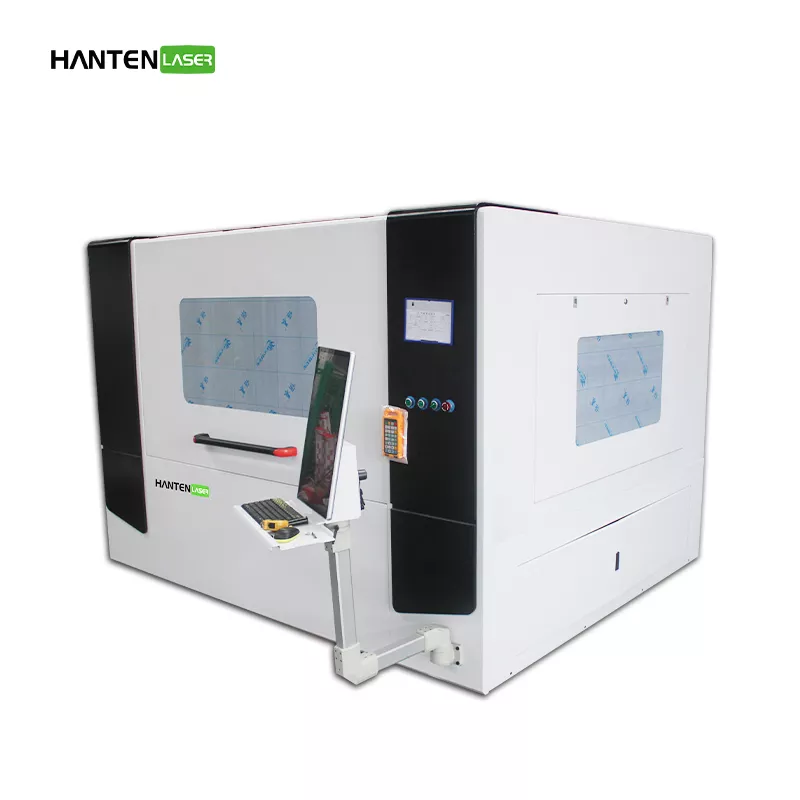
If you are looking for laser cutters for regular-sized objects, you can consider HTC800-1500. This device comes with a 300 x 200 mm standard cutting area. If you are looking for something bigger, you might opt for a CNC 1000-6000W laser cutter. This device typically comes with a 3000 x 1500mm standard cutting area.
Both models are customizable, specifically for laser power and cutting area. They both come with a safety enclosure. HTC800-1500 typically costs around $6950 to $7800. On the other hand, the automated CNC features one that costs between $15,000 and $23,680.
Contact Us Today
Ready to start your laser cutting aluminum sheet metal project? Reach out to us to get reliable and high-precision laser cutters. One of our core focuses is on making high-quality sheet metal laser cutting machines. For more information, feel free to reach out to us.