Laser marking is an important part of modern production because it gives you precise and long-lasting results. When you know about the different types of laser marking, it will help you choose what is right for your needs. In this guide, you will learn the strengths and drawbacks of common laser marking approaches to decide what works best for you.
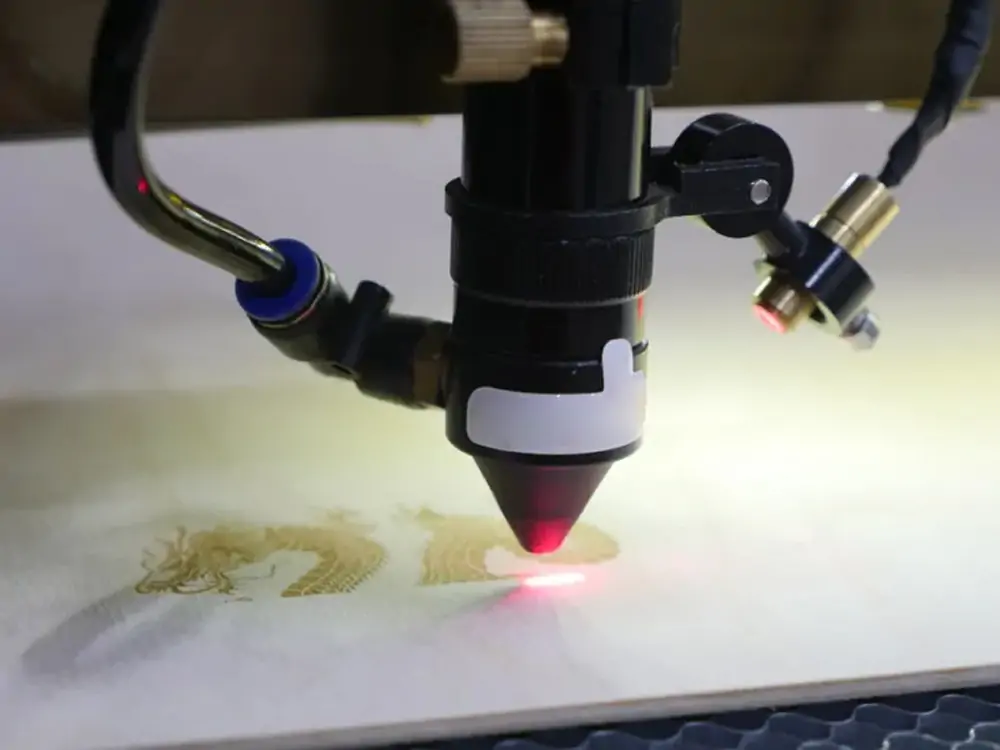
What is Laser Marking?
Laser marking uses a focused beam of light to create a permanent, clear, high-contrast mark on a material’s surface. This technology does not damage the surface. It precisely alters the material’s surface structure, enabling stable and lasting identification.
During the production process, laser marking is commonly used to add information such as logos, serial numbers, and barcodes. This enhances product traceability and brand value. Laser marking can also be used for personalized DIY labeling, adding uniqueness and value to products.
Types of Laser Marking Machines
Laser marking machines can be categorized by the wavelength of the laser source as follows:
- Fiber laser marking machine (wavelength 1064nm)
- CO2 laser marking machine (wavelength 10.64µm)
- UV laser marking machine (wavelength 355nm)
- Green laser marking machine (wavelength 532nm)
Each model is suitable for different materials and marking effects.
1. Fiber Laser Marking Machines
A fiber laser marking machine is a high-precision marking device that utilizes a fiber laser source as its light source. It uses a focused laser beam to process the surface of a material precisely. This enables the rapid creation of clear, permanent, and high-contrast marks.
Fiber laser marking machines offer advantages such as a long lifespan, maintenance-free operation, and low power consumption, requiring virtually no consumables. This machine can be used just by plugging in the power supply. Operation is stable and reliable. These makes them one of the most widely used laser marking machines on the market.
Fiber laser marking machines are widely used for processing metals and some non-metallic materials, including stainless steel, aluminum, copper, iron, alloys, and some engineering plastics.

Advantages:
a. High Durability
The marks made with fiber laser marking are permanent, meaning they won’t fade or wear off. They resist scratches, heat, and chemicals and stay through the entire product’s life.
b. Minimal Maintenance
Fiber lasers are designed to last and need very little care. This means less downtime for your work and lower repair costs that will save you effort and money in the long run.
c. High Precision
Fiber lasers give you sharp and detailed marks which are needed to make small text or complex patterns.
d. Fast Processing Speed
Fiber lasers work quickly, allowing you to mark more products in less time. This can help increase your productivity, allowing you to meet strict deadlines with ease.
Disadvantages
a. Limited Material Range
While fiber lasers work well on metals and some plastics, they are not suitable for materials such as wood or fabric.
b. Color Limitations
Fiber lasers can only mark your object in shades of black and gray. Stainless steel and brass can be color-marked using a MOPA laser source. Other materials cannot be color-marked yet.
c. Surface Sensitivity
Some shiny surfaces, such as copper or silver, are more difficult for fiber lasers to absorb. Higher power or specialized laser sources may be required for these materials.
Applications
Common applications include:
- Electronics and electrical industry: Coding and traceability of chips, switches, plugs, and cables;
- Automobile and machinery manufacturing: Permanent marking of part numbers, bearings, gears, and tools;
- Hardware products: Brand identification of knives, measuring tools, locks, pipe fittings;
- Jewelry: Fine engraving and personalized customization on rings, bracelets, and pendants;
- Medical devices: Anti-counterfeiting and traceability marking of surgical instruments and medical consumables;
- Packaging industry: Production batch numbers and dates on bottle caps, food packaging, and beverage cans.
Fiber laser marking machines can meet the speed and precision requirements of industrial mass production. They also support small-batch personalized customization. This helps companies increase the added value of their products and market competitiveness.
Hantencnc’s Fiber Laser Marking Machines
HANTENCNC’s fiber laser marking machines include industrial-standard models, customizable automated models, and compact models suitable for commercial and residential use.
HANTENCNC is committed to R&D and innovation, making it easier for users worldwide to create value with laser marking machines. For example, the Koala 2nd Generation integrates core components, including the laser source, galvanometer, power supply, and motherboard, into a custom chassis. It is easy to operate, convenient to carry, compact, and beautifully designed. It looks both practical and like a decorative piece on a desktop.
In the future, HANTENCNC will continue to work closely with laser manufacturers to develop more compact and intelligent laser marking machines to meet the diverse needs of different users.
2. CO2 Laser Marking Machines
CO2 lasers use a mix of gases, mainly carbon dioxide, to create a laser beam in the infrared range. These lasers are highly useful and can mark or engrave a wide range of non-metallic materials. If you need a reliable tool for marking wood, glass, plastic, or more, a CO2 laser is what you might need.

Advantages
a. Versatile Material Compatibility
CO2 lasers can be used for marking various organic materials, including wood, glass, plastics, leather, and paper. You will receive clear and high-quality marks that are suitable for various projects.
b. High-Quality Marks
TThese lasers create clear, lasting, and professional-looking marks. You can use them on a variety of materials and surfaces to achieve beautiful engraving effects.
c. Large Marking Area
CO2 dynamic focus 3D systems can cover a wider marking area. Large-format CO2 dynamic focus marking systems are particularly useful if you need to mark large products or process smaller batches more efficiently. They are commonly used in industries such as greeting card customization, personalized jeans patterns, full-width fabric pattern design, and leather engraving.
Disadvantages
a. Not for Metals
Untreated metals cannot be marked by CO2 lasers because the beam reflects off the surface.
b. Higher Maintenance Needs
The gas-filled tube in a CO2 system has a limited life and will need to be replaced.
c. Larger Footprint
CO2 laser systems are generally bigger than fiber lasers and might not suit you if you have a smaller work area.
d. Consumable Parts
If it is a CO2 glass tube laser marking machine, the glass tube has a lifespan of only 8,000 hours. Once this lifespan is reached, the machine cannot be used anymore and must be replaced with a new glass tube. However, CO2 metal tubes are now more commonly used for CO2 laser marking machines. They have a longer lifespan and can be used for a longer period after being inflated.
Applications
a. Packaging Industry
CO2 laser marking machines can directly mark date codes, batch numbers, and barcodes on the surface of materials such as plastic bottles. This replaces traditional inkjet coding. This method is more environmentally friendly and can effectively prevent tampering and counterfeiting.
b. Woodworking
CO2 laser marking machines are ideal for engraving logos, patterns, and text on wooden products, including furniture, signs, and crafts.
c. Textile and Apparel
These CO2 laser marking machines can cut and mark fabrics such as denim, leather, and synthetics. You can make unique designs with high accuracy for clothing or other textile products.
d. Promotional Products
You can easily add logos, messages, or custom designs to personalize items made from acrylic, glass, or plastic using CO2 laser marking machines.
3. UV Laser Marking Machines
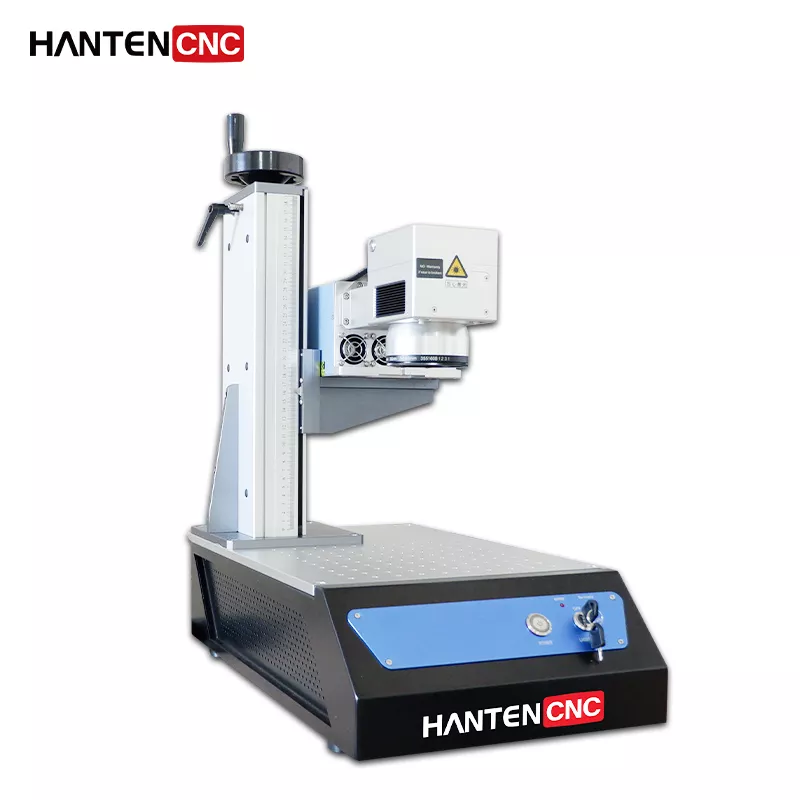
UV laser marking machines use shorter wavelengths compared to fiber and CO2 laser marking machines. This means they can mark materials using a “cold marking” method, which causes less heat and stress on the material. This makes them useful for you if you are working with heat-sensitive materials and want to protect your products during the marking process.
Advantages
a. Cold Marking Process
UV laser marking machines’ low thermal effect prevents damage to heat-sensitive surfaces and marks delicate materials without burning or warping.
b. Exceptional Precision
UV laser marking machines can produce extremely small and detailed marks with high resolution.
c. Wide Material Range
UV laser marking machines can mark a wide range of materials, including plastics, glass, ceramics, and some metals.
d. Permanent Marks
The marks are created through a photochemical reaction. This results in highly durable and lasting marks that resist fading.
Disadvantages
a. Higher Cost
The laser source of a UV laser marking machine is one of the more expensive of the three laser categories. Advanced technology and components contribute to the higher initial cost. However, with the advancement of laser technology, the global application of UV laser marking machines is growing. As production increases, costs will gradually decrease.
In the future, UV laser marking machines will develop towards higher power levels, such as 20W and 30W. These lasers are suitable not only for marking non-metallic materials but also for cutting thin metal sheets. They maintain heat-resistant cutting surfaces and produce smooth, beautiful edges.
b. Slower Marking Speed
The cold marking process is usually slower than the thermal methods of fiber or CO2 lasers.
c. Lower Power Output
UV lasers have a lower power level compared to other laser types, which can limit the depth and speed of your marking process.
In the future, HANTENCNC will expand to high-power applications of 20W and 30W. This device can not only be used for non-metal engraving, but also for metal processing and cutting. This multi-functionality in one machine will help users improve efficiency and flexibility.
Applications
a. Medical and Pharmaceutical
The sterile cold marking process is perfect for marking medical plastics and glass vials.
b. Semiconductor Industry
The high precision and low heat prevent damage to delicate parts when marking silicon wafers and microelectronic components.
c. Plastics Manufacturing
You can create high-contrast marks on a variety of plastic types like PVC and ABS without melting or foaming.
d. Glass and Ceramics
The process creates tiny fractures on the surface for a clear mark.
Fiber VS CO2 VS UV Laser Marking Machines
| Feature | Fiber Laser | CO2 Laser | UV Laser |
| Material | Best for metals and some hard plastics | Best for organic materials like wood, glass and paper | Wide range, especially heat-sensitive plastics and glass |
| Precision | High precision, good for small details | Good precision, suitable for general marking | Extremely high precision, best for micro-marking |
| Speed | Very fast | Fast | Slower |
| Budget | Medium to high starting cost, low running cost | Low to medium starting cost, moderate running cost | High starting cost, higher running cost |
| Power Requirements | Efficient, lower electricity usage | Higher electricity usage | Moderate electricity usage |
Conclusion
Choosing the proper laser marking method depends on your job requirements. Fiber lasers are best suited for fast and durable marking of metals and some non-metallic materials. CO2 lasers are suitable for some non-metallic materials and paint stripping. UV lasers are ideal for delicate and heat-sensitive materials. HANTENCNC offers a range of laser marking machines to meet your needs. Contact our sales engineers and we’ll tailor the solution to your needs and budget.
Frequently Asked Questions
Can laser marks withstand harsh environments?
Yes, laser marks are highly durable. They resist heat, chemicals, and wear, making them reliable in tough industrial conditions.
How does laser marking contribute to product traceability?
Laser marking enables you to add durable serial numbers, barcodes, or QR codes that facilitate easy product tracing throughout supply chains.
What maintenance is required for laser marking systems?
Maintenance depends on the type. Fiber laser sources require almost no maintenance. CO2 metal tubes need to be refilled at the end of their lifespan. UV laser sources require occasional part replacement to extend lifespan and restore power.
Can laser marking be integrated into automated production lines?
Yes. Laser marking systems can work with your automated lines to offer fast, smooth operation for large-scale production.