Accuracy is the key to making high-quality devices. From electronics to automotive, every sector needs components that fit perfectly. Over the years, people have tried to develop the material processing method. Thanks to Laser cutting technology, we can now achieve tolerances of up to ±0.05 mm.
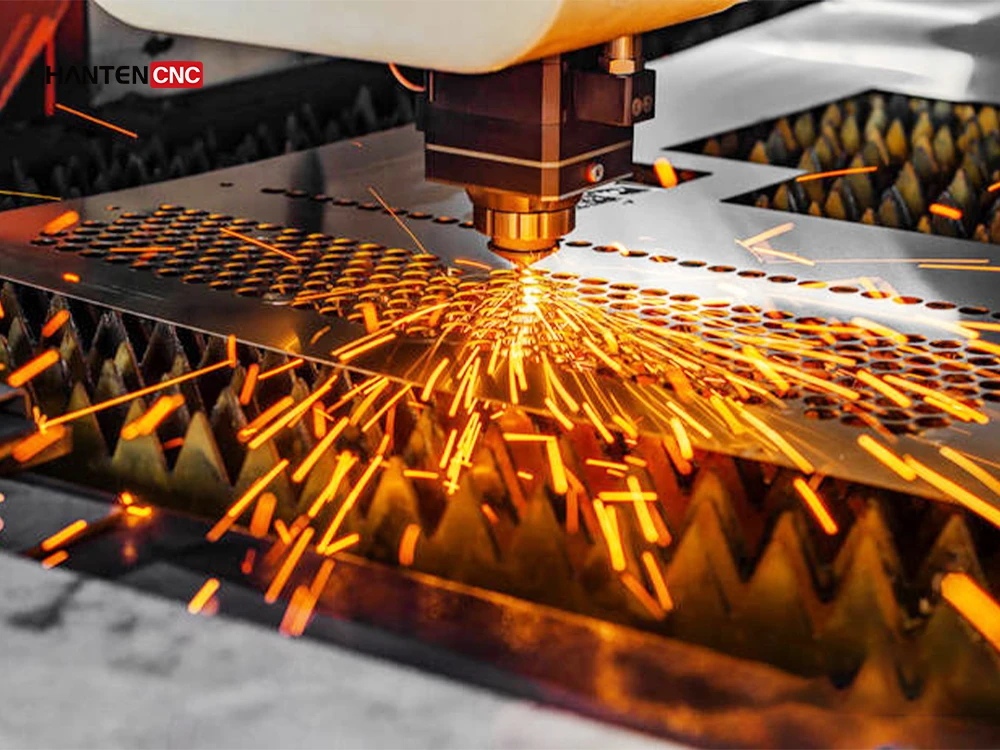
Laser cutting is one of the most effective ways of cutting materials. It works by using a very focused laser beam. This beam is just a tiny light, but it is powerful enough to cut through many materials. Because the beam is so precise, the cuts are very accurate and clean. Overall, a laser cutting machine can create shapes and designs with great detail. However, the results also depend on using the correct laser settings.
Advantages of Laser Cutting
There are various types of cutting methods out there. Some of the popular options include manual cutting, CNC cutting, plasma cutting, water jet cutting, and gas cutting, among others. The question is, why should you choose the laser cutting method? Why not other traditional ones, which are way cheaper than laser cutting?
Unlimited 2D Complexity
Laser cutting allows you to work with unlimited 2D designs. It can create shapes like sharp angles, curves, or delicate patterns easily. Since it is a non-contact process, you typically don’t need any additional tools.
With the G-code movement control, you can achieve effective results according to your requirements. Laser-cut parts are ideal for artistic, custom parts, and decorative items.
CNC or computer numeric control has various types of codes. G-code is among the most commonly used. It guides the laser gun to follow the path specified in the CAD file. The cutting width is typically as narrow as 0.1mm. Such a narrow beam ensures perfect cutting, even for tiny or highly detailed designs.
Above all, laser cutting offers you fine details that are not available in traditional methods.
High Precision & Accuracy
A laser engraving machine typically offers tolerances of up to ±0.005 inches or ±0.1 mm. On the other hand, plasma cutters provide a tolerance for ±0.55mm. Moreover, waterjet cutting offers a tolerance of ±0.25mm.
Therefore, high accuracy is the main feature of laser cutting technology. As a result, most manufacturers prefer laser engraving for custom parts.
In the cutting process, the beam targets a tiny spot and then proceeds. It results in a perfect cutting edge. This feature makes it ideal for industries where accuracy is crucial. Aerospace, electronics, automotive, and medical sectors all rely on laser cutting technology.
Maximum Flexibility
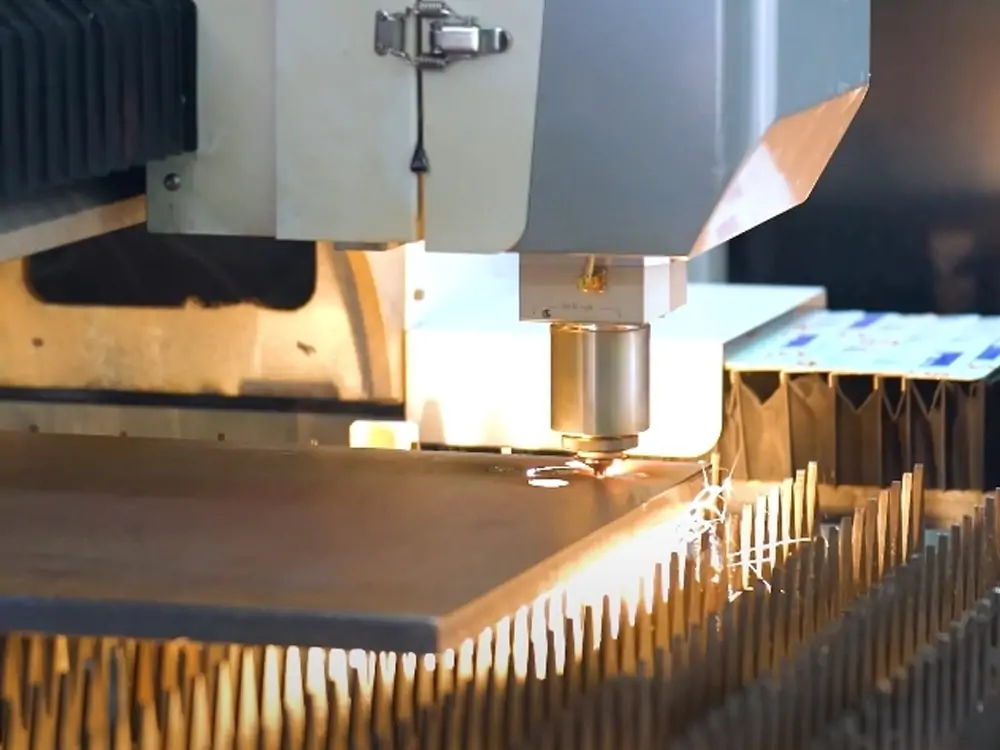
In laser engraving, flexibility means the ability to handle a wide range of tasks. It literally opens up a wide range of possibilities for different types of projects.
First, laser cutting can cut a wide range of materials. You can use a variety of materials, including stainless steel, aluminum, titanium, brass, and many more.
Second, laser cutting also supports complex and intricate design patterns. You might think of simple or highly detailed geometries, all of which can be cut using laser cutting. Due to this, laser cutting is ideal for prototyping and creating custom parts.
Third, laser cutting systems are user-friendly. You can either use the display that comes with the device or use various later cutting software to operate the machine. You can adjust the laser settings on both the laser UI and the software. Laser cutting software is readily available for all types of operating systems.
Using laser cutting is also flexible because switching from one product to another is easy. There is no need for any molds, dies, or special blades. This flexibility lowers the setup cost and time.
Less Heat Affected Zone
Laser cutting typically produces less heat-affected zone (HAZ) than plasma cutting. However, waterjet cutting is quite good in this case. It doesn’t make any HAZ area.
According to various experiments, it is observed that plasma cutting produces a HAZ area of up to 3.1mm. On the other hand, laser cutting may reach up to 0.63mm. Clearly, laser cutting is better than other thermal cutting processes.
The laser beam in the laser cutting process is narrow. Therefore, when it comes into contact with the materials, it hits a small portion of them. The beam is so precise that it allows the laser to expose less heat to the surroundings. Due to this, laser cutting is particularly effective on thin materials, whereas plasma cutting is more suitable for thicker materials.
High cutting speed is also a reason for minimal heat distortion and less HAZ. Even if you apply it to metal like stainless steel, aluminum, or titanium, they can easily retain their properties. It allows the laser cutting machine to serve multiple industries simultaneously.
Highly Accurate Repeatability
Laser cutting also ensures very high repeatability with consistent results. Therefore, you can create designs of the same high quality repeatedly.
Various experiments show that laser cutting offers higher precision than plasma cutting in terms of repeatability. Laser cutting shows precision around ±0.05 to ±0.1 mm. On the other hand, plasma cutting can not offer precision of less than ±0.5mm. Instead, sometimes it may reach more than ±0.5mm.
Why does repeatability matter a lot? When producing in mass, ensuring consistent results is crucial. You must provide as high a precision as possible in cutting.
Even a slight deviation can lead to parts not fitting correctly. You may also experience wasted materials, which can ultimately lead to increased production costs. High repeatability, in this case, guarantees that every piece matches the exact specification.

Quicker Cutting Method
Compared to traditional methods, laser cutting is much faster. The beam moves very fast and cuts intricate designs in a few seconds. It does not even leave the design unmatched.
Although the speed of the cutting depends on what materials and thickness you are dealing with. Plasma cutting may damage thin materials because it produces high localized heat. On the other hand, laser cutting produces less localized heat, making the process significantly safer. However, for laser cutting, multiple passes may be required to complete the cut, especially with thicker materials.
Therefore, laser cutting is typically faster than plasma cutting for thinner materials. On the other hand, it is slower for thicker materials. The laser cutting speed may reach up to 600cm per minute for materials less than 3mm thick.
No Need for Consumables
Unlike mechanical cutting, laser cutting does not require blades to cut products. Additionally, it does not require any consumables or harmful substances, such as chemicals. The beam itself is a cutting tool. There is no consumable stuff to replace it frequently. It eventually saves both time and money. The overall cost will be lower than in other methods.
Maintenance schedules are simpler. Only optics and filters may need checking, but wear is very low. These benefits typically make laser cutting a cost-effective option in the long run.
Less Maintenance
Laser cutters typically need less maintenance compared to other methods. Additionally, the maintenance cost is lower than that of different cutting methods.
Mechanical methods, such as sawing, grinding, or milling, require physical contact for cutting. These methods consume a significant amount of time and require part replacement due to frequent use. Besides, plasma cutting and waterjet cutting need proper cleaning after each cycle. On the other hand, laser cutting is a contactless process. It minimizes wear and tear during cutting, resulting in a smooth finish.
After production, you must clean the machine. With proper care, machines run smoothly for years. This reliability makes them suitable for industries with high demand.
Easy Operation & Training
Laser cutters are typically easy to operate and learn. Unlike the messy setup of waterjet and plasma cutting, laser cutting is easy to set up and operate. HantenCNC laser cutting machines come with an advanced control UI. You can manage the machine with this UI, starting from inserting the design and setting the laser parameters.
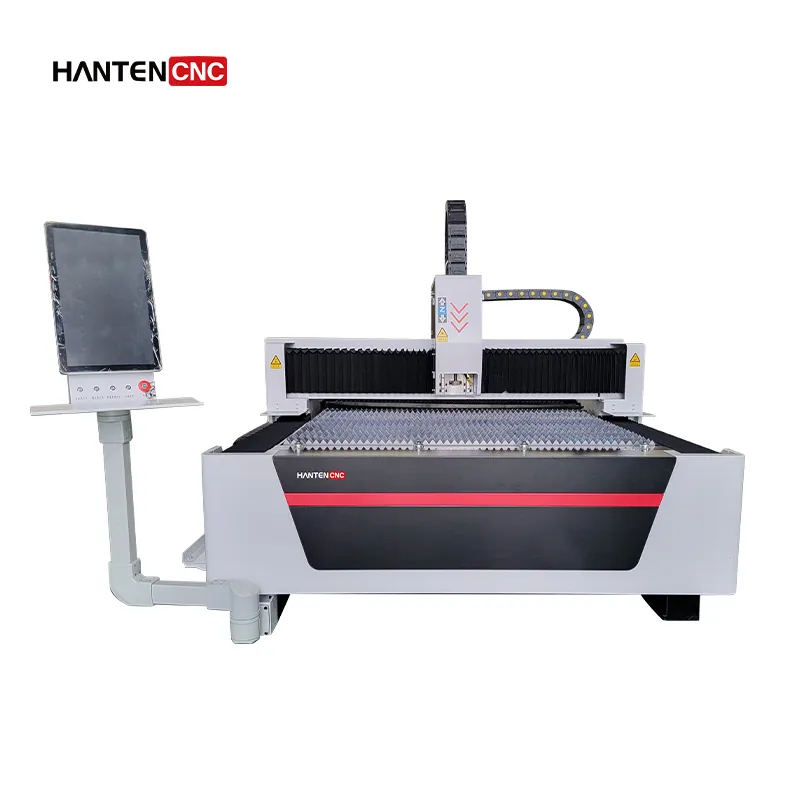
Besides, you can also use laser engraving software to operate the device. Based on your project requirements, you can adjust the laser settings. You can follow the SOP and that’s all.
HantenCNC also offers professional training on how to use a laser cutter efficiently. You are always welcome to be a member of our family.
Variety of Applications and Industries
Laser cutting is a versatile method used in various industries. It can cut into a wide range of materials, including metals, plastics, wood, composites, acrylic, and many more. Its versatility and efficiency are the reasons for its widespread popularity among various manufacturers. Numerous sectors utilize it, including the automotive, aerospace, electronics, textiles, and packaging industries.
The process is also standard in signage, prototyping, and decorative items. Its versatility stems from the ability to work with a wide range of materials with high precision. For this reason, it is considered one of the universal cutting methods in industries.
Automation & Mass Production
Laser cutting machines are easily integrated with automated systems. They can work with robotic arms, conveyors, and automated loading units. This feature typically makes laser cutting machines ideal for large-scale production.
When you compare it with other methods, you will find that laser cutting machines are better in various ways. It offers better precision and faster setup with automation. The plasma system can also be automated, but its accuracy is lower.
Limitations of Laser Cutting
You have just reviewed a comprehensive list of the benefits of laser cutting methods. Yes, laser cutting machines are indeed better in many ways. However, there are some limitations to this technology that make other traditional methods more suitable in specific ways.
High Initial Cost
Laser cutting machines require a significant initial investment. The purchase cost is significantly higher than that of traditional cutting tools.
A typical 1-3kW laser cutter may cost around $15,000 to $40,000. On the other hand, a handheld plasma cutter typically costs between $1,000 and $3,000. For an automated one, the cost may be up to $10,000. A waterjet cutting machine typically costs between $10,000 and $30,000.
The specific price of a laser cutting machine typically depends on its size, laser power, and level of control.
Since a laser cutter doesn’t require any consumables, it is a good deal over time. While plasma cutting and waterjet cutting continuously require consumables and maintenance, laser cutting is a more cost-effective option.
Material Limitations
A laser engraving machine cannot cut all materials. There are certain limitations on the material type. A fiber laser cutter is typically ideal for metals. Starting from aluminum to titanium, you can cut almost all metals using fiber lasers. Even different types of metal grades are welcome here. The primary reason for this ability is that fiber laser wavelengths are ideal for penetrating metals.
Limitations to Material Thickness
A laser machine also works best on thin to medium-thick materials. For metals, the practical cutting limit is usually around 15 to 25. The exact range typically depends on the laser power and material type.
If the material is too thick, you need a slower cutting speed to penetrate completely. Due to this, excessive heat buildup may cause warping or uneven side kerf widths. Eventually, it may reduce the quality of the cut.
Varying Process Parameters
Laser cutting typically needs precise control of multiple process parameters. You must understand how all factors work in conjunction with the others. Some of the crucial factors are laser power, speed, focus position, assist gas, and gas pressure.
Small changes in these parameters can affect cut quality. Additionally, you may not achieve a smooth edge and reduced HAZ. Therefore, we always recommend that you follow the proper guidelines provided with our laser cutters.
Final Thought
Throughout this article, we have gone through various benefits of the laser cutter. We have also discussed some of the limitations.
Considering all these advantages and disadvantages, you must make your decision wisely. Properly assess your project requirements. If you need to cut a wide range of medium-thick parts with high precision, consider a large-format fiber laser cutting machine. If you focus on thick plates or highly reflective metals, other cutting methods or a 10,000-watt laser cutting machine may be more suitable. If you are cutting small, thin materials or are simply cutting samples for demonstration purposes, you can choose the Hantencncn MINI fiber laser cutting machine.
Consider production volume, material types, and long-term production costs. Although the initial cost is very high, the efficiency, accuracy, and automation benefits can make lasers more economical over time.
If you have any questions about HantenCNC laser cutting machines, please don’t hesitate to contact us. We have a huge collection of various types of laser cutters. We also create laser cleaning, marking, welding, and glass drilling machines. We consistently prioritize customer satisfaction, enabling us to remain competitive in the market.