
The answer is yes. But like any tool, laser graffiti depends on what you are cleaning and how you use it. Let us break it down.
1. What is Laser Graffiti Removal?

2. How Does Laser Graffiti Removal Work?
- The laser emits short, high-energy pulses.
- The graffiti paint absorbs laser energy much faster than the surface beneath it.
- The graffiti heats up, vaporizes, and disappears.
- The surface below stays intact because the laser energy is absorbed selectively.

3. Does Laser Graffiti Removal Really Work?
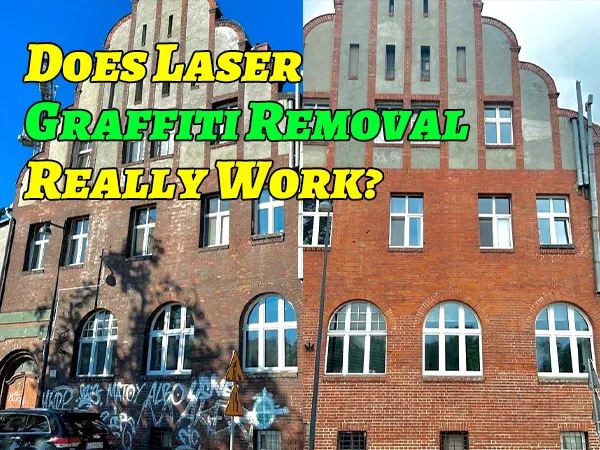
Case 1: Old red-brick building with white graffiti
A customer needed to remove graffiti from an old red-brick building.
The surface was delicate, and abrasive methods would have damaged the building’s finish. They chose HANTENCNC’s laser graffiti removal.
The graffiti was removed cleanly, and the building’s original appearance was restored. No chemicals, no sanding, and no harm to the facade.

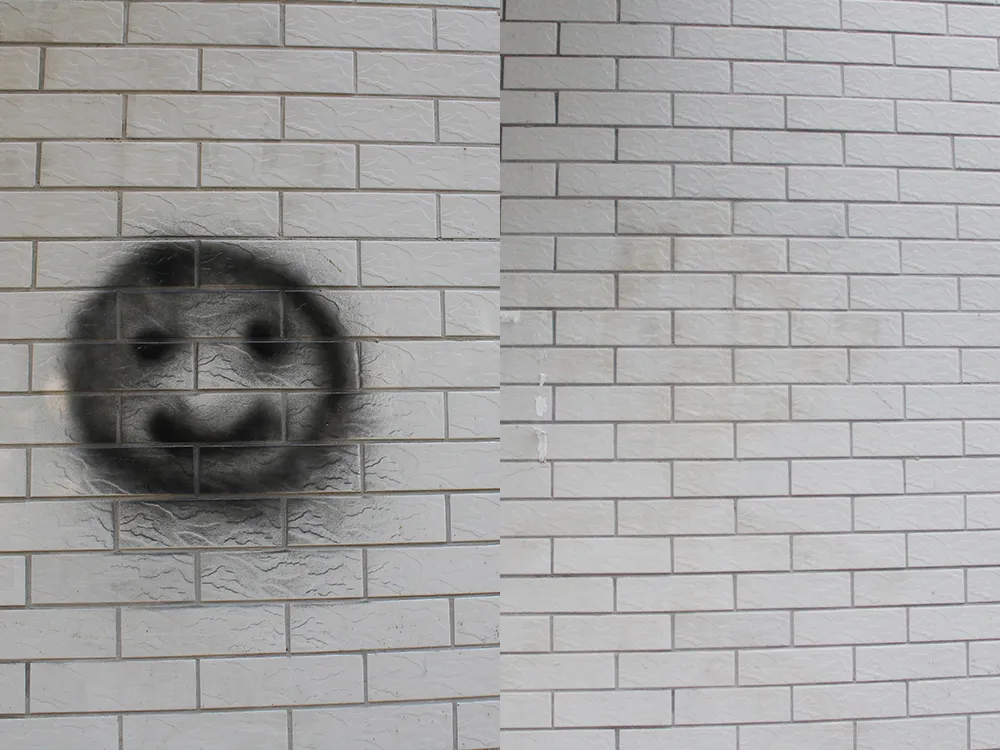
Case 2: Concrete wall with laser graffiti removal
A customer needed to remove graffiti from concrete wall.
The paint had soaked into the porous surface, and traditional sandblasting would have damaged the concrete. They chose HANTENCNC’s laser graffiti removal machine.
The result was a clean surface with the graffiti gone and the concrete texture intact. No chemicals, no dust, and no damage to the wall.
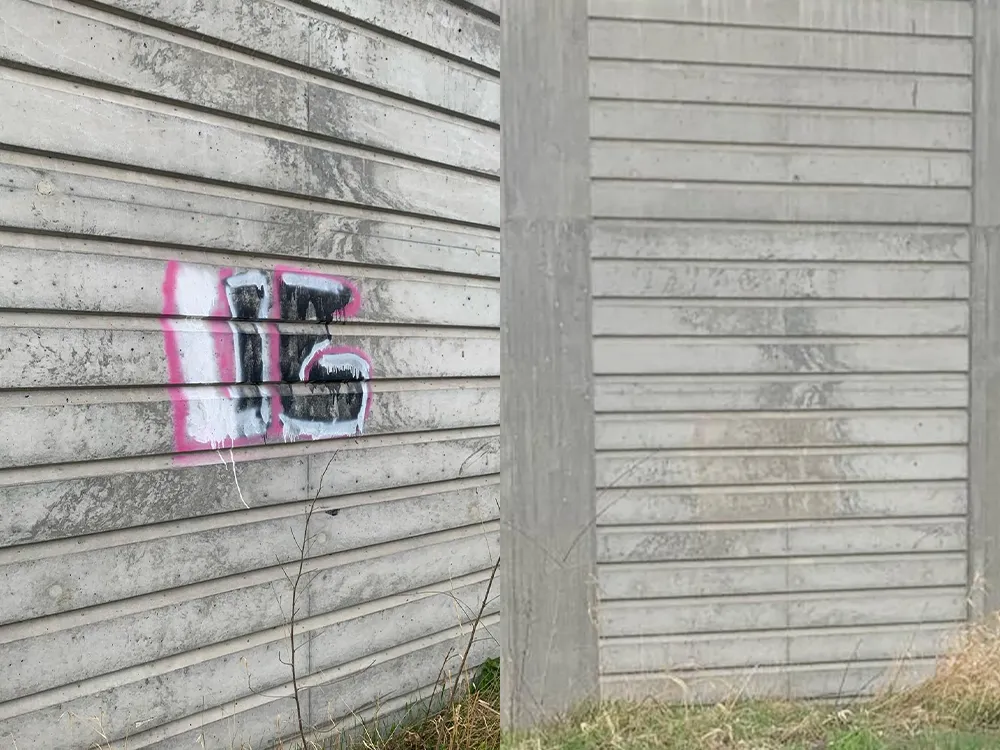

Case 3: Textured concrete wall with graffiti
A customer needed to remove graffiti from a textured concrete wall.
The horizontal grooves made it hard to clean with chemicals or sanding, the paint would get stuck in the ridges. They chose HANTENCNC’s laser graffiti removal machine.
The graffiti came off evenly, leaving the concrete surface clean without damaging the grooves.

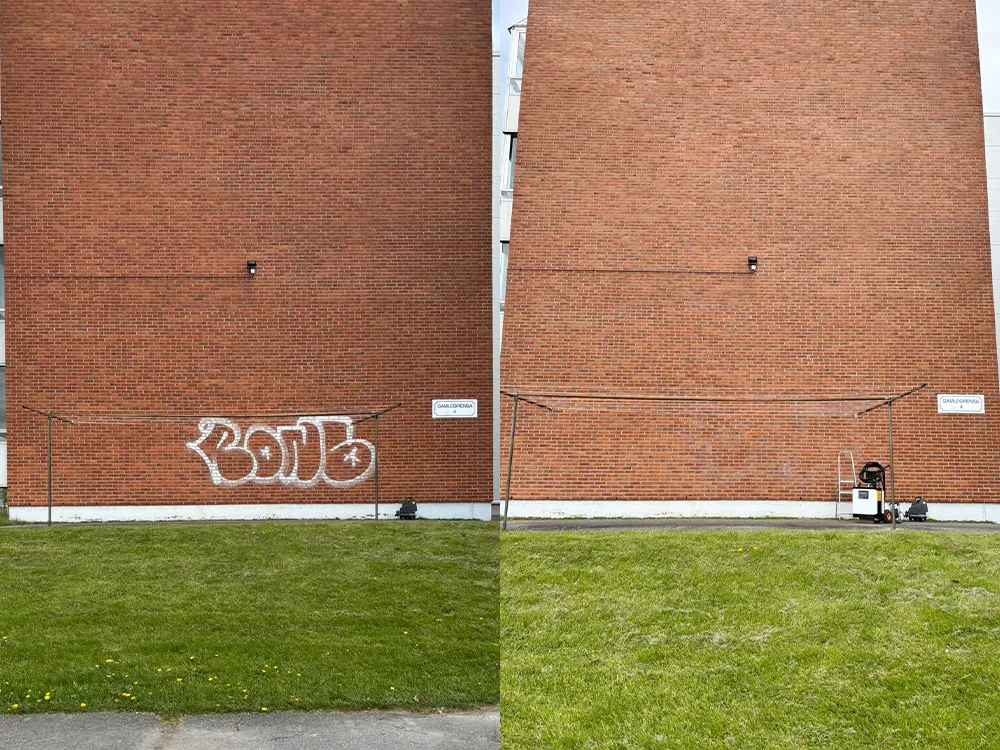
Case 4: Red brick wall with white graffiti
The result was impressive. The graffiti was completely removed, and the brick surface remained intact, with no staining or damage. The wall looked like it had never been painted.
4. Laser Graffiti Removal vs Traditional Graffiti Removal
Traditional methods of graffiti removal mostly rely on chemicals or sandblasting. These methods may damage the wall, generate waste, and pollute the environment.
The following comparison table shows that laser cleaning is most competitive for surface preservation.
| Laser Cleaning | Chemical Solvents | Sandblasting | |
|---|---|---|---|
| How it works | Vaporizes paint with laser pulses | Dissolves paint with solvents | Blasts paint off with abrasive media |
| Surface damage | No damage, non-contact, selective | Can stain or etch porous surfaces | Erodes the surface along with the paint |
| Speed (1 sqm concrete) |
About 45 mins with 300W laser cleaning; About 22.5 mins with 500W laser cleaning (500w is approx. 50% faster than 300W ) |
Slow, multiple applications | Fast, but requires setup and cleanup |
| Environmental impact | No chemicals, no waste | Toxic fumes, disposal issues | Heavy dust, media waste |
| Best for | Delicate, historic, or textured surfaces | Smooth, non-porous surfaces | Large, durable surfaces where damage is acceptable |
| Cost | Higher upfront, low operating cost | Low equipment cost, high consumable cost | Low equipment cost, high labor and cleanup cost |
5. What is the Disadvantages of Laser Graffiti Removal?
5.1 Cost
The equipment is more expensive than a bucket of solvent or a sandblaster.
Entry-level laser cleaners start at $4,000, with industrial models up to $35,000.
For a one-time cleanup, renting is usually more practical than buying.
5.2 Speed on thick paint
Multiple layers of old graffiti take longer to remove. The laser needs to work through each layer.
5.3 Substrate matters
On very porous or heavily textured surfaces, some paint residue can remain in deep crevices. It is still better than chemical methods that leave solvent trapped in pores, but it is not always perfect.
5.4 Not for glass (especially tempered glass)


5.5 Learning Curve
Getting the settings right takes practice. Too much power and you can damage the surface. Too little and the paint won’t come off.
6. When Should You Choose Laser Graffiti Removal?
- The surface is historic, delicate, or costly to replace
- You need to avoid chemicals due to fumes, runoff, or environmental rules
- You have a textured or uneven surface that could be damaged by sandblasting
- You handle regular cleaning jobs and want a tool that saves money in the long run.
For more details, visit:
Conclusion
So, does laser graffiti removal really work? Yes, laser graffiti removal works on the right surfaces. With the right settings, it works very well.
It’s not the cheapest option, and it’s not the fastest for every job. But when you need to remove graffiti without damaging what’s underneath, laser is hard to beat. No chemicals, no dust, no abrasion. Just light doing the work.
If you’re not sure whether laser is right for your project, reach out to HANTENCNC. We’ll help you figure it out.