
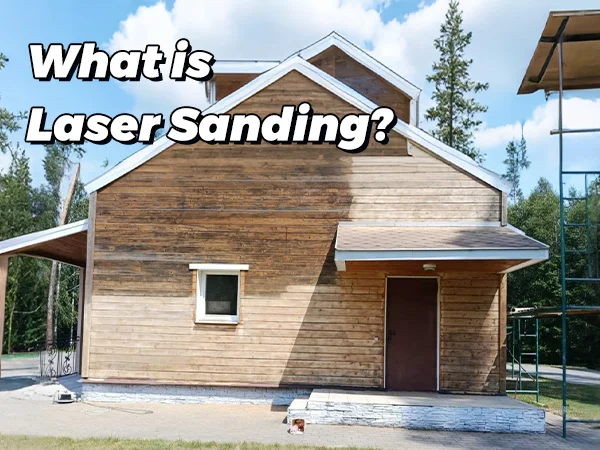
1.What is laser sanding?
1.1 What is traditional sanding?
Traditional sanding is a common surface preparation method. It uses abrasive materials or mechanical tools to remove and smooth unwanted material from the surface, preparing it for painting or finishing.
The usual traditional sanding tools include sandpaper, grinding tools, and other abrasive methods. Traditional sanding is mainly used to smooth uneven surfaces and prepare surfaces before painting or finishing.
1.2 What is laser sanding?
Laser sanding is a laser-based surface preparation process. It uses laser energy to remove unwanted surface layers, such as rust, paint, oxides, oils, coatings, and other contaminants.
Unlike traditional sanding, laser sanding is not designed to level or smooth uneven surfaces. Instead, it focuses on removing unwanted layers while preserving the underlying material.
It is widely used for applications such as paint removal from wood surfaces and rust removal from metal components during restoration and surface preparation.
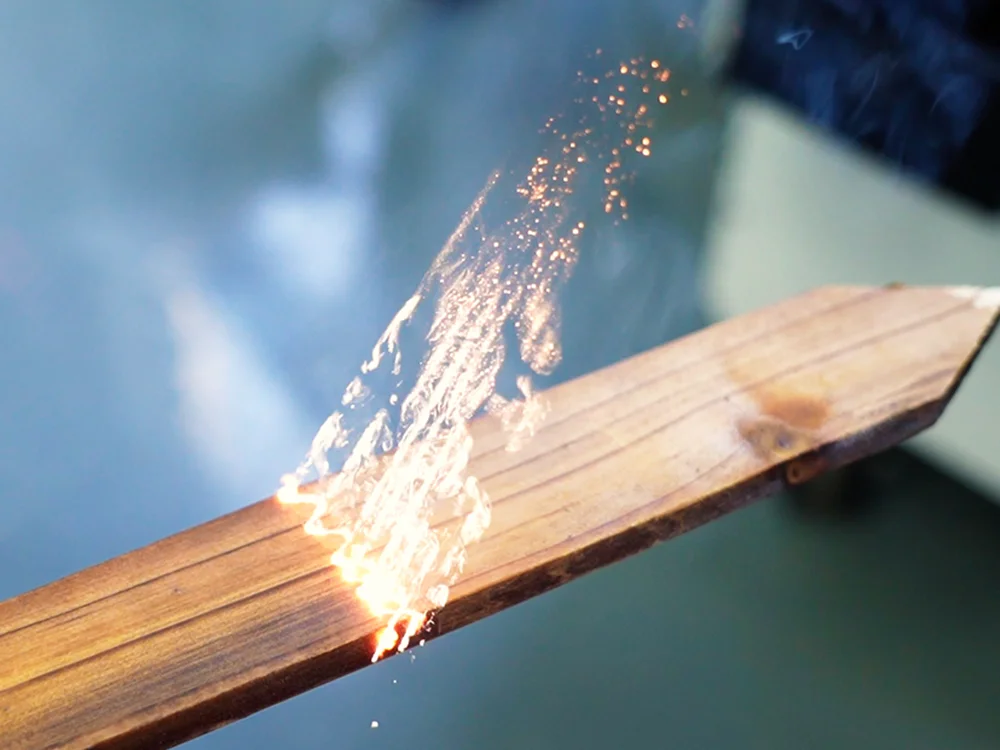
Laser sanding on wood – removing rust on metal surface

Laser sanding on metal – removing rust on metal surface
2. Traditional Sanding vs Laser Sanding: What’s the Difference?
The term “laser sanding” is used because it serves a similar purpose to traditional sanding — preparing a surface by removing unwanted material or layers before further processing.
However, the working principles are different.
Traditional sanding removes material through physical abrasion using sandpaper, abrasive tools, or grinding equipment. Laser sanding uses concentrated laser energy to selectively remove unwanted surface layers, such as paint, rust, coatings, and contaminants, without direct mechanical contact.
In other words, laser sanding does not “sand” a surface in the traditional way. Instead, it provides a laser-based alternative for surface preparation applications where conventional sanding methods may be inefficient or difficult.
3. Real Laser Sanding Applications from HANTENCNC Customers
3.1 Laser Sanding for Metal Surface Preparation

Traditional sanding and polishing can effectively restore brass surfaces, but they often require direct contact, making it difficult to treat intricate details. These methods may also cause surface scratches and uneven finishes, and they require consumable abrasives.
HANTENCNC Laser Sanding Solution


3.2 Laser Sanding for Wood Restoration


3.3 Laser Sanding for Industrial Equipment Maintenance
Laser sanding of Marine Propeller for Vessel Maintenance


This example shows that laser sanding can help with marine equipment maintenance, restoring large metal parts, and preparing industrial surfaces.

4. When Should You Choose Laser Sanding Instead of Traditional Sanding?
Laser sanding is not designed to replace traditional sanding in every application. Traditional sanding remains a practical and cost-effective solution for tasks such as smoothing uneven surfaces, removing minor imperfections, and preparing surfaces for finishing.
However, laser sanding provides an alternative solution for applications where traditional sanding has limitations. It is especially suitable for removing unwanted surface layers, such as paint, rust, coatings, and contaminants, while preserving the underlying material.
Laser sanding is also beneficial for complex shapes, delicate surfaces, and large components where manual sanding can be time-consuming and difficult to control.
Compared with traditional sanding, laser sanding requires a higher initial investment and may not be the most economical choice for simple, small-scale surface finishing tasks.
However, for applications that require a cleaner process, less manual labor, high precision, fewer consumables, and efficient surface preparation, laser sanding offers a more advanced alternative.
5. From Sanding to Sandblasting

Why 6000W Laser Cleaning Is Replacing Sandblasting for Ship Hulls and Large Steel Structures?
3.2 Hourly Operating Cost Comparison (Including Labor, USD) The hourly operating cost comparison includes labor...
Jan

Laser Cleaning vs Sandblasting
Most industries, specifically metal industries, need surface cleaning technology. Why do they need cleaning? First,...
Dec

Top Alternatives to Sandblasting: Why Laser Cleaning Takes the Lead
When you are preparing an object, proper surface preparation is crucial. Suppose you have an...
Jul