Plastic is naturally flexible and lightweight. Because of its unique properties, it is widely used in our everyday applications. However, marking plastic is different from marking other materials, such as metal. It is difficult to engrave plastics, and it is not an efficient solution. For this reason, plastic products are marked by different methods. In this case, laser marking plastic is one of the most effective ones.
When it comes to laser marking plastic, finding the right machine can also be tricky. For example, different types of lasers, their sizes, functions, and applications all matter. If you want to mark manually, you can choose a general-purpose laser marker. If you need it for a production line, then a flying-type laser marking machine would be ideal.
In addition, fiber, CO₂, and UV lasers each have their own pros and cons. Even their application is different. In this article, we will try to figure out this information. Additionally, we will explain, in technical terms, how laser marking of plastic offers a damage-free solution.
Laser Marking on Plastic Parts
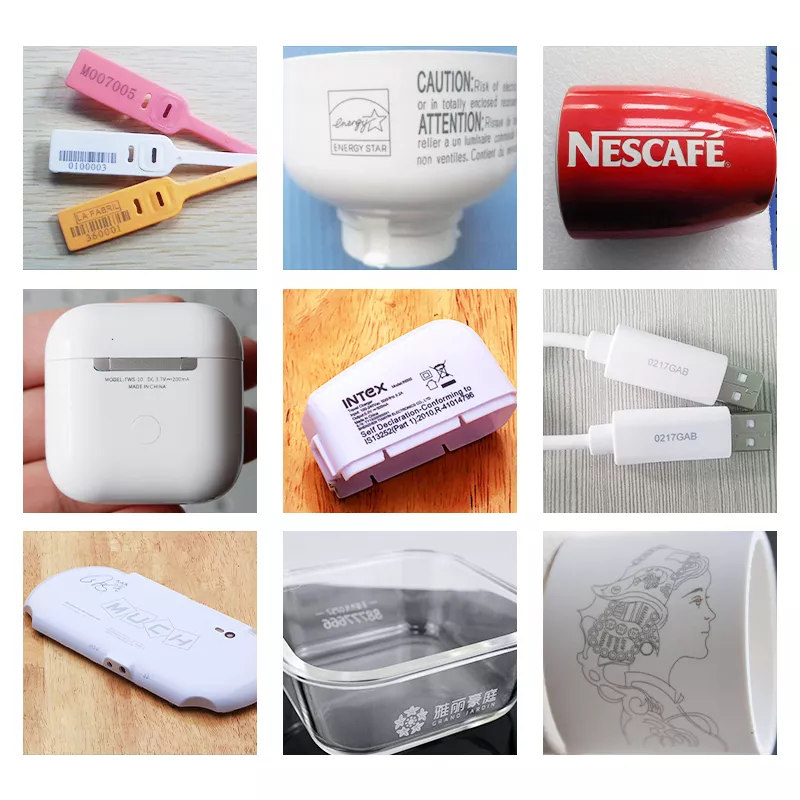
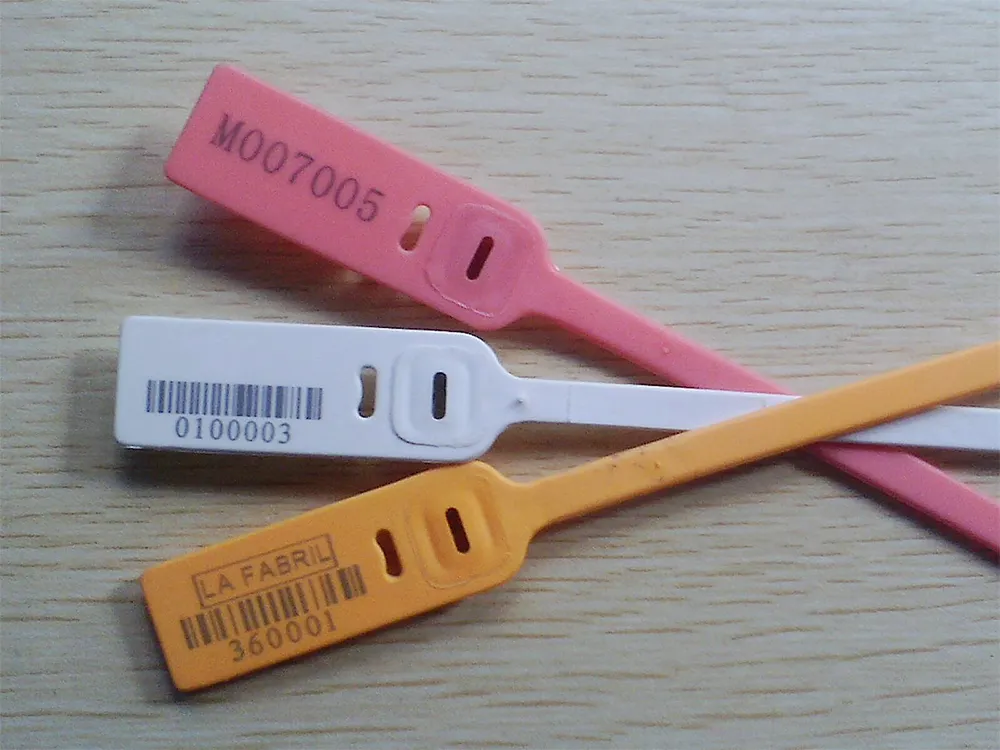
Laser marking on plastic is a process of plastic traceability. It uses a highly focused laser beam to change the properties of the plastic surface. It either changes color or produces bubbles underneath the surface. As a result, you can see a permanent and high-contrast mark.
Laser marking on plastic is usually permanent and can withstand many conditions. It doesn’t fade over time nor wear off. Thus, most manufacturers opt for laser marking as an ideal method for plastic traceability.
During marking, the laser does not physically contact the surface. It chemically interacts with the plastic, changing its color without burning it. Typically, different laser wavelengths affect plastics differently. For this reason, manufacturers choose specific lasers to get the cleanest mark on plastics.
Moreover, a laser marking machine for plastic can easily be integrated into a production line. The flying laser markers can mark hundreds of plastic parts in a few minutes. You can easily swap designs from barcodes to logos. The final result is high-quality, sharp, and readable. Besides, compared to other marking methods, laser markers are safe for delicate plastic parts.
In terms of durability, it resists fading, scratching, chemicals, and other harsh conditions easily. They do not wear off easily, unlike ink or stickers.
Laser marking is widely used in various sectors. In production lines, laser markers are used to mark barcodes, UDI codes, or other traceability information. Its use can be observed in the medical, automotive, aerospace, and electronics industries.
Types of Laser Marking for Plastic
You can mark plastic using various types of lasers. Although you can mark with all laser types, the results differ significantly. Therefore, you must carefully assess the plastic compatibility before use.
Fiber Laser Marking Machine
Fiber lasers are one of the most versatile and effective media. It uses infrared radiation near 1064 nm to act on materials. In addition, they are highly efficient and well-suited for industrial production lines. Beyond plastics, it is also quite popular for marking metals.
Fiber lasers can handle various types of plastics. Examples include ABS, Polycarbonate, Nylon, and dark polymers.
CO2 Laser Marking Machine
CO2 lasers operate at 10,600 nm in the infrared. It is ideal for marking non-metals, such as wood, leather, glass, and paper. When it comes to plastic, they handle thick, sensitive, heat-resistant ones smoothly.
UV laser Marking machine
UV lasers generally use a 355 nm wavelength for cold marking. Instead of burning the material, UV lasers break the chemical bonds. Thus, it produces precise, clear marks on plastics. It works excellently on delicate glass and plastics. UV lasers can safely work on almost all types of plastics. From resins to HDPE, LDPE, PP, and PVC, you can use it effectively with all of them.
Which Laser is Suitable for Marking Plastics?
UV lasers are among the top-priority choices for marking plastic materials. As mentioned earlier, this technology uses a concentrated 355 nm wavelength, which is highly effective for plastic marking. Unlike traditional lasers, it also operates through cold marking. Generally, traditional methods are prone to plastic melting, warping, or burning out. UV lasers’ high-energy light only breaks molecular bonds without depending on heat. As a result, surrounding materials remain safe during the process.
This damage-free marking process produces clear, sharp, and contrast marks or logos. As a result, it ensures that barcodes or tracking numbers can be easily identified. When scanning barcodes, clear & high contrast marks play a crucial role. Therefore, you can try UV laser markers even on sensitive plastics like polypropylene, polyethylene, and others.
Which Plastics Can Be Laser Marked?
Laser marking can mark a wide variety of polymers for various applications. Polymer types typically vary based on their composition and the additives used in their construction. Lasers also respond differently to specific polymers.
ABS plastics are more commonly chosen for plastic marking. It becomes dark when exposed to laser energy. Thus, its chemical reaction produces a dark, smooth mark on a natural surface. Polycarbonate also delivers outstanding results. Its transparent surface creates sub-surface markings.
Besides, PET works well with UV wavelengths for colored markings. It can resist harsh chemicals and is used for food packaging. Nylon varieties also generate clear, sharp, light-colored marks on dark surfaces. Lastly, polyethylene and polypropylene can also achieve long-lasting marks. Neither requires any chemical additives, which would add extra cost.
How Laser Performs Damage-free Marking on Plastic
As mentioned earlier, plastic is a flexible material. Even a small amount of heat can deform or melt it. Therefore, thermal marking is quite tricky. However, in the modern world, laser marking has become a highly popular solution. By using different pigments in plastic, color marking can be easily achieved with a laser. Let’s explore how laser marking provides damage-free marking.
Color Modification Through Photochemical Reactions
When you use UV lasers on plastic, the results are optimal. The 355 nm wavelength directly breaks the molecular bonds of plastic. This photochemical reaction occurs without producing any heat or thermal damage.
Controlled Micro-foaming Technology
In micro-foaming, laser energy initially melts the plastic. When it cools, it traps tiny gas bubbles inside the plastic. This way, it alters light refraction, resulting in a light-colored mark without deforming.
Use of Laser-Responsive Additives
Many manufacturers mix special additives, pigments, or metal oxides into raw resins. These resins help to absorb various wavelengths. But for UV lasers, you do not need to add any special elements, since they work with chemical bonds.
Ultra-Short Pulse Processing (picosecond and Femtosecond Lasers)
Lasers emit short pulses of energy. It lasts for only picoseconds or femtoseconds. Thus, the laser alters the surface structure even before heat spreads. It makes them ideal for precise, clean, and damage-free marking.
Common Laser Marking Techniques for Plastics
Not all laser marking methods are ideal for plastics. For example, laser engraving is not effective or an ideal marking solution for plastics. In manufacturing, color-changing, ablation, and foaming are widely used for laser marking of plastic.
Color Change
The lasers alter the pigments in polymers rather than melt them. This chemical reaction later results in a crisp, dark, or light-colored mark. After marking, the surface remains completely smooth and flat.
Ablation
In ablation, the laser removes the coating layer from the material surface. It reveals the underlying material and uses only a small amount of heat.
Foaming
Foaming is a process in which a laser melts the target area, trapping tiny bubbles. These bubbles refract light, raising a mark on the surface. In general, it works beautifully on dark plastics.
Best Laser Marking Machine for Plastic
JPT water-cooled 3/5/10W UV laser machine is a high-end tool designed to handle a wide range of plastics. It emits light at around 355 nm, in the UV range. Shorter wavelengths also indicate higher photon energy. Such higher energy can directly interact with the chemical bond. Another crucial benefit is its support for cold marking. It ensures a clear, smooth marking effect.
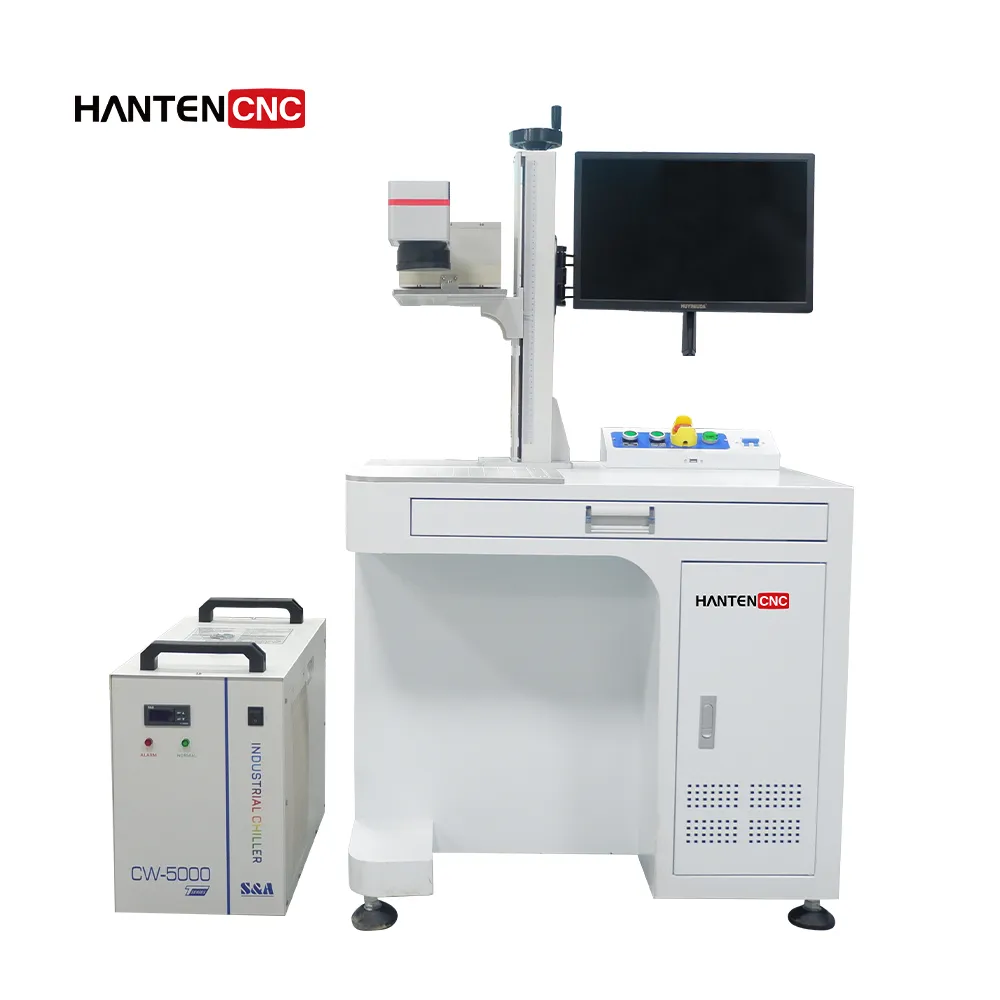
Its laser source is JPT, and it offers 3W, 5W, and 10W power levels as needed. The frequency range is 20 kHz-150 kHz, and the marking area is 110 mm × 110 mm, with a high beam quality (M² ≤ 1.2). Overall, you can easily rely on this modern device to achieve professional results.
Expert Advice
Apart from the topics discussed in this article, there are also several other areas where you should do a little more research. For example, when choosing the right laser marking machine, you may be looking for one for a small workshop or for plastic marking in a production line. Your target application will certainly be different. For this reason, you will find many types of laser marking machines available in the market.
Before choosing the right laser marking machine, first understand what purpose you will use it for. What is your plan, and what type of marking result do you expect? In addition, choosing the right manufacturer is a very important step because machine quality, features, functions, and, most importantly, after-sales service all matter.
Hanten CNC is one of the leading manufacturers of laser marking machines in China. The company offers a wide range of laser markers, including fiber, CO2, and UV laser marking machines. With exciting offers and benefits, purchase one for your business today. For more information, feel free to reach out to our customer support team.