
Imagine starting a busy work day! You have several cutting jobs waiting to be finished. You turn on your laser cutter, but the cuts are rough. The machine is overheating, or it suddenly stops working. Because of this, your production is delayed, or you may have missed the deadlines. These problems are usually not caused by the machine itself. They happen because you have overlooked regular maintenance. That is where fiber laser cutter maintenance comes in.
A few simple maintenance tasks can keep your machine in good shape. It ensures your machine runs smoothly and improves cutting quality. Besides, it reduces downtime and delivers reliable performance for many years.
Why Is Fiber Laser Cutter Maintenance Important?
If you want your laser cutting machine to last a long time, regular maintenance is a must. So, it keeps your device safe and functional.
A device’s performance depends heavily on its condition. Similarly, a laser cutting machine is not an exception. You must keep it in good shape to ensure precision cutting. And the most crucial parts are the protective window, device calibration, gas flow, and the fiber laser source.
Over time, metal dust, spatter, and debris build up around critical components. Protective windows and lenses become dirty, rails lose lubrication, and dust enters optical seals. Additionally, dirty optics absorb heat, which can cause thermal lensing, beam distortion, or damage to the fiber laser source.
Therefore, you will need to properly maintain your fiber laser cutter to ensure it remains in good condition.Proper maintenance can significantly extend the service life of the machine. It can also eliminate the need for part replacement and costly repairs and unexpected downtime. Cutting results remain efficiently the same over every project.
From an economic perspective, laser cutter maintenance offers additional benefits. For example, clean optical components reduce energy loss and help maintain stable cutting efficiency. Thus, it reduces energy costs by consuming less electricity. Proper lubrication minimizes friction losses during use. A sudden breakdown can stop production entirely without proper maintenance.
Safety is a big concern here. Dirty exhaust fans or clogged filters lead to fire hazards. If you do not maintain your device properly, metal dust and fumes can be generated during production. As a result, your long-term health will be at risk. Meanwhile, a well-maintained machine ensures a much safer workspace for everyone.
Which Parts of a Fiber Laser Machine Need Regular Maintenance?
In laser cutting, several components work together to ensure precision cutting. When performing maintenance, several components are crucial.
First comes the protective window (protective lens). Located at the bottom of the cutting head, this protective window must be inspected and cleaned regularly to prevent dust and spatter from damaging the internal optics.
Next come the guide rails and linear tracks. You must regularly lubricate them for smooth operation.
The cooling and air-assist systems are also important parts of maintenance. The cooling system keeps the laser source and cutting head at a stable operating temperature. If it is a water-cooled system, replace the coolant regularly according to the manufacturer’s recommendations. The assist gas, on the other hand, keeps the cutting area clean by blowing away molten material, smoke, or debris. The air-assist gas needs to be dry and clean.
The exhaust system is another important component of the machine. It collects hazardous fumes and fine metal dust from the workspace. If the exhaust system is faulty, electrical cabinets may accumulate dust over time.
Ignoring all these crucial parts can result in expensive repair bills. Laser cutter maintenance and the simple habit of cleaning can save hours of frustration later. Taking a few minutes for a routine check-up and basic care may stop tomorrow’s machine failure.
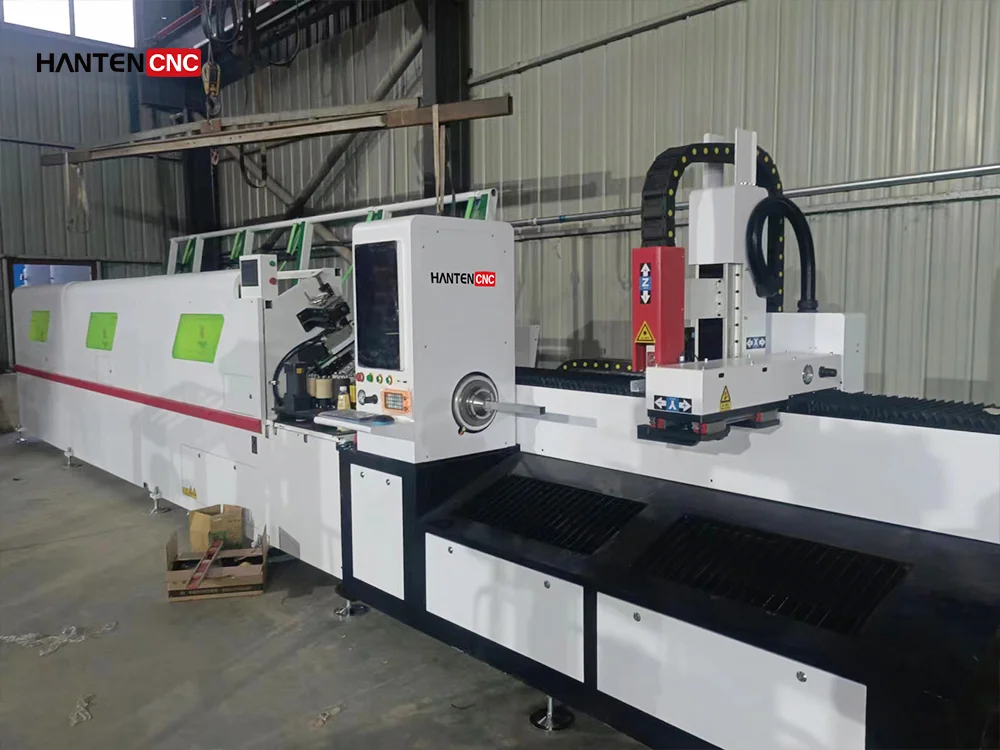
How to Maintain a Fiber Laser Cutting Machine (Step-by-Step)
Keeping a laser cutting machine in good condition is not difficult. A few simple maintenance tasks are typically enough to cover 70% of the total care. The remaining tasks might be tricky, as they involve the laser source, lenses, and other technical components. If you regularly perform these tasks, you can ensure 100% consistent cutting quality and a longer lifespan.
Keep the Machine Clean
Dust, dirt, and other debris can degrade your machine’s performance. For this reason, you need to clean it daily and inspect for dust. Make sure the worktable is free from metal dust slag. Use a soft, lint-free cloth. Or, you can also vacuum the interior to remove fine dust.
Clean the Optical Components Carefully
Dust and spatter build up rapidly around the laser cutting head, which can degrade beam quality and cause focal shifts. Daily inspection of the protective window (protective lens) is essential to protect the internal optics.
Optical components are extremely sensitive to contaminants and easily scratched. Therefore, follow the manufacturer’s recommended cleaning guidelines. In general, you could use high-purity isopropyl alcohol or anhydrous ethanol with a lint-free lens cleaning swab. Be gentle and use circular motions for better cleaning results. Never touch or disassemble internal focusing or collimating lenses without professional guidance.
Maintain the Nozzle and Air Assist System
Clean the nozzle and ensure there is no blockage. Always check the air pressure before starting the cutting process. Inspect the nozzle for moisture and oils. A clogged nozzle affects the beam quality. Regular checks and keeping it clean ensure even and sharp cuts.
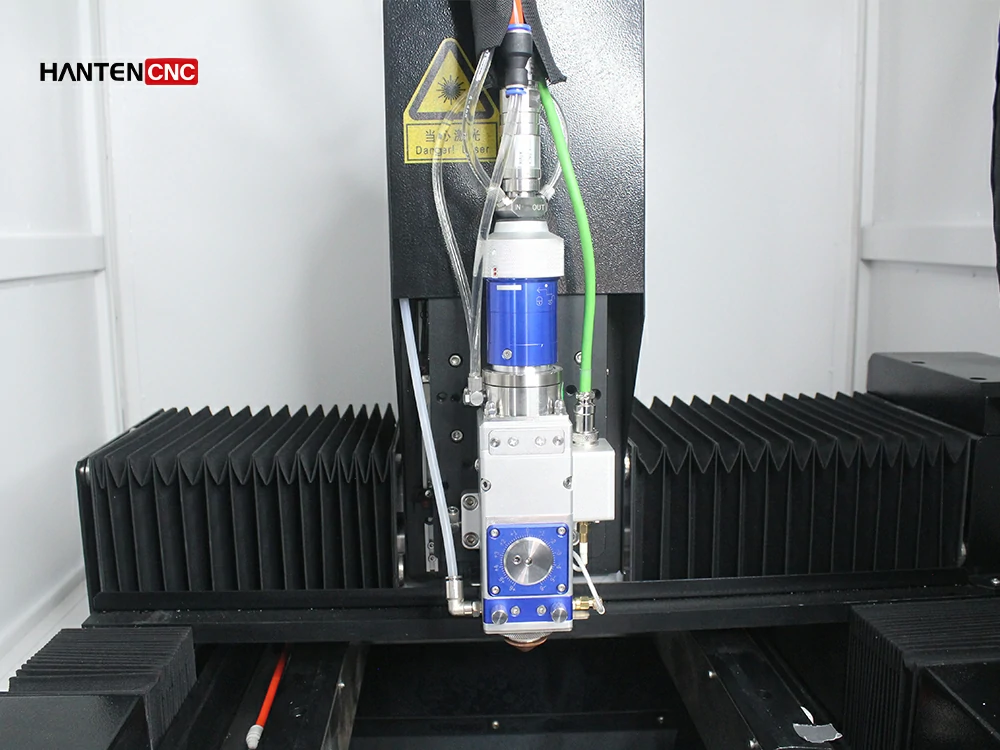
Take Care of the Cooling System
The cooling system is an essential part of a fiber laser cutter. Without it, the machine may show anomalies and part failures. Therefore, check the coolant level very often. Replace the coolant according to the chiller manufacturer’s maintenance recommendations. Make sure the coolant is recommended by the fiber laser source and chiller manufacturers.
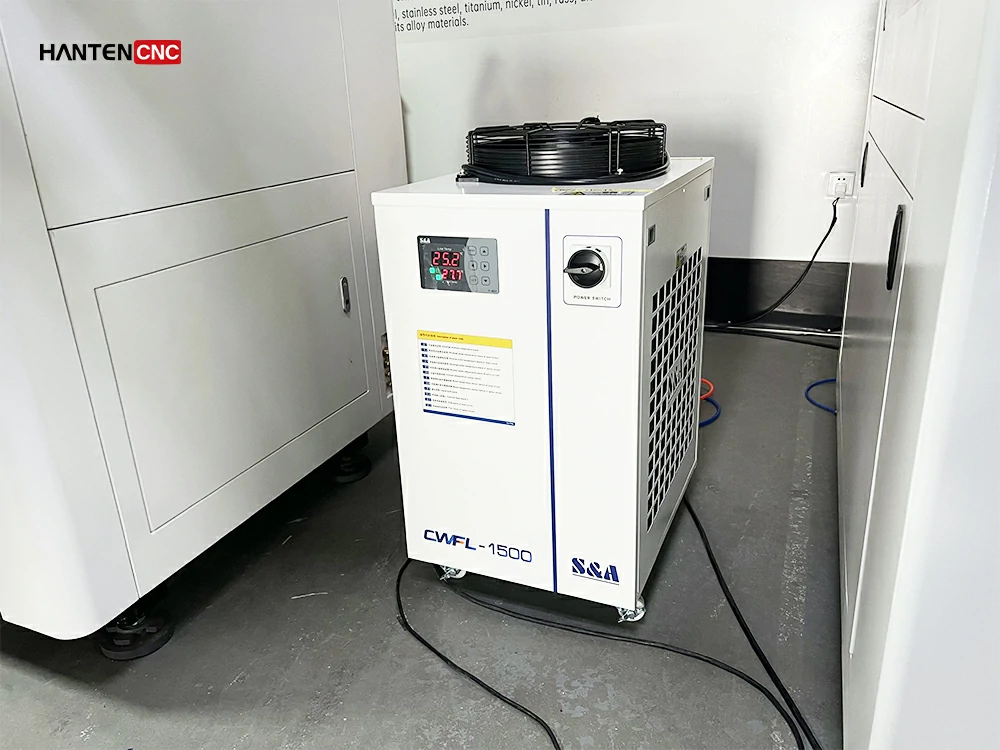
Lubricate Moving Parts and Guide Rails
Lubricants are crucial for decreasing friction. Friction gradually wears down the guide rails and gear racks, reducing positioning precision. Clean off metal dust and check the automatic lubrication system or apply fresh oil and grease to the tracks. This ensures the laser head moves smoothly without jitter or mechanical resistance.
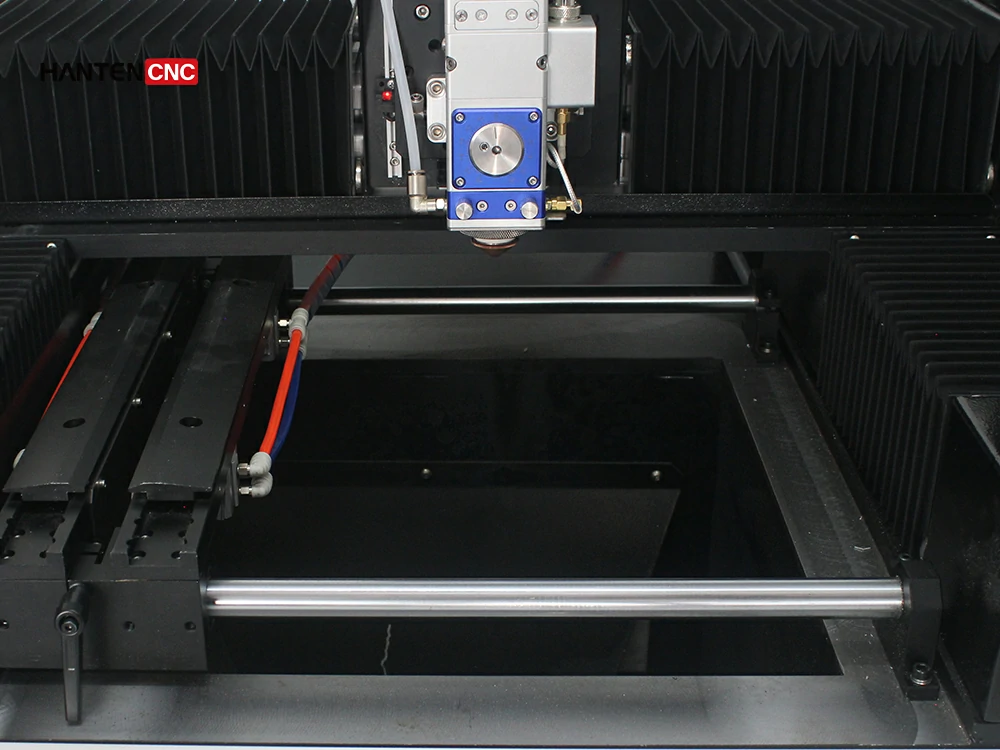
Check Machine Alignment
Verify the cutting head alignment and nozzle centering regularly. Also, verify the cutting head alignment and nozzle centering.
Misalignment can result in weak, unsuitable cuts on the material surface. Apply a nozzle-centering test to verify the laser position. Check the motion of both axes and keep it precise for smooth cuts.
Inspect Wear Parts
Damaged or partially damaged parts degrade cutting quality. Check the parts carefully. Inspect the protective window for scratches, burns, contamination, or coating damage. Inspect your drive belts for cracks. Replace filters or worn parts to prevent any breakdowns.
Keep the Software Up to Date
Update the software and firmware to the latest version. The newer version comes with higher cutting efficiency and fewer or no bugs. Before updating, always back up your settings parameters to avoid losing them after every update.
Fiber Laser Cutter Maintenance Schedule
There are various types of laser cutter maintenance tasks. Each is performed in a specific period of time. Some tasks should be done every day, while others only need attention weekly, monthly, or yearly. You can prepare a simple route for these maintenance tasks.
Daily Maintenance
Your daily laser cutter maintenance should include a few steps. The initial step is to clean the workbench of any dust or slag. Then, check the coolant level to see whether it is working properly. Make sure it controls heat efficiently and avoids overheating. Inspect the cutting nozzle and use accurate air-assist gas pressure. Look closely for damaged parts or cracks.
Weekly Maintenance
For weekly laser cutter maintenance, clean the protective window (protective lens) with high-purity isopropyl alcohol. Blow out the moisture from your air compressor filter and air-assist lines. Inspect the laser power output and cutting performance. Also, check the control panel for error messages and unresolved alarms.
Monthly Maintenance
Check the coolant level, inspect the deionization (DI) filter, and replace the water chiller coolant if necessary with fresh purified or deionized water. Besides, wipe down the rails and gear racks thoroughly, refill or check the automatic lubrication system, and apply new lubricants or grease. Power down the system before checking electrical connections for safety. Don’t forget to clean the exhaust fan and run a test cut to calibrate the cutting head, nozzle centering, and focal position.
Yearly Maintenance
Perform a broader, top-to-bottom inspection of the machine chassis. Replace all worn parts, such as protective lenses, seals, and others, as needed. Conduct a professional calibration for a long-term motion test and maintain its accuracy. Perform preventive maintenance to keep your fiber laser cutter operating at peak efficiency.
How to Protect Your Laser Machine During Winter?
Maintaining the fiber laser cutting machine in winter is quite challenging. If the ambient temperature falls below freezing, it can severely damage the machine’s cooling system. At this temperature, water solidifies as ice and expands inside the cooling pipes. Therefore, always keep your machine in a room with a temperature above 50°F (10°C). Never leave it out overnight in a cold shop.
Here, you can protect your machine using manufacturer-specified low-conductivity antifreeze. If necessary, mix approved antifreeze with deionized or distilled water according to manufacturer guidelines to decrease the freezing temperature. Never use standard automotive antifreeze, since its high conductivity can permanently damage the laser source and the cooling system. If the machine is turned off for a long time, always drain the water completely, or keep the chiller running continuously during cold snaps.
Final Thought
Fiber Laser cutter maintenance tasks typically keep your device in good shape. Besides, it significantly reduces laser cutter repair costs. Create a general routine and plan each task periodically. There are task requirements for daily, weekly, monthly, and yearly tasks.
A simple daily habit of checking can ultimately save you from long-term, costly repairs. Just a few minutes of cleaning can make a big difference. If you need further guidelines or have any questions regarding laser cutting maintenance, feel free to contact us. We have a friendly team always ready to assist you with accurate information.