Aluminum is one of the most widely used metals on Earth. Since it is lightweight, it offers the best solution for portable items. You can think of electronic housings, auto parts, kitchen appliances, aerospace components, and many more. Consequently, welding is a must when making those aluminum products. In this “How to Remove Aluminum Oxide” guide, we will introduce several methods for removing aluminum oxide. This guide will also compare laser cleaning with other traditional methods.
What is Aluminum Oxide
Aluminum oxide (Al2O3)naturally forms on the aluminum surface. It occurs instantly when it comes into contact with oxygen in the air. Even a millisecond of exposure may create a thin oxide film on the aluminum part surface. Although this layer is nanometers to micrometers thick, it is highly dense. The oxide layer is hard and chemically stable.
This oxide layer typically acts as a primary protective barrier. Because of this, the metal part doesn’t further oxidize, which makes aluminum highly corrosion-resistant. If you think of steel, the oxide layer flakes and continues to grow. Aluminum oxide doesn’t do that. It adheres tightly to the surface and seals the underlying metal from environmental attack.
It is important to note that aluminum oxide has properties different from those of the base metal. It has higher electrical resistance, hardness, and thermal stability. These characteristics are suitable for corrosion protection. However, it becomes a problem when you try to weld on it.
Why Aluminum Oxide is a Problem in Welding
The rate at which Al2O3 melts is the main problem. Pure aluminum melts at about 660 degrees, but aluminum oxide melts at 2050 degrees. If you don’t clean the oxide layer before welding, the base metal will melt first, while the oxide layer remains solid. In this way, it makes a barrier between the filler material and the liquid weld pool.
This problem usually makes it challenging for good fusion to happen. The oxide film can sit atop the weld pool and form holes in it. In addition, it makes the welding less stable.
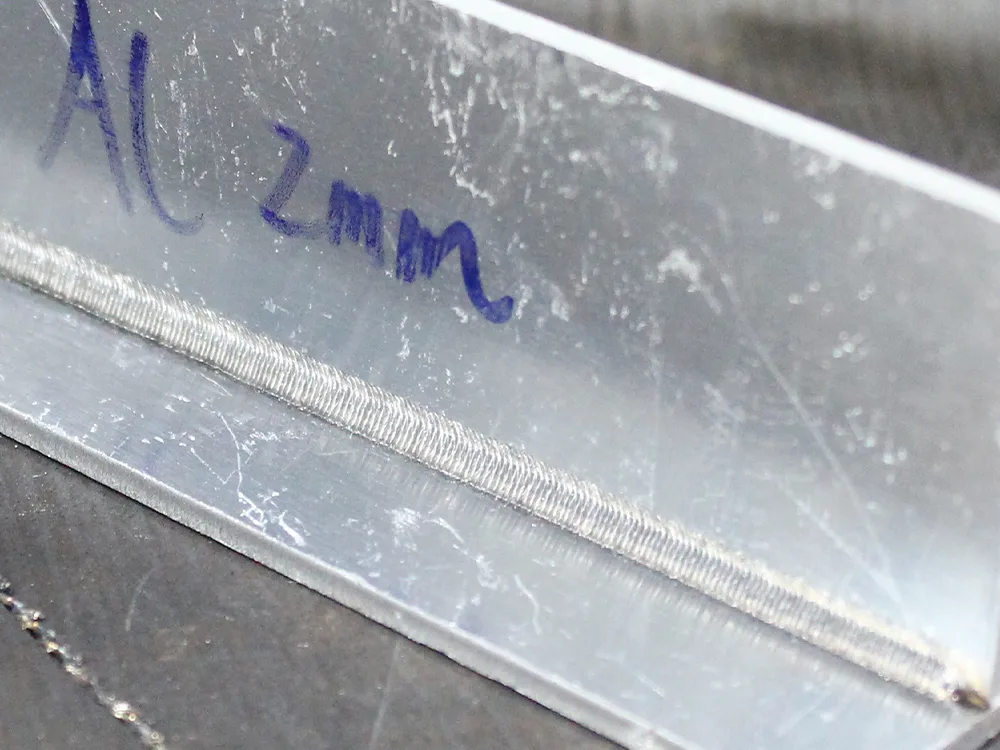
Moreover, aluminum oxide is highly porous. On the surface, it can trap moisture, oil, and other contaminants. These elements quickly decompose at high temperatures and produce gas. Eventually, it produces weld porosity. If you do not remove the oxide layer, the following 4 problems may occur during welding.
- The oxide layer prevents proper fusion between the filler and the base aluminum.
- There is a high possibility of poor penetration. It will result in shallow, inconsistent weld depth.
- Trapped moisture or oil may produce weld porosity.
- The high electrical resistance of the oxide film causes unstable welding.
How to Remove Aluminum Oxide Before Welding
You can remove aluminum oxide in various ways. You should know that proper removal of aluminum oxide ensures defect-free work. Therefore, choosing the best cleaning method is crucial. “How to remove aluminum oxide” depends on the final product’s quality requirements.
Mechanical Cleaning
Mechanical cleaning is a traditional way of cleaning aluminum parts. It usually uses regular items like brushes, grinding kits, and sanding papers. The physical abrasion breaks the oxide layer and lifts it from the surface.
Brush cleaning primarily uses a stainless-steel wire brush to clean the aluminum surface. The bristles scrape the surface, disrupting the oxide film.
Grinding uses a rotating abrasive wheel that cuts into the surface. Compared to brush cleaning, grinding is much faster.
Sanding involves abrasive grains rubbing against the surface. It gradually wears away the oxide film.
Upsides
- Mechanical cleaning is much cheaper and needs less setup. Compared to chemical or laser cleaning, it is much simpler.
- For removing thick layers, mechanical cleaning could be ideal for your project.
- Mechanical cleaning is suitable for field work and small workshops.
Downsides
- This method damages the base metals.
- There is a high risk of contaminating aluminum.
- Surface quality depends on the worker’s skill
- Mechanical cleaning produces dust and debris.
- This method cannot deliver consistent results, especially in large-scale production.
Chemical Method
Chemical cleaning involves using various types of cleaning agents. They remove aluminum oxide and surface dirt through a chemical reaction. Solutions typically dissolve, loosen, and convert the oxide layer. As a result, it reduces the mechanical damage to the base metal.
Solvent Cleaning dissolves oils, grease, and organic dirt. It cleans the surface, allowing oxide-removal steps to work more effectively.
Alkaline cleaning reacts with aluminum oxide and surface dirt. It loosens light oxide films and removes oils instantly.
For thicker oxide layers, acids are used to dissolve them completely. This reaction removes oxide uniformly across the surface. Later, rinsing and neutralization typically stop the reaction.
Upside
- Chemical cleaning offers uniform surface treatment. It is effective for complex shapes and hard-to-reach areas.
- This technique reduces mechanical damage significantly.
- Chemical cleaning is ideal for batch or automated processing.
- It removes oils and oxides in one process.
Downside
- Chemical cleaning is not environmentally friendly. It requires chemical handling and safety measures.
- There are concerns about waste disposal and the environment.
- There is a high risk of over-etching or surface corrosion.
- It needs additional rinsing and drying steps.
Laser Cleaning
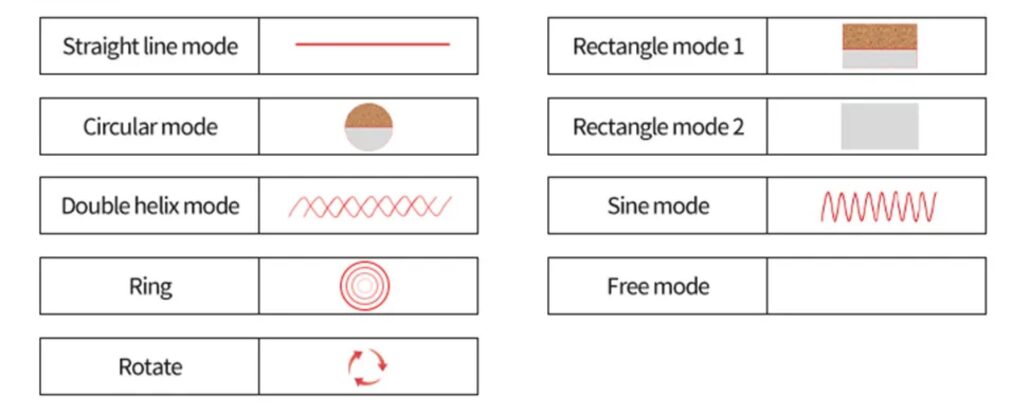
Laser cleaning is a non-contact surface preparation process. It uses a highly focused laser beam to remove oxide layers from the aluminum. Aluminum oxide precisely absorbs laser energy more than reflective aluminum.


When the laser beam hits the surface, the oxide layer rapidly heats. It causes micro-explosions, vaporization, or thermal stress. Eventually, it breaks the bond between the oxide layer and the base metal. The oxide detaches as fine particles or fumes. The fume system later extracts it, leaving the aluminum part clean and shiny.
Note that the aluminum is typically a reflective metal. Therefore, it experiences minimal heating or damage. After all, laser cleaning produces a clean, oxide-free surface which is ideal for welding.
Upside
- Laser cleaning is precise and delivers consistent results.
- It is a totally non-contact, non-abrasive, and non-chemical method. As a result, laser cleaning is an environmentally friendly method.
- Laser cleaning is easy to automate. You can install it with the production line as per your requirements.
Downside
- Laser cleaning requires higher initial costs than other setups.
- This method involves safety controls and skilled operators.
Laser Cleaning vs Traditional Cleaning: Which is Better for Aluminum Oxide Removal
Both traditional cleaning and laser cleaning are widely popular in industrial projects. However, there is no single method ideal for all projects. Each type is ideal for specific applications. When comparing laser cleaning and traditional cleaning, a few factors to keep in mind are:
Surface Consistency
Laser cleaning gives better, more uniform results. Traditional methods, on the other hand, depend on workers’ skill, which produces uneven oxide removal. Besides, traditional methods also require additional surface preparation. After all, laser cleaning wins here.
Material Damage
Traditional, specifically mechanical cleaning, can scratch or remove base metal. Chemical methods, on the other hand, may do over-etching.
Laser cleaning is a non-contact process that prevents damage to the base aluminum. This way, the method preserves the structural integrity. It also maintains the original surface finish for high-quality welding.
Automation
Laser cleaning can be automated as needed. You can easily integrate it with the production line. Mechanical cleaning, on the other hand, is mainly manual. However, chemical cleaning may be integrated with the automated production.
Environmental Impact
Chemical cleaning is not environmentally friendly. It produces harmful waste that must be disposed of safely. Laser cleaning is a non-contact process—the laser oxide forms fume, which can be captured with a fume extractor.
Speed
Laser cleaning removes oxide rapidly. It uses a highly focused laser beam that works instantly. Mechanical cleaning requires rubbing, grinding, or sanding, which takes time to complete. Chemical cleaning is comparatively faster than mechanical cleaning, but it requires a messy setup. In this case, laser cleaning also wins.
Long-Term Cost
Laser cleaning has a higher initial cost. However, it significantly reduces the operating cost in the long run. Besides, laser cleaning machines also need less maintenance. Mechanical and chemical cleaning needs less initial cost. However, they need higher maintenance and labor costs. If you compare all the costs, you will find that laser cleaning balances all and eventually becomes a cost-effective solution.
Precision
There is no doubt that laser cleaning offers high precision. However, chemical cleaning can also provide high precision, but it may damage the base metal. Mechanical cleaning produces the lowest precision of all.
Maintenance
Mechanical tools wear quickly and need frequent replacement. If you consider chemical cleaning, you will need to change the chemical baths periodically. Laser cleaning systems have low consumables. It also requires less maintenance.
Conclusion
“How to Remove Aluminum Oxide” can be done in various ways. Regular methods are mechanical, chemical, and laser cleaning. Laser cleaning offers the safest, most precise, and cost-effective solutions.
| Parameters | Mechanical Cleaning | Laser Cleaning |
|---|---|---|
| Cleaning Type | Physical Abrasion | Laser Envery |
| Surface Consistency | Less Effective | Highly Effective |
| Material Damage | May scratch or remove base metal | Minimal impact on the underlying aluminum |
| Speed | Moderate, slower on large areas | Fast and efficient for production |
| Automation | Difficult | Easy |
| Environmental Impact | High | Low |
| Cost | Low initial cost, higher operation cost | Higher initial cost, lower operation cost |
Laser cleaning is the best solution for removing aluminum oxide before welding. However, the price may seem higher at first. However, in the long run, it balances the overall ownership costs. For information, feel free to reach out to our customer support team.