Industrial manufacturing often requires surface preparation. This can be for raw materials or rework. You might need to clean, prepare, or modify the surface before the next production step. You might need to remove rust, paint, oxides, or coatings. In this case, industrial laser ablation offers an efficient solution.
Consider traditional cleaning methods such as chemical cleaning, sandblasting, or mechanical methods. All these methods are time-consuming and hazardous. Mechanical grinding may damage fragile components. Industrial laser ablation appears as an effective alternative.
What is Laser Ablation?
Laser ablation is a common material removal process used in various sectors. Its main purpose is to remove a portion of material from its surface. It can remove metal, plastic, ceramic, glass, or other materials. Since it is a non-contact process, many manufacturers prefer using it over other methods.
In fabrication industries, laser ablation is widely used for marking and cleaning. It removes only a thin single layer at a time. So, the material underneath remains intact and damage-free throughout the entire process.
Industrial laser ablation is closely linked to both laser cleaning and stripping. You can easily remove various materials such as rust, paint, oil, grease, oxides, and other coatings. It can also remove material from the base material itself.
How Does Laser Ablation Work?
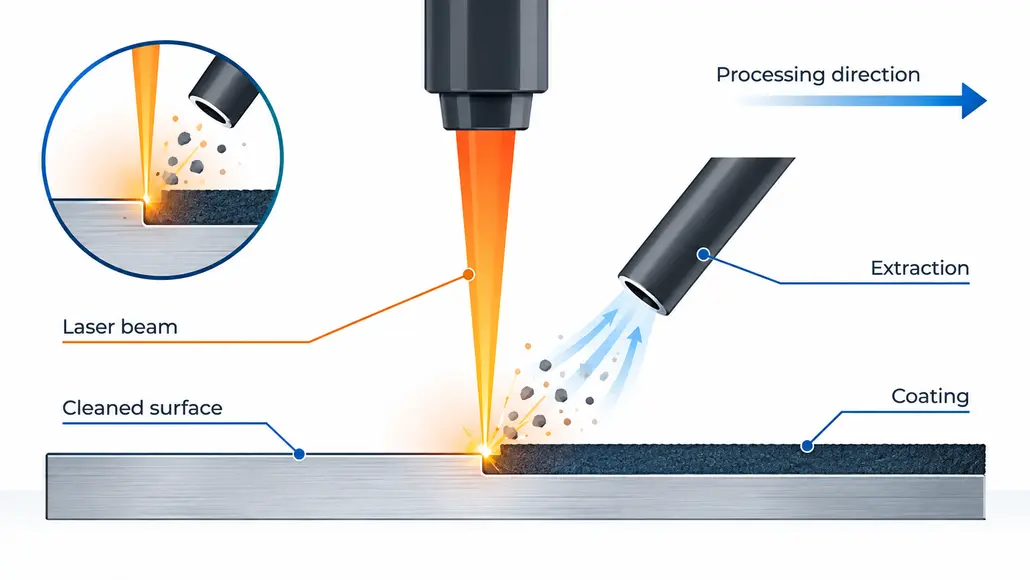
The process begins by focusing a highly concentrated light beam on a tiny spot of a solid surface. The surface absorbs light and heats up quickly, vaporizing or transforming the coating into tiny particles. Each pulse removes a thin coating. The scanner controls the beam and guides it across the material. A fume extractor smoothly captures all loose particles.
Laser ablation is highly versatile. You can process many materials, including aluminum, rubber, plastic, copper, glass, and more. You need to change the pulse width, size, speed, and power based on the surface coating or material. It lets you clean both thin and thick layers accordingly. As a result, laser ablation can handle many different jobs.
As you know, the process is well-known for contactless processing. You don’t need any chemical solutions, water, or other abrasive media for cleaning. It saves money and time. Moreover, zero physical contact means minimal tool wear. As a result, precision remains very high, targeting only specific spots while sparing the base material. Another advantage is that it is quite easy to automate on production lines.
Many factories use laser ablation for different applications. In the metal industry, it removes rust, paint, and other coatings from surfaces. It can also remove tire molds and rubber. In the EV sector, people use it to strip coatings from electrodes. Moreover, ablation can pattern circuit boards or solar panels. The automotive and aerospace sectors utilize it before welding.
Different Forms of Laser Ablation
Laser ablation varies depending on how the surface material interacts with the laser beam. It varies depending on how the material interacts with the laser beam. In general, the industry widely uses four forms. Each method removes material from the surface differently. Understanding these methods helps you choose the right one.
Laser Vaporization
Laser vaporization is typically a thermal removal process. It is also considered one of the most common laser ablation processes. When a laser beam contacts the material surface, it quickly raises the surrounding temperature to the boiling point. The laser removes only the unwanted surface material without damaging the material beneath. This process suits metals well, removing rust, oil, paint, or oxide layers. Pulsed fiber lasers often use it.
In laser vaporization, heat is the key factor. The laser beam must produce enough energy to pass the ablation threshold. If the energy is too low, it won’t remove surface contamination. If the energy is too high, it can easily damage the base material. So, you must be careful.
Laser Desorption
Laser desorption is a low-energy ablation process. Typically, it’s a gentle technique for removing thin surface contamination. It could be moisture, oil, or other very thin layers. In this process, the laser provides the energy needed to break the molecules free. The molecules then leave the surface as a gas. This process is gentle and precise.
Many industries prefer it for delicate tasks. It cleans optical, sensor, and electrical parts. You may also use it to prepare materials before bonding or painting. Such an approach is ideally suited to UV lasers and short pulses. It also produces no waste or liquid. Parts come out clean and ready for the next step in production.
Laser Spallation
Laser spallation is a well-known laser ablation process that uses shock rather than heat. A short, powerful pulse initially hits the surface. As a result, it creates an initial shock wave inside the material that pushes against the underlying coating. This helps crack or break the layer into pieces. No material melts or vaporizes here.
Spallation is usually an ideal solution for brittle, thick, and strong coatings. Frankly, it is useful when the material underneath is sensitive and can be damaged by heat. Since it removes flakes larger than vapor, you need an extractor to collect them. Operators should also check the surface after each pass.
Laser-induced Plasma Ablation
In this version, the laser ablation is so intense that it forms plasma. Plasma is a heated cloud of charged particles. It is formed immediately above the surface. The plasma then absorbs laser light and grows rapidly. As a result, it creates a powerful force, which helps throw particles off the surface. However, it may require high peak power to initiate.
This laser-induced pulse method operates at a high speed. It lets you treat very hard surfaces easily. The plasma protects the surface from the laser beam and lets you operate properly by delivering lower power to the surface. All you need is careful control, which helps with the short pulses.
Three Main Ways of Laser Ablations
Laser ablation has several techniques for material processing. These techniques differ in how they deliver energy to the material. Industrially, three key techniques are commonly used. These techniques dictate the thermal effects, cutting, and precision of the process.
Continuous Wave Laser Ablation
Continuous laser ablation provides steady, stable energy to the material without any breaks. It does not provide energy in pulses. This constant thermal energy quickly raises the temperature, melting and vaporizing a large amount of unwanted material. It also creates a large heat-affected zone.
As you know, it’s a continuous process; it ideally suits industrial manufacturing. Many factories use it for heavy-duty metal cutting, processing, engraving, or deep welding. It removes material at a steady rate but isn’t suitable for sensitive or delicate parts.
Nanosecond Pulsed Laser Ablation
A nanosecond pulsed laser fires short bursts of light. Each pulse lasts a few billionths of a second. Each pulse has high peak power. It removes a thin layer in a single shot. The heat doesn’t spread because the pulse is so short.
Nanosecond pulse lasers are very common in industry. They are used for industrial cleaning, such as removing rust and paint, or cleaning machinery molds.
Ultra-Short Pulsed Laser Ablation
An Ultrashort pulse uses a short burst of light pulses in picoseconds or femtoseconds. These pulses are so brief that they vanish before energy spreads. This process is known as cold ablation. The surface remains intact, burn-free, smooth, and clear at the end.
Ultrashort pulses operate at a microscopic level with precision. They are well-suited for drilling glass, semiconductor wafers, cardiovascular stents, and other materials.
Common Industrial Laser Ablation Applications
Laser ablation offers clean, smooth, and precise surface modification for a range of needs. As mentioned earlier, it can clean, strip, and shape surfaces without physical contact. Here is one of the five most common laser ablation applications worldwide.
Laser Texturing
Laser texturing means engraving a surface at a micro level or creating fine patterns on it. The laser removes tiny amounts of material. This improves grip or adhesion for painting.
Laser Rust Removal
Laser rust removal removes rust from steel or iron. A high-energy beam vaporizes it instantly, leaving the base material beneath it safe. No consumables or chemical solutions are needed.

Laser Oxidation Removal
Laser oxidation removal removes oxide layers from metal. These layers form in the air and heat. Lasers easily cut them off in a narrow pass. This step prepares pieces for painting or welding.
Laser Paint Removal
Laser paint removal is a well-known laser ablation application. When the laser beam strikes the surface paint, it vaporizes the paint layer by layer. No extra chemical stripping or sanding is needed. It is mostly used on aircraft, cars, and ships.
Laser Coating Removal
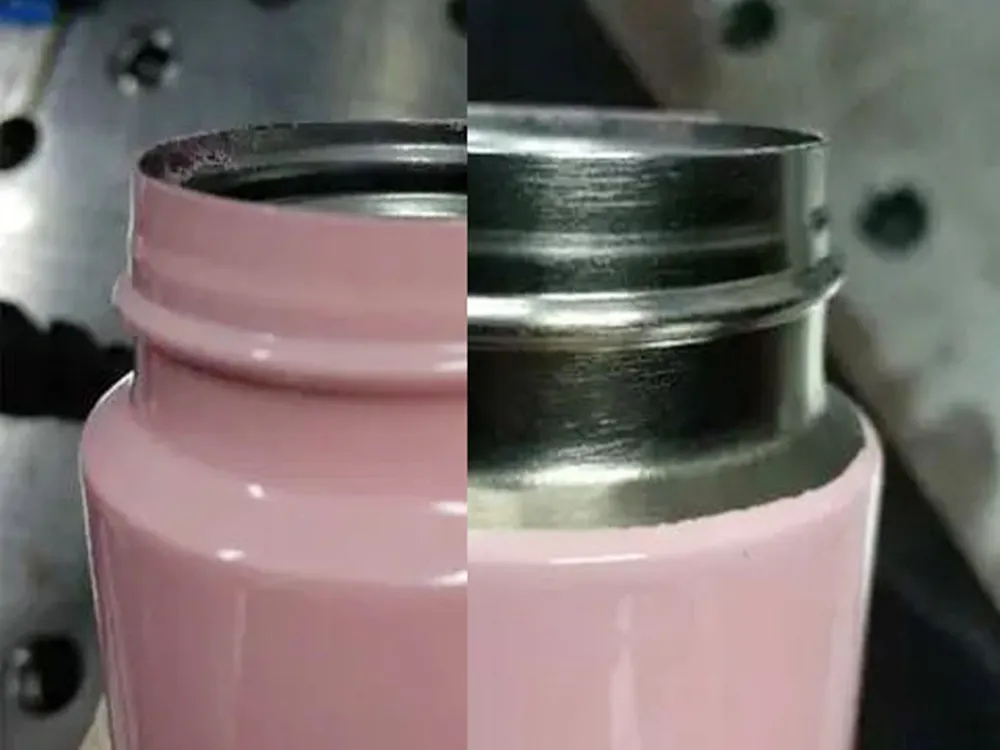
Laser coating removal removes thermal barriers, anodized layers, or protective films. Typically, it strips contaminated layers from the base material of active electronics or industrial components.
Conclusion
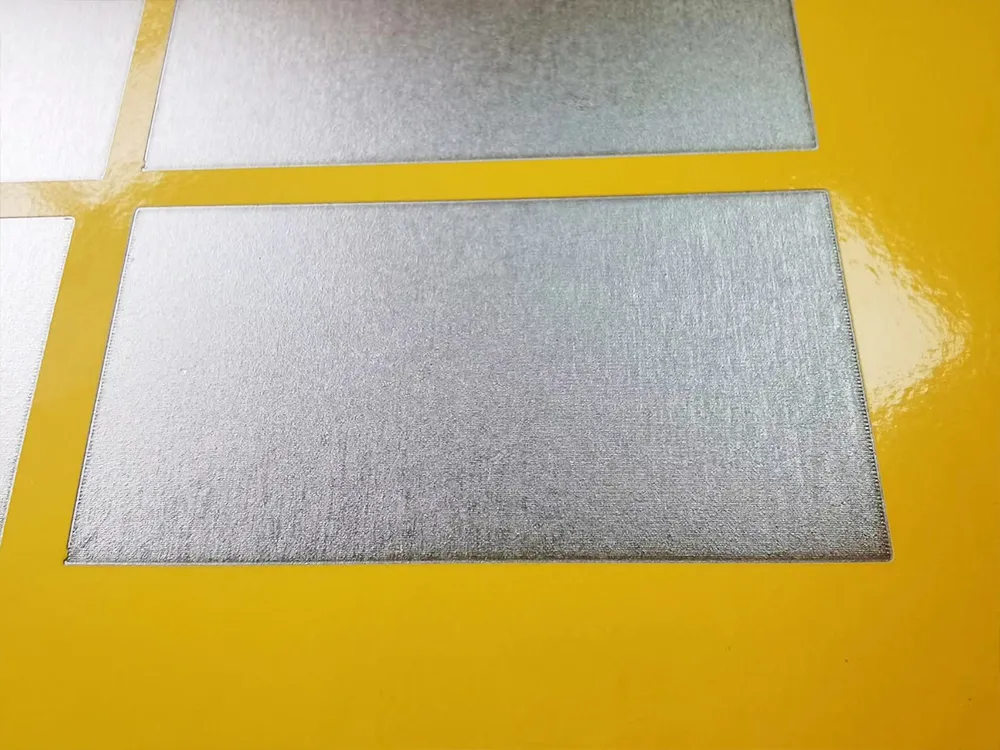
Laser ablation is a versatile and precise way to remove material. You can use it on metals, plastics, and other coatings. It doesn’t use harmful chemicals or substances that add extra cost. Manufacturers use it for cleaning, stripping, and even texturing. For each application, choose the right type and settings for the best results. This way, the technology will help you grow your business and manufacturing production.
If you have further queries regarding laser ablation, please don’t hesitate to contact us. We are always here, and our technical experts will guide you. Just let us know your questions, and we will help you through your journey.