
Does laser welding produce a heat affected zone? How to improve the laser welding quality?
Laser welding is one of the most common modern metal fabrication processes. It uses a highly focused laser beam to produce rapid heat for welding. It either melts the filler material or the base metal to join metal parts.
During welding, not every part of the metal reaches its melting point. The metal directly beneath the laser beam melts, forming the weld pool. The surrounding material remains unchanged. However, some areas near the weld pool remain heated to high temperatures, producing a heat affected zone (HAZ).
Compared with other traditional methods such as TIG or MIG, laser welding produces a smaller HAZ because the heat it produces is concentrated and less distorted.
Heat affected zone, or HAZ, is a normal part of almost every welding process. You can not completely avoid it because heat naturally spreads. What you can do is reduce the HAZ and its intensity.
Today, we will briefly talk about what a heat affected zone (HAZ) is. Why does it happen, and how can it be reduced?
What is a Heat Affected Zone in Laser Welding?
HAZ, or heat affected zone, is created next to a weld. It is the area of the base metal that doesn’t melt but is affected by heat. Thus, the name heat affected zone.
The HAZ is exposed to a high temperature during the welding process. This heat generally changes the material’s microstructure and also some mechanical properties. Depending on different situations, the HAZ may become harder, softer, or more brittle.
A smaller HAZ is usually better because it reduces thermal stress and distortion. In this case, laser welding produces a very narrow HAZ. Its focused laser beam delivers heat only where it is needed. As a result, laser welding maintains the strength and appearance of the final part.
Understanding Heat Tint
During laser welding, various types of HAZ may appear. To distinguish their types, the first thing to check is the color of the oxide layer. It is also called heat tint.
Heat tint appears when the metal reacts with oxygen at high temperatures. Common colors include yellow, blue, purple, and brown. You may usually see it when working with stainless steel and titanium.
Some heat tints may only affect the appearance. Some may reduce corrosion resistance if left untreated. Therefore, when performing laser welding, using proper shielding gas is crucial. Besides, correct welding parameters also minimize heat tint. However, cleaning or passivation can also restore the surface after welding. The following table lists different types of heat tint colors and their respective temperature ranges.
How Can You Evaluate a Heat Affected Zone?
There are various ways to identify the heat affected zone. And it is crucial to understand all these ways for welding quality control. Some signs can be seen with the naked eye. On the other hand, other types may need laboratory testing. A proper evaluation can help you detect material changes and improve weld quality.
Heat Tint Observation
One simple way to check HAZ is by checking the heat tint. Light colors like yellow usually show lower temperature exposure. On the other hand, dark blue colors show higher temperatures. These colors can give you a rough idea of the heat level during welding.

However, heat tint is not always fully reliable. The color may change due to other reasons. Surface condition, contamination, and oxygen level can change the color. Some materials with high chromium content may not show strong heat tint at all.
Visual Inspection of Surface Changes
The next way to identify HAZ is by visual inspection. You can look for any surface changes around the weld area. Is there any discoloration? Do you see any uneven surface or distortion? These signs can indicate excessive heat input.
A clean, narrow HAZ usually indicates better process control. A wide or uneven HAZ may show unstable welding conditions.
Metallurgical and Chemical Changes
HAZ, or heat affected zone, is not only a surface change but also affects the internal structure. One of the most common changes is surface nitriding. It may increase the surface hardness. However, it may reduce weldability.
Moreover, due to chromium carbides near the grain boundaries, corrosion can develop. It may reduce corrosion resistance in stainless steel.
Hydrogen is another culprit. It can also enter the material, causing hydrogen embrittlement. It may crack over time.
Phase changes are also important. For example, austenitic steel can change into a martensitic structure. This makes the material harder but more brittle.
Post-Weld Evaluation and Heat Treatment
You can also identify HAZ by post-weld testing. You may use metallurgical analysis or mechanical testing to study the changes.
In some cases, you may also apply heat treatment after welding. This way, you can restore material properties and reduce stress in the HAZ. It can also improve weld strength and corrosion resistance.
How Does Laser Welding Affect the Heat affected Zone?
Naturally, laser welding produces much smaller HAZ than other traditional methods. The laser beam delivers a large amount of energy into a very small area. They are precisely focused on a particular area, producing high-intensity heat. It melts the metal quickly and allows it to cool rapidly. As a result, less heat spreads into the surrounding materials.
Although laser welding reduces the HAZ, it cannot remove it completely. Heat normally flows from the weld pool into the nearby metal. However, you can control it and optimize your laser settings to ensure as little HAZ as possible. Besides, it also depends on what materials you are working on and how you are doing it.
High Energy Density Creates a Smaller HAZ
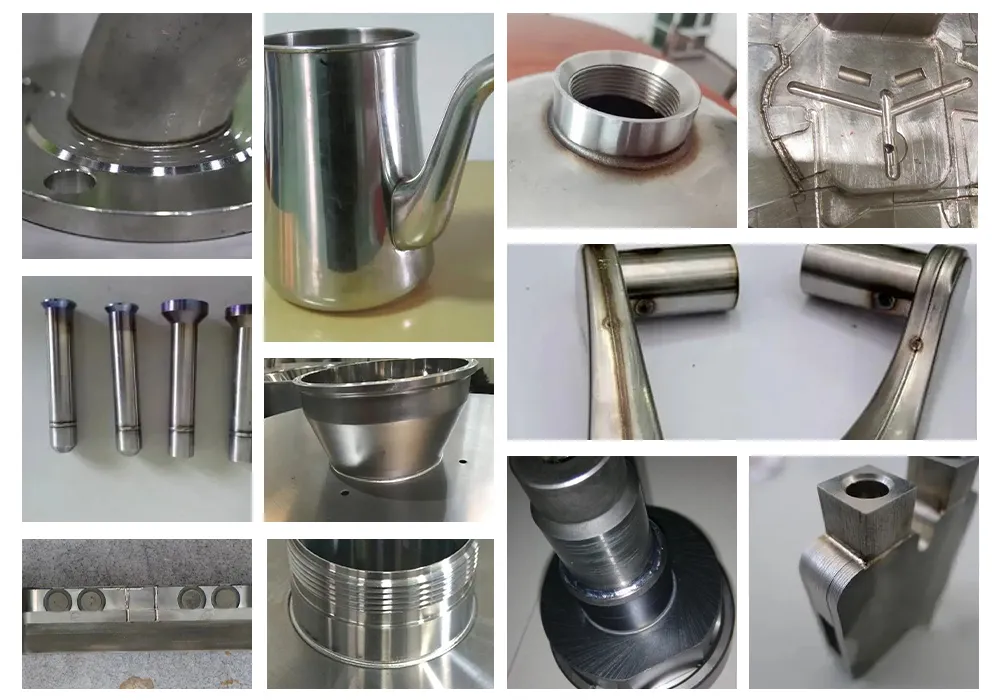
One of the biggest pros of laser welding is its high energy density. The laser beam is highly focused on a small spot. As a result, it produces a deep and narrow weld.
Since the heat is concentrated, only a small area around the weld is exposed to high heat. The surrounding metal cools quickly. It helps reduce the grain growth and distortion. Overall, it prevents your metal part from unwanted changes.
Laser Parameters Influence the HAZ
Inaccurate laser parameters mainly affect the size of the HAZ.
Laser power controls how much energy enters the material. Higher power produces more heat, creating a larger HAZ. On the other hand, lower power reduces heat input but may not provide enough weld penetration. So, you must know the exact laser power level.
Welding speed also matters. In general, faster travel cannot produce a good weld, while slower travel allows heat to spread further.
Beam focus is also important. A properly focused beam concentrates energy exactly where you need it.
Therefore, before you start welding your metal part, know which metal and grade it is. Different metals and grades require different laser settings. Inaccurate settings will lead to a larger HAZ and an unstable weld.
Welding Mode Changes Heat Flow
Different laser welding modes produce different thermal effects.
If you are using pulsed laser welding, it typically delivers energy in short bursts. So, your metal part gets some time to cool between pulses. With this mode, you can reduce the heat buildup and create a narrower HAZ. Pulsed laser welding is widely used for thin materials and precision parts.
On the other hand, continuous-wave laser welding produces a steady laser beam. It is ideal for deep penetration and for use in thick metals. Besides, continuous-wave laser welding is suitable for high production speeds.
Therefore, the best welding mode depends on the application. If you are working with delicate materials, a pulsed laser will give you the best result. If you need deep welds, continuous wave laser welding is suitable.
Material Properties
Every metal reacts differently with a laser. Even with the same metal, different grades behave differently.
Copper and aluminum typically transfer heat very quickly. However, stainless steel and titanium won’t do the same. They have a very unique microstructure. You must adjust the laser settings for each material type. With the right laser parameters, you can reduce the HAZ.
Looking for a Reliable Laser Welding machine?
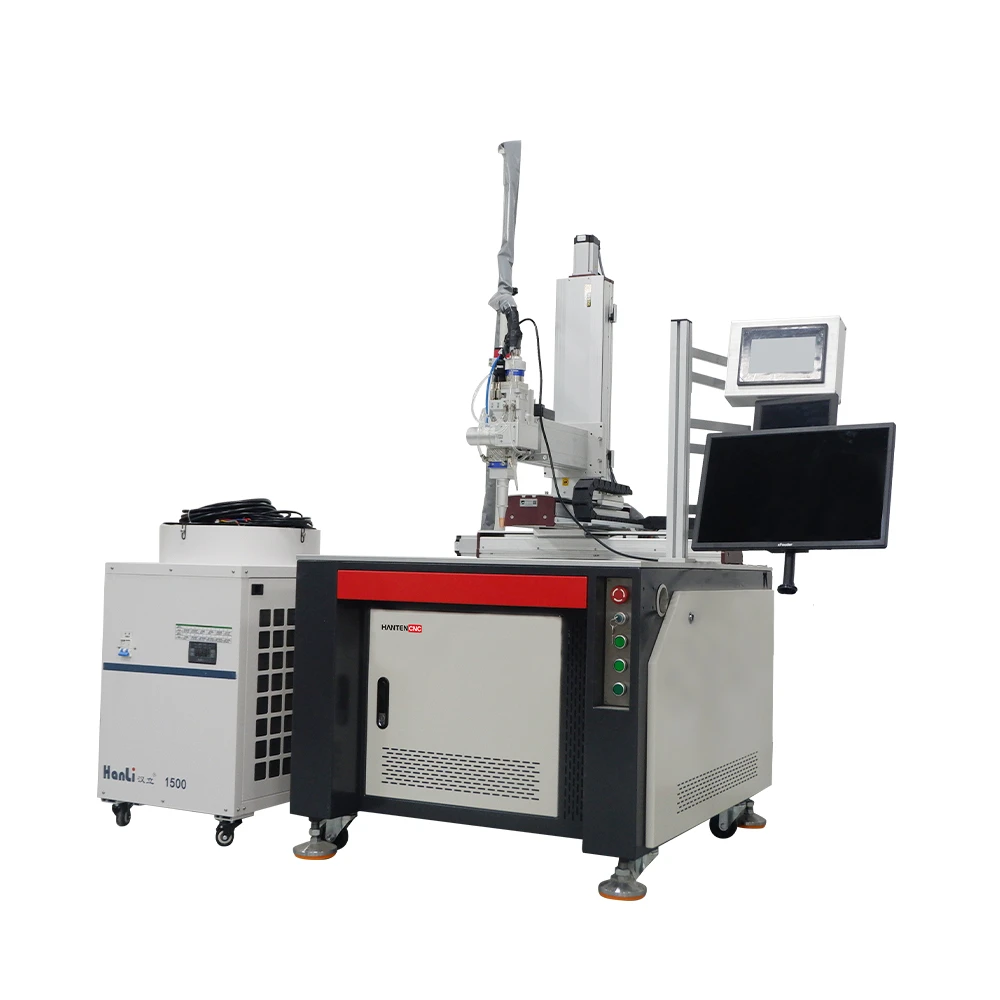
You might have a small workshop or a large production line. If you want to add a laser welding machine to it, you need to undergo a proper evaluation. The best machine depends on your material, production volume, and end user use. HantenCNC offers a complete range of laser welding machines that ensure reduced HAZ and improved weld quality.
If you need a cost-effective solution, consider SEAL 1500-2000W ($2K-$6K). For a versatile option, you might like a 3-in-1, 4-in-1, or 5-in-1 handheld metal laser welding machine ($2K-$5K). With these, you can work with stainless steel, carbon steel, and aluminum and perform many daily tasks.
For heavy-duty applications, you might need 6kW handheld laser welders (13K-$15K). It provides deep penetration and high welding speed. For high precision, you can opt for the QCW spot welders or platform laser welders. You can also consider galvanometer welding or articulated models. These devices may cost from $3K to $10K.
If you are still not sure which model might suit you best, contact us today! We have a team of experts for advice. Tell us about your future plans, and our engineers will recommend the most suitable laser welding machine for you.