
Stainless steel generally has high toughness, low thermal conductivity, and a strong tendency to work-harden. These three properties make it challenging to cut. Besides, they cause extreme heat to build and rapid tool wear. That’s where we need specific machining strategies depending on the alloy. In this case, laser-cut stainless steel is one of the most efficient options.
Compared to other cutting methods, laser cutting offers better solutions. It is precise, fast, and highly flexible. When it comes to stainless steel, modern fiber laser machines can process sheets from thin to thick. Depending on the specific alloy, the laser parameters may change. In this article, you will learn everything about how to laser-cut stainless steel.
Can you Cut Stainless Steel with a Laser?
Yes, a laser can cut stainless steel. In fact, it is one of the most effective methods for processing stainless steel. Laser cutters cut not only metals but also other materials, including glass, wood, acrylic, and more. It’s a versatile solution for many fabrication works.
It is important to note that not all lasers are sufficient for cutting metals. There are various types of laser sources, including fiber, CO2, UV, and green, among others. Each type of laser is suitable for cutting different materials. In today’s case, a fiber laser is suitable for cutting metals, including stainless steel.
But carbon dioxide, UV lasers, YAG, and others struggle to match the same results. CO2 lasers are ideal for cutting non-metals such as acrylic, wood, leather, and others. UV lasers lack the power to deliver the expected results in industrial applications. They work too slowly. YAG lasers produce extreme heat, which can cause material warping.
Overall, a fiber laser is a great option for handling stainless steel. It produces clean and sharp edges after cutting. Also, it minimizes material warping during the operation process. Although it may need some finishing touches, it is significantly less than other cutting methods.
How Does Stainless Steel Laser Cutting Work?
Every cutting process starts with producing a suitable laser, which is called a laser source. In today’s case, we will be working with stainless steel. To do this, we will need a quality fiber laser source.
When the laser is produced, it travels through an optical fiber and reaches the laser gun. There are mirrors and a lens in the gun where this laser is focused and released. This focused light beam is highly energetic and, upon contact with a surface, disrupts the integrity of internal bonds, creating a cut. Its intense heat instantly vaporizes or melts metal.
To guide the laser beam for precise cutting, there are two options. If you are working with smaller pieces, the computer system can guide the laser beam. However, if your piece is larger, you will need a CNC controller that guides the entire laser beam throughout the workspace.
An essential part of the process involves high-pressure assist gas. Typically, a specialized nozzle assists with gas flow during laser beam cutting. When cutting stainless steel, you will need to apply such a gas to push the molten material away.
Most modern laser cutting machines are fully controlled. The whole process doesn’t need any manual intervention.
How to Laser Cut Stainless Steel: Step-by-step
Laser-cut stainless steel requires a systematic way of handling. You can not just load a sheet into the machine and start the process. You must ensure the material and machine are prepared correctly. Most importantly, you should know which laser parameters to use for each type of stainless steel. These steps are necessary to achieve clean cuts. It also minimizes HAZ and improves equipment lifespan.
Prepare the Stainless Steel Sheet
Initial preparation for laser-cutting stainless steel begins with cleaning. Check for any dust or dirt on the steel surface. If so, thoroughly remove all dirt, oil, and rust from the surface. Make sure the sheet is properly cleaned before use. Besides, the sheet should be flat. Any warping can cause the nozzle to crash. Secure it firmly onto the machine’s workbed to prevent shaking or movement.
Set up the Design File
Import your vector design into laser software. Make sure to choose vector formats like DXF or DWG. Vector format works best for detailing. Check all dimensions and sizes precisely before starting. Verify all the lines for duplicate vectors or paths. Organizing the cutting work from the inside cut to the outside of the border makes it more precise.
Configure the Laser Cutting Machine
For machine configuration, select a gas nozzle based on your material thickness. You may install a double nozzle if high pressure is required. Choose nitrogen as your assist gas for a clean outcome. Set up the gas pressure accordingly. Choose other crucial parameters, such as power, speed, frequency, and duty cycle, accurately.
Focus and Test Cuts
Adjust the focal length and point it deep into the material, depending on its thickness. Stainless steel laser cutting needs negative focus settings. If everything goes according to plan, proceed with a test cut on a sample of material. Check the cutting quality and edges for burning or dross. Then reconfigure power, speed, and other parameters based on the sample material.
Cut and Finish
After a test cut, start the cutting process. Monitor the first few cuts closely. Look for spatter, warping, and anomalies on the edges. If everything is fine, let the machine complete the entire production. During this work, one must remain alert for emergencies. Carefully remove the products after cutting and clean the edges. Inspect every part cautiously.
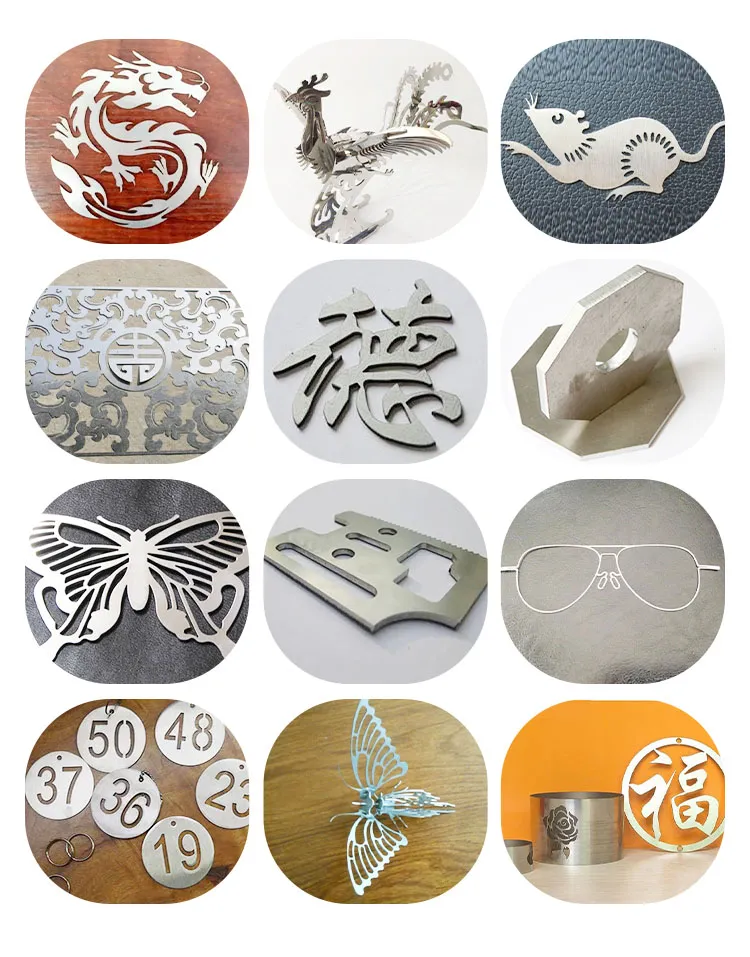
Stainless Steel Laser Cutting Thickness Chart
Selecting the right machine for your material is vital to achieving a smooth cut. Higher power machines are suitable for processing thicker materials. They maintain stable penetration. Lower-power lasers are ideal for thin to medium-thick steels. Besides, using the right parameters makes the result more appealing. Proper configuration ensures clean and bur-free cutting.
Below is a functional chart for fiber lasers operating on thin-to-thick materials with precise power control. It will also guide you to a particular speed.
For 3KW Laser power:
| Thickness (mm) | Assist Gas | Cutting speed (m/min) |
|---|---|---|
| 1 | N2 | 30-58 |
| 3 | N2 | 6-14 |
| 10 | N2 | 0.6-0.8 |
For 6KW Laser power:
| Thickness (mm) | Assist Gas | Cutting speed (m/min) |
|---|---|---|
| 1 | N2 | 42-52 |
| 12 | N2 | 0.8-1.5 |
| 20 | N2 | 0.3-0.5 |
For 12KW Laser power:
| Thickness (mm) | Assist Gas | Cutting speed (m/min) |
|---|---|---|
| 1 | N2 | 45-60 |
| 20 | N2 | 0.7-1.5 |
| 30 | N2 | 0.2-0.5 |
Common Problems of Stainless Steel Laser Cutting and Fixes
It is quite common to encounter problems during stainless steel laser cutting. Things might go wrong if you have set the laser parameters incorrectly. Besides, improper assist gas settings, poor focus position, and material variations can also affect cut quality. The following three problems are the most common because of these errors.
Burrs
Burs are typically small bumps that are left on metal edges. You may face it when the molten metal is not blown away evenly. Generally, using a higher cutting speed and a lower gas pressure results in burrs when laser-cutting stainless steel. To avoid this problem, use the correct parameters, reduce the speed, and allow nitrogen gas to clean the molten portions effectively.
Burn Marks
Burn marks usually appear when the material overheats during cutting. Using slower cutting causes the material to overheat. Additionally, applying more power than necessary to cut the material can also overheat it. Therefore, you should balance the speed-to-power ratio to avoid overheating. Always choose the correct power and speed based on your material thickness and cutting requirement.
Rough Edges
Rough edges mean uneven surface quality and a jagged appearance. It occurs when you use the incorrect focus length. If the beam focus is too high, you may observe an unstable kerf line. Nozzle damage can also lead to rough edges, as it can distort during use. Therefore, use the correct nozzle and clean your lens. Make sure to select the correct focus distance.
Best Stainless Steel Laser Cutting Machine in 2026
The 1000w –6000w Enclosed CNC Fiber Laser Cutting Machine For Metal Sheet is a high-end machine. It integrates with CNC and laser efficiently and is a premium tool in 2026. This machine offers flexible power ranges from 1000W to 6000W. You utilize it depending on your application needs. Also, the machine contains all parts within an enclosed frame, so each part remains safe. Its design safely contains laser radiation and fumes.
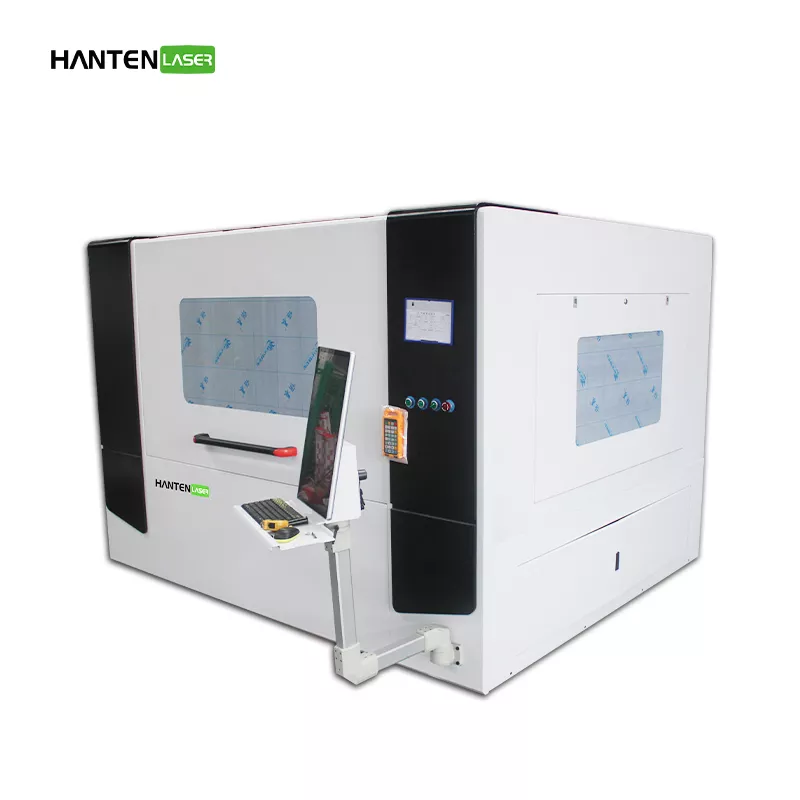
Since the power is flexible and can deliver 6000W, it offers extra advantages for industrial work. This machine provides high speed and extreme accuracy, with minimal material waste. The repeatability score is ≤±0.02mm/m with a cutting speed of ≤30m/min. Its workbench can hold 1800 kg, which is a huge load. With it, you can easily process stainless steel kitchenware, electronics, and other machinery parts.
Contact Us Today!
Laser-cut stainless steel offers high precision and fast processing. Most importantly, it offers excellent flexibility for a wide range of applications. With the right machine, settings, and cutting strategy, you can achieve clean and consistent results. Besides, you can reduce material waste and production costs.
If you are looking for a high-quality stainless steel laser cutting solution, HantenCNC is ready to help. You can opt for our collection of fiber laser cutting machines. Our machines are ideal for cutting both thin and thick stainless steel sheets. Contact our team today to discuss your requirements in more detail.