
You may have already heard of CNC or EDM machining. Have you ever heard of laser beam machining? CNC or EDM machining is typically a subtractive process. They remove material from the surface and give it a desired shape. Laser beam machining also follows the same goal, but with a different technology. It uses a highly focused laser beam to remove material.
In this article, we will explore laser beam machining in detail. We will also discuss the differences between LBM and other machining methods. You will learn why laser beam machining is gradually replacing the traditional methods. You will also know why you should choose it for your project.
What is Laser Beam Machining?
Laser beam machining is one type of material-removal process. It uses intense thermal energy created by a highly focused laser beam. LBM uses this energy to process various metals. It either cuts, engraves, creates grooves, or gives a shape.
LBM works very well for both hard and delicate materials. You can control the cutting head with CNC systems for both linear and angular movements. It is a versatile solution that offers you a wide range of cutting, engraving, and drilling work. You can perform drilling cooling holes in turbine blades. You can also cut sheet metal and micro-machining electronic parts. Besides, there are many options available for laser beam machining.
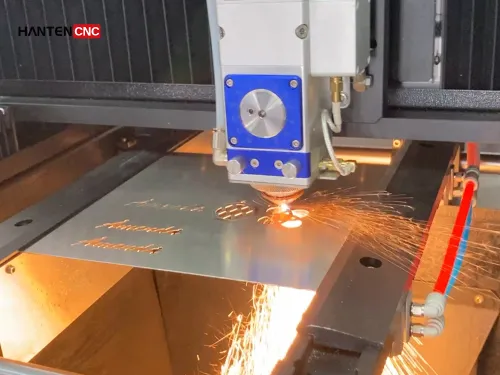
One major advantage of using the LBM process is its non-contact approach. There is no physical contact with the surface, making it a zero-wear tool. Besides, this method delivers intense heat to a small area. As a result, the heat-affected zone (HAZ) remains very small, thereby stabilizing the surrounding portion.
Here are some key components of laser beam machining (LBM):
- Power Source: Supply of the main energy in order to excite the medium.
- Laser Medium: The medium or source that generates light for machining. Medium can be a gas, a solid, or a liquid.
- Flash Lamp: Triggers the emission of a photon.
- Reflecting Mirrors: Moves the system back and forth to amplify the beam.
- Lenses: Make the amplified light focus on tiny spots.
- Worktable: Holds and moves the material as directed.
How Does Laser Beam Machining Work?
Laser machining begins by converting a high-power light beam into thermal energy. Generally, it happens when the power excites the medium, producing a coherent light source. Then, using mirrors, light is amplified to increase strength. After amplification, it passes through focusing lenses and is concentrated into a tiny spot on the workpiece.
When the material comes into contact with the surface, it absorbs light energy and heats up instantly, melting or vaporizing.
Two key parameters determine the machining quality here. The first one is a power source. It must be high enough to melt the material. Beware of using too much power, as it can cause excessive melting. The second factor is the speed. It determines the quality of the hole or cuts. Make sure to use a balanced speed.
LBM vs Other Machining Methods
With the changing times, people have been using various machining methods. To keep up with demand, new and advanced technologies are entering the market. In 2026, laser beam machining became one of the most modern methods. The comparative table below highlights the differences between LBM and other machining methods.
| Feature | Laser Beam Machining (LBM) | CNC Machining | EDM Machining | Conventional Machining |
|---|---|---|---|---|
| Contact Type | Non-contact | Contact | Non-contact (Electrical) | Contact |
| Tool Wear | No tool wear | Tool wear | No physical tool wear | High tool wear |
| Material Type | Hard, brittle, fragile | Mostly metals and plastics | Hard conductive materials | Limited materials |
| Accuracy | Very high | High | Very high | Medium |
| Speed | Fast | Moderate to fast | Slow to moderate | Moderate |
| Surface Finish | Excellent | Good | Excellent | Fair to good |
| Waste Generation | Low | Moderate | Low | High |
Laser Beam Machining Advantages
Laser beam machining offers some significant advantages. These benefits typically make LBM useful in many applications across industries. The following four advantages are the most crucial to LBM’s popularity.
(1) Laser beam machining is known for its precision and intricacy. While other machining methods strive to achieve high accuracy, LBM can easily meet that standard. Its entire process offers you precision at the microscopic level. Thus, creating tiny holes or complex shapes becomes much more efficient with it.
(2) With other machining methods, there is a high risk of damaging both the materials and the tools. It especially counts for delicate materials. With laser machining, there is no physical contact with the surface. So, the beam never gets dull. Also, breakage and maintenance costs remain significantly lower.
(3) LBM can easily cut almost all types of materials. You can work with metals, hard alloys, ceramics, plastics, and more.
(4) Lasers typically convert a light beam into high-intensity heat at a tiny spot. It only concentrates on a small area, making it a reliable method for users.
Limitations of Laser Beam Machining
Initially, laser beam machining may seem expensive. You might consider a higher investment for both the system and the installation. However, once you have installed it, you will never regret the amount you have invested. In the long run, you will need no consumables except electricity. Besides, there are no tool-wear problems.
Moreover, you will need less labor to operate the process. Therefore, if you calculate the overall ownership costs, you will find that the laser system offsets them through lower operating expenses. So, no matter how much you spent at first, the balance is at the end.
Applications of Laser Beam Machining
Laser beam machining has a wide range of applications in multiple sectors. You can utilize it depending on your application needs. From aerospace, automotive, electronics, and medical sectors, you might find it everywhere.
It has broad applications in semiconductor electronics as well. Marking chips, creating holes, and trimming circuits are among its vital uses. It works excellently for microelectronic wafer machining. Higher accuracy has made this path much easier for manufacturers.
Different Types of Lasers for Beam Machining
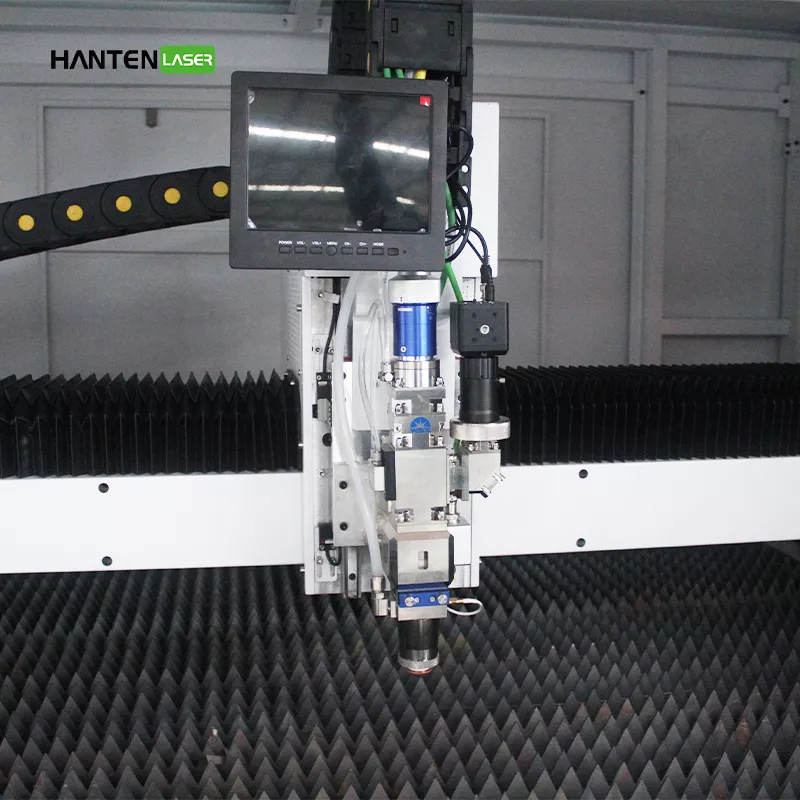
There are three main types of lasers used for laser beam machining. The fiber laser is the most commonly used, which operates at 1.07 µm. It works efficiently and is considered ideal for machining metals. Second is a CO2 laser that operates on inorganic materials. These materials include wood, acrylic, ceramic, and many others.
The third type is the Nd: YAG laser machine. People mostly use it for drilling or welding materials. It supports both the pulse and continuous methods. The choice depends on your materials and machining requirements.
Why Does Laser Beam Machining Matter in Modern Manufacturing
In 2026, Laser beam machining has become an important part of modern manufacturing. There are various reasons why LBM matters in modern manufacturing. In today’s world, industries demand faster production and better accuracy. That’s where LBM comes in.
No Tool Wear
Laser machining is a modern process that uses a laser beam instead of mechanical tools. It indicates that there is no friction and mechanical stress. Each tool remains safe and perfect for long-term use.
Fine & Complex Geometries
Laser beams are comparatively precise and thin. For this reason, it can easily create intricate holes and patterns. Laser technology also allows engineers to produce complex parts that traditional methods cannot.
Versatile (Hard/Fragile)
In terms of versatility, laser machining can be used on almost any material. From hard alloys to fragile ceramics, it can handle both. Its non-contact approach allows it to complete each task without cracking or damaging the surface.
Excellent Accuracy and Repeatable
Since the method is CNC-controlled, the laser moves with perfection each time. This way, it produces many identical parts without defects. While traditional methods rely on human effort, this can lead to errors or defects in parts.
Reduced Waste/Chemicals
The entire laser machining process is neat and clean. Using a narrow beam reduces material waste to nearly zero. Unlike other methods, it does not use any harmful chemicals or consumables, making it eco-friendly and far safer for use.
Frequently Asked Questions
What is the tolerance of Laser Beam machining?
Laser machining is an extremely precise tool. The tolerance range is ±0.01 mm to ±0.05 mm. It specifically depends on the material types. Advanced laser systems can maintain consistent accuracy even for complex shapes and fine details. However, the final tolerance may still vary based on several factors. It may depend on machine calibration, material thickness, and processing conditions.
What Material can be machined by using a laser beam?
This process works on metals, non-metals, or fragile materials. Metals include aluminum, steel, and titanium. Non-metals include ceramics, plastics, and glass. Laser beam machining is especially suitable for hard-to-machine or heat-sensitive materials. While traditional machining fails, LBM can still achieve high accuracy without contact.
Conclusion
Laser beam machining plays an important role in modern manufacturing. It uses a high-energy laser beam to cut, drill, engrave, and shape materials. Compared to other methods, it provides a more precise and faster solution. It is a non-contact process that helps create clean cuts while keeping the work environment cleaner.
Thanks to laser machining, which works on a variety of materials. You can process metals, plastics, ceramics, and even composite materials. Although it has a higher initial cost, it eventually balances ownership costs over time. As a result, more industries continue to adopt the technology to ensure faster, more accurate production.
With a laser beam machining system, you can improve product quality and reduce waste. It can also significantly increase production efficiency. If you have any questions, feel free to contact our customer support team.